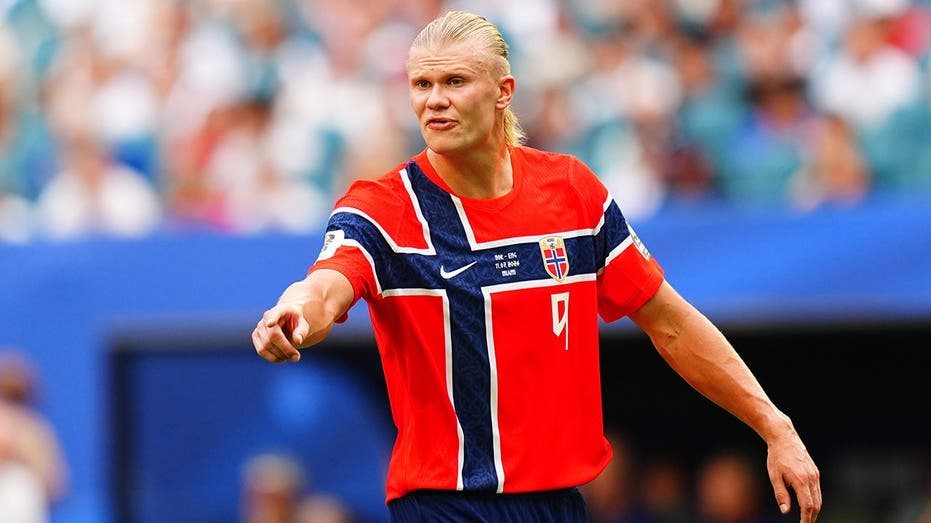
Norway’s surprising World Cup journey came to a dramatic end on Saturday with a 2-1 quarterfinal loss to England, but the match was overshadowed by a controversial decision to substitute star striker Erling Haaland with 15 minutes left in extra time. The Manchester City forward, who had scored seven goals in the tournament, was replaced by Jorgen Strand Larsen as Norway trailed by a single goal, leaving fans and analysts questioning the move.
Haaland, 25, had been a dominant force throughout the World Cup, becoming one of the tournament’s most electric players. However, he was kept scoreless against England and was involved in a costly moment when a pre-corner foul negated what would have been Norway’s second goal. Despite his struggles in the match, the decision to pull him off the field with Norway’s World Cup hopes hanging in the balance drew immediate backlash on social media.
Many observers speculated whether Haaland was injured, but no official explanation was provided during the match. Norwegian manager Ståle Solbakken is expected to face questions from the media about the substitution, which many viewed as a puzzling tactical choice. The move effectively ended Haaland’s tournament with him watching from the bench, a disappointing conclusion for a player who had been one of the most popular figures in the competition.
England advanced to the semifinals thanks to a standout performance from Jude Bellingham, who scored two goals, including the decisive strike in extra time. The Three Lions will now face the winner of Saturday night’s match between Argentina and Switzerland, while France and Spain are set to meet in the other semifinal. The tournament is now down to its final four teams, with the championship match scheduled for next week.
Norway’s run to the quarterfinals was seen as a significant achievement for a team that had not reached such heights in recent World Cups. The squad’s performance, including Haaland’s prolific scoring, energized fans and raised expectations for future tournaments. Some analysts believe Norway could replicate this success in four years at the next World Cup in Saudi Arabia, provided the team builds on its current momentum.
The controversy over Haaland’s substitution has sparked broader discussions about tactical decisions in high-stakes matches. Critics argue that removing a player of Haaland’s caliber, especially when trailing, undermines a team’s chances of scoring. Supporters of the decision, however, point to Haaland’s quiet performance and the need for fresh legs in extra time as potential justifications.
Social media reactions ranged from disbelief to outright anger, with many users calling the substitution one of the worst decisions of the tournament. Some noted that Haaland’s presence alone often draws defensive attention, creating space for teammates, and that his removal may have reduced Norway’s attacking threat. Others expressed sympathy for the player, who had carried the team’s offensive burden throughout the competition.
As the World Cup heads into its final stages, the focus shifts to the remaining contenders. England’s victory sets up a highly anticipated semifinal, while France and Spain prepare for a clash of European giants. For Norway, the tournament ends with a mix of pride and what-ifs, as the team reflects on a historic run that ultimately fell short of the semifinals.