Kareem Abdul-Jabbar misses the point in Caitlin Clark face-of-the-WNBA debate
Kareem Abdul-Jabbar argued that Caitlin Clark should not be called the face of the WNBA because she lacks the résumé of A'ja Wilson, but critics say he confuses 'best player' with 'face of the league,' pointing to Clark's historic rookie season, record viewership, and jersey sales as evidence of her commercial impact.
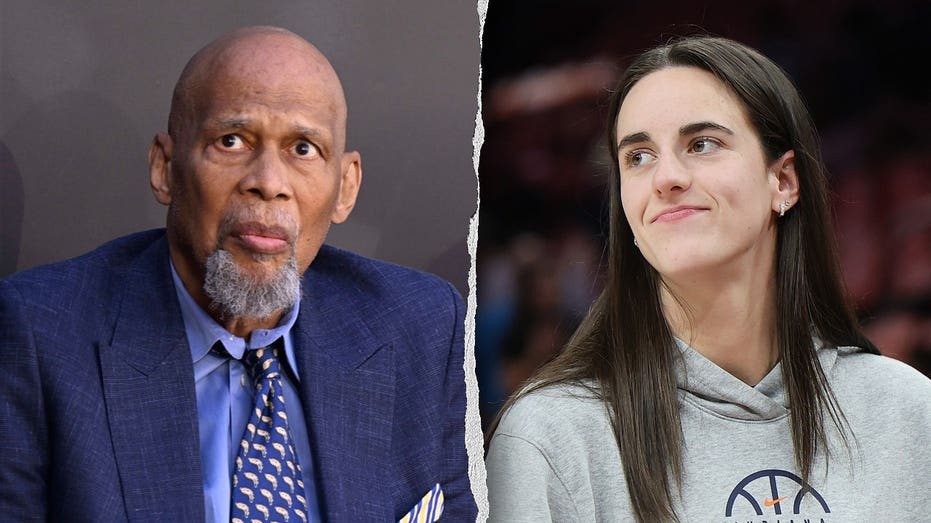
Kareem Abdul-Jabbar has every right to believe A'ja Wilson is a better basketball player than Caitlin Clark. Wilson is a four-time WNBA MVP, three-time Defensive Player of the Year, eight-time All-Star and three-time league champion. Clark's professional résumé, after one season, cannot match that. But Abdul-Jabbar's recent argument that Clark should not be considered the face of the league confuses on-court achievement with commercial reality, and critics say he is missing the point entirely.
Abdul-Jabbar wrote on his Substack in response to a letter from 11 Republican lawmakers to WNBA commissioner Cathy Engelbert, which referred to Clark as «the face of your league.» Abdul-Jabbar called Clark «a very good, possibly even a great, player» but argued that labeling any single player the face of the league without the «on-court and cross-platform dominance» of a Michael Jordan or LeBron James is insulting to other great players. The problem, according to many observers, is that Abdul-Jabbar is applying a standard to Clark that was never applied to LeBron James himself.
LeBron James did not have a championship or multiple MVPs when fans and the media first anointed him the face of the NBA. He was on the cover of Sports Illustrated as «The Chosen One» while still in high school. He entered the league with a historic Nike contract worth a guaranteed $87 million over seven years before playing a single NBA minute. His rookie jersey was the top seller, and the NBA shattered merchandise sales records. He won Rookie of the Year in 2003-04 but did not win his first MVP until 2008-09 or his first championship until 2012. In his third NBA season, the same stage Clark is now entering, the commercial anointing had already happened, even though championships and MVPs were years away.
Clark's trajectory mirrors that early commercial impact. She was the No. 1 overall pick in the 2024 WNBA draft, won Rookie of the Year, set the league's single-season assists record, and set rookie records for points and three-pointers. She averaged 19.2 points, 8.4 assists and 5.7 rebounds. More importantly, she led the league in jersey sales and drove television viewership to unprecedented levels. A late-night regular-season game between the Indiana Fever and the Los Angeles Sparks in July averaged 1.04 million viewers across USA Network and CNBC, setting a league record for late-night viewership. By comparison, Game 4 of the 2022 WNBA Finals, when Wilson's Las Vegas Aces won their first championship, drew fewer than 400,000 viewers on ESPN. Clark's Fever averaged more than two-and-a-half times as many viewers for a regular-season game starting at 10 p.m. ET as Wilson's team drew for the 2022 Finals clincher.
Abdul-Jabbar's comparison also overlooks the fact that «face of the league» has never been synonymous with «best player.» Tim Duncan won five NBA championships, two league MVPs and three Finals MVPs, but he was never considered the face of the league. Allen Iverson, a contemporary of Duncan, won one MVP and zero championships, yet he was a much larger cultural force and had a stronger claim to that title in the late 1990s and early 2000s. No one complained that Iverson was more popular than Duncan among fans.
The business reality is clear: Clark brings millions of new viewers to the WNBA. She has expanded the league's audience in ways that even its most established stars have not. That does not make her a better player than Wilson, but it does make her the commercial engine of the league. Abdul-Jabbar's argument conflates two different things — on-court greatness and marketability — and in doing so, he misses the point that the face of the league is determined by fans and the marketplace, not by a résumé checklist.