FIFA President Confirms Trump Call Over US World Cup Star’s Suspension
FIFA President Gianni Infantino confirmed he spoke with President Donald Trump about U.S. soccer player Folarin Balogun’s red card, but stressed that FIFA’s independent judicial bodies made the final decision to suspend the one-game ban.
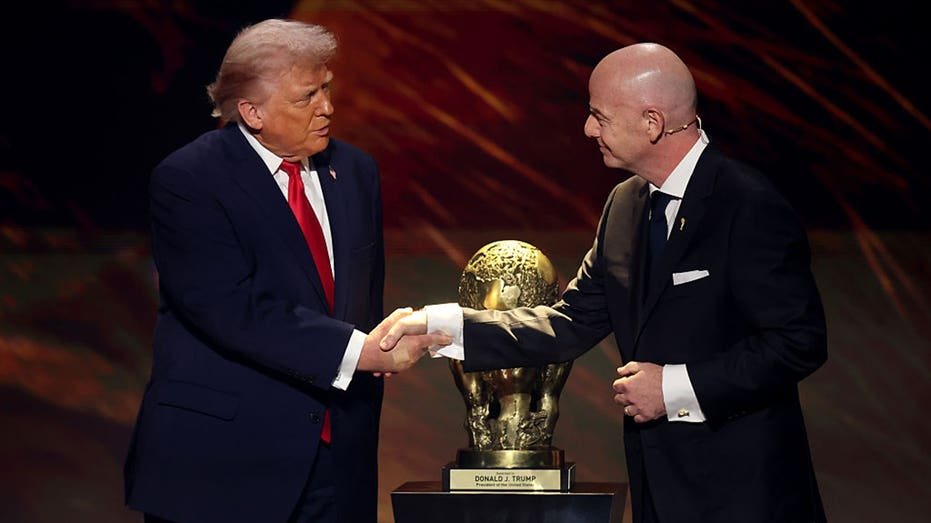
FIFA President Gianni Infantino released a statement Monday addressing his phone call with President Donald Trump regarding the suspension of U.S. World Cup star Folarin Balogun, emphasizing that the decision to overturn the ban was made by FIFA’s independent judicial bodies, not by political intervention. The controversy erupted after Balogun received a red card during a match against Bosnia and Herzegovina for stepping on an opponent’s ankle, which would have sidelined him for the crucial game against Belgium. FIFA later suspended the one-game ban, allowing Balogun to play.
Infantino stated that he regularly discusses World Cup matters with heads of state, including President Trump, and that their conversation focused on explaining the ongoing legal process. «During our conversation, I explained that there was an ongoing legal process involving FIFA’s independent judicial bodies and that the case would be decided in due course by the competent bodies,» Infantino said. He added that he respects the autonomy of these bodies, even when he personally disagrees with their decisions, and that «respect for independent institutions and the rule of law is what protects the integrity of our competitions and the credibility of FIFA at all times.»
President Trump addressed the issue in the Oval Office, stating that he asked for a review of the red card because he believed the incident was not a foul. «All I did was, I asked for a review, because I didn’t think it was a foul,» Trump told reporters. He argued that removing a top player like Balogun would have «stained this incredible championship» and praised the committee’s decision to suspend the ban. Trump also admitted he was unfamiliar with soccer rules, saying, «I didn’t know what the hell a red card was, and when I found out I said, ‘You gotta be kidding.’»
The Belgian Football Association appealed FIFA’s decision to suspend Balogun’s ban, but the appeal was dismissed later Monday, just hours before the U.S. team faced Belgium in a high-stakes World Cup match. The incident has drawn widespread attention, with analysts noting that Trump’s intervention and his lack of knowledge about soccer rules added to the controversy. MS NOW’s Vaughan Hillyard described Trump’s remarks as «head-spinning» for soccer fans, particularly his admission that he did not know what a red card meant before the incident.
Balogun, a key player for the U.S. national team, was initially shown a red card after a VAR review determined that he had stepped on the ankle of a Bosnia and Herzegovina defender. The suspension would have forced him to miss the match against Belgium, a critical game for the U.S. team’s progress in the tournament. FIFA’s disciplinary committee reviewed the case and decided to suspend the ban, allowing Balogun to play. Trump argued that the referee’s decision was «horrible» and that the red card was unwarranted, comparing the incident to a collision between two athletes rather than a deliberate foul.
Infantino’s statement sought to clarify that the decision was made independently, despite the president’s call. He noted that he receives calls from various world leaders and stakeholders on many issues, but that FIFA’s judicial bodies operate autonomously. «Sometimes I am surprised by them. Sometimes I agree with them, and sometimes I disagree,» Infantino said of the disciplinary committee’s decisions. «What I always do, however, is respect those decisions and the autonomy of the bodies that make them.»
The episode has sparked debate about the influence of political figures on sports organizations, with critics arguing that Trump’s call could be seen as an attempt to pressure FIFA. However, both Infantino and Trump maintained that the decision was made by the committee, not by the president. Trump emphasized that he did not tell Infantino what to do, but simply asked for a review. «I don’t believe he made the decision. I think it was a committee that made the decision and they made the right decision,» Trump said.
The U.S. team’s match against Belgium proceeded as scheduled, with Balogun available to play. The outcome of the game and the broader implications for the World Cup remain to be seen, but the controversy has highlighted the intersection of sports and politics on the global stage. FIFA’s commitment to maintaining the independence of its judicial processes, as reiterated by Infantino, will likely continue to be a focal point as the tournament progresses.

105