New Urbanism Grew From Suburban Backlash Into Mainstream Planning Reform
A movement that began as a fringe response to car-dependent sprawl has reshaped zoning debates and community design across the United States, decades after its founders first gathered to define it.
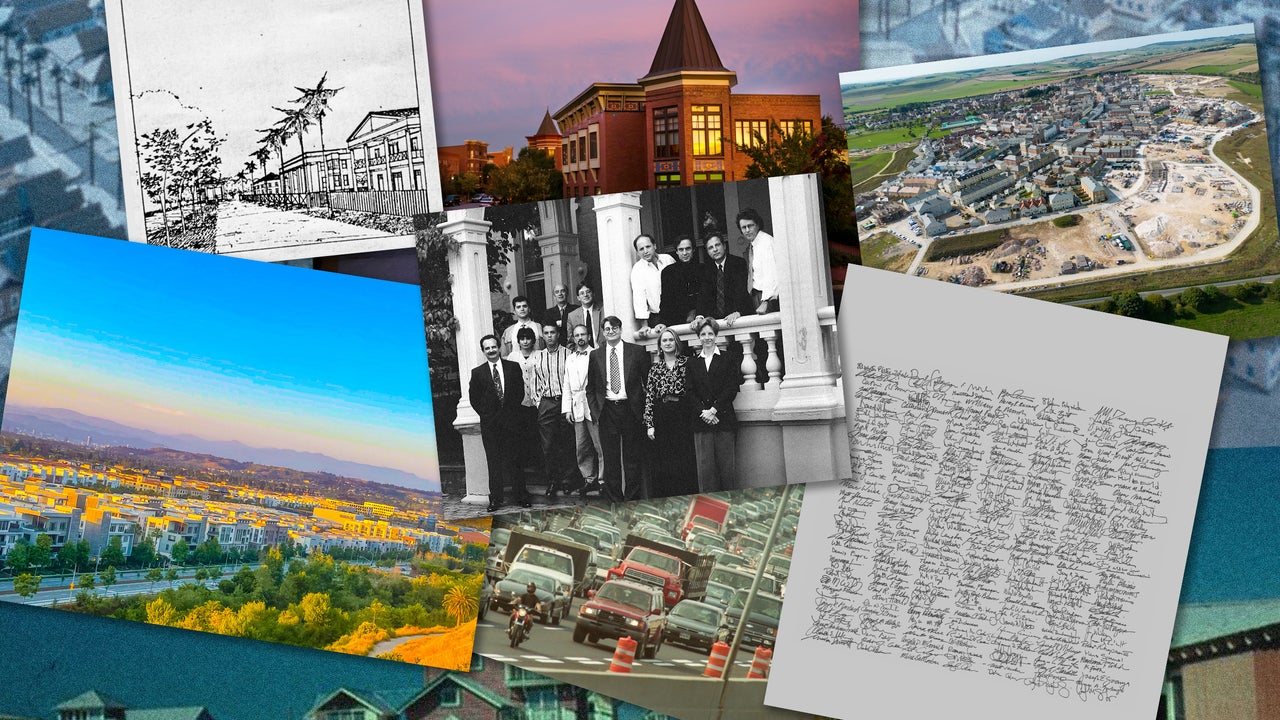
For much of the postwar era, American growth meant one thing: the suburb. Between 1950 and 1990, the share of Americans living in suburbs rose from 23 percent to 46 percent, and development spread outward along highways in patterns that depended heavily on the automobile. A small group of planners and architects came to see that model as a problem rather than a triumph, and their alternative, known as New Urbanism, has since moved from the margins of the profession toward the center of debates over housing and land use.
The pressures were visible in places like metropolitan Atlanta, where exurban communities added more than 600,000 residents in roughly six years leading into the mid-1990s. Growth on that scale brought long commutes, heavy traffic and constant construction, and the strain on fast-expanding suburbs became a rallying point for critics who argued that the region was building itself into a corner. Progressive planners and architects pressed for a different pattern: walkable neighborhoods, a mix of homes and shops, and housing for households at different income levels.
The intellectual roots of the movement reach back to the 1970s, when many planners grew disillusioned with development shaped primarily by car travel and short-term economic incentives. Andres Duany, Elizabeth Plater-Zyberk, Peter Calthorpe, Stefanos Polyzoides and Elizabeth Moule were among the figures who helped give that discontent a design vocabulary. The first community widely cited as a New Urbanist project was Seaside, Florida, begun in 1981, and in 1986 Calthorpe and Sim Van der Ryn published a book on designing sustainable communities that helped frame the ideas for a broader audience.
The movement took organizational shape in the early 1990s. A gathering hosted by Judy Corbett in Davis, California, over a pasta dinner, helped set the agenda, and a 1991 conference at Yosemite's Ahwahnee Hotel produced the Ahwahnee Principles, which called for complete communities, varied housing types and the conservation of resources. Those principles became the foundation for a more formal statement of purpose.
That statement came in 1996, when 262 people gathered in Charleston, South Carolina, and signed a 27-point charter for the movement. The signatories ranged from grassroots activists to the secretary of the Department of Housing and Urban Development, a spread that reflected how far the ideas had traveled beyond design studios. The group that grew out of that effort, the Congress for the New Urbanism, now operates as a nonprofit organization.
Over time the movement's influence has extended into the rules that govern how cities are built. Its advocates have contributed to zoning reforms, to efforts to remove parking minimums that require developers to build more spaces than a project may need, and to a broader emphasis on walkability in local planning. Interest has also grown as housing affordability has become a central political concern, and the ideas now overlap with the abundance movement, which argues that governments should loosen restrictions to allow more homes to be built.
The story of New Urbanism is, in many ways, a story of a critique that became policy. A design philosophy that once looked like a niche reaction to suburban expansion now sits inside arguments about who gets to live where, how neighborhoods should grow, and what kind of places communities want to become. The founders who first challenged the car-centered model are still living, and their accounts of how the movement took shape offer a view of a planning idea that has moved from the drafting table into public life.
Source: fastcompany.com
5