Families of Civil Rights Martyrs Urge Supreme Court to Protect Voting Rights Act
Relatives of Andrew Goodman and other civil rights workers killed during the 1964 Mississippi Freedom Summer have issued a direct plea to the U.S. Supreme Court, warning that weakening the Voting Rights Act would betray the sacrifices made to secure it.
Families of the civil rights activists whose murders helped galvanize support for the Voting Rights Act of 1965 are delivering a pointed message to the U.S. Supreme Court: preserving the landmark law is the only way to honor those who died for it. In a case that could reshape federal voting protections, relatives of Andrew Goodman — a 20-year-old volunteer killed alongside James Chaney and Michael Schwerner in Mississippi in 1964 — have publicly called on the justices to reject any ruling that would dilute the act's enforcement mechanisms.
The appeal comes as the Supreme Court prepares to hear arguments in a challenge that critics say threatens to gut Section 2 of the Voting Rights Act, which prohibits racial discrimination in voting practices. The case, brought by private plaintiffs, tests whether the current legal standard for proving discriminatory effect is too onerous. Voting rights advocates argue that a narrow interpretation could allow new voter ID laws, redistricting plans, and polling place closures that disproportionately affect minority communities to escape judicial review.
For the families of the slain civil rights workers, the stakes are deeply personal. Andrew Goodman, a white college student from New York, had traveled to Mississippi to register Black voters as part of the Freedom Summer project. He and his two companions were arrested by a local sheriff, released into the hands of Ku Klux Klan members, and murdered. Their bodies were discovered weeks later in an earthen dam. The national outrage over the killings helped build the political momentum that led to the passage of the Voting Rights Act the following year.
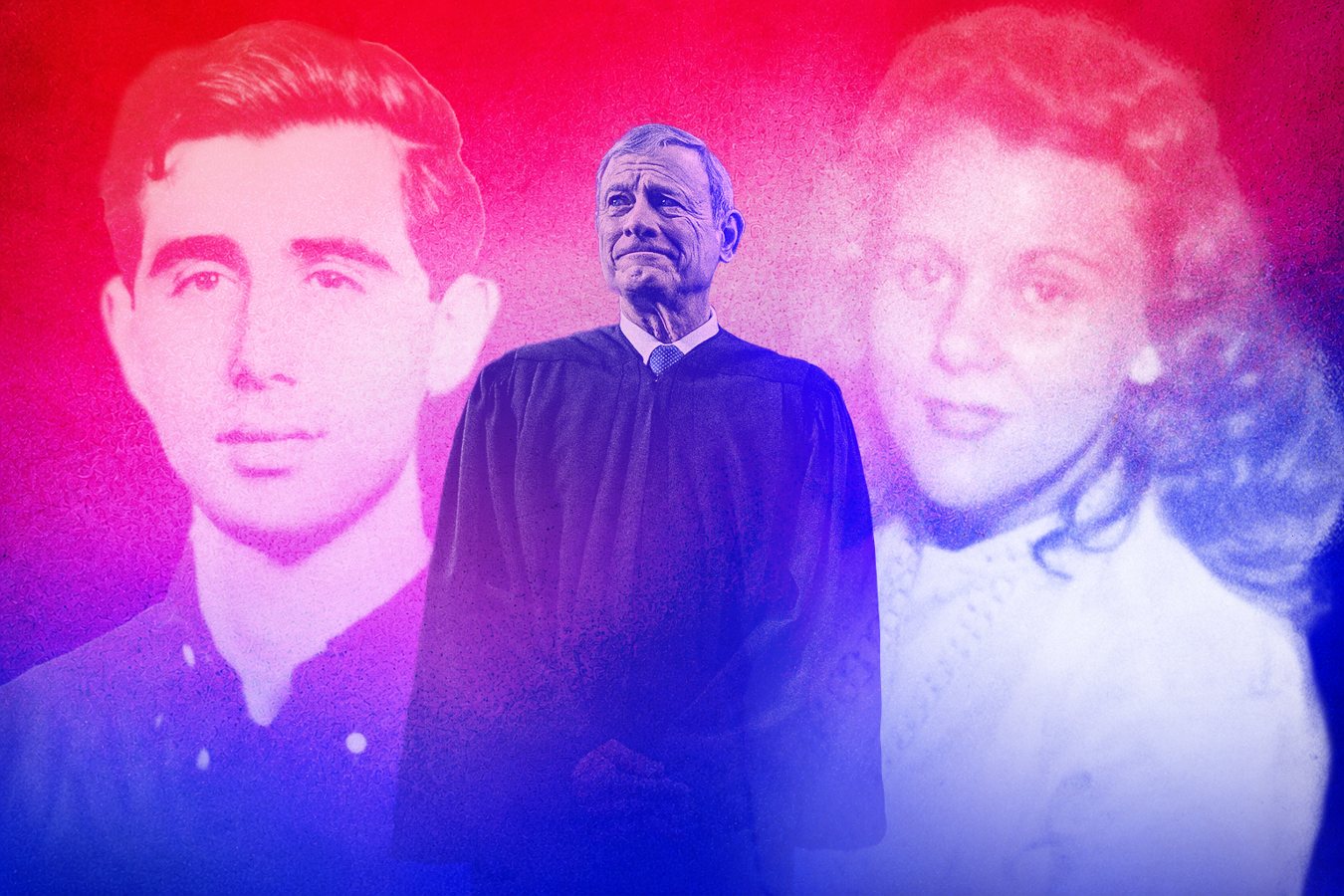
«My brother did not die so that this court could gut the very law his sacrifice helped create,» said a spokesperson for the Goodman family in a statement released ahead of oral arguments. «We urge the justices to remember that the Voting Rights Act was written in the blood of martyrs. To weaken it now would be an insult to everyone who fought and died for the right to vote.» The statement was accompanied by an image of Chief Justice John Roberts with the blurred faces of Goodman and another young civil rights worker in the background — a visual reminder of the human cost behind the legal debate.
The Supreme Court has a history of narrowing the Voting Rights Act. In 2013, the court’s decision in Shelby County v. Holder effectively struck down the coverage formula for Section 5, which required certain states and localities with a history of discrimination to obtain federal approval before changing voting laws. Since then, dozens of states have enacted restrictive voting measures. The current case targets Section 2, which remains the most powerful tool for challenging discriminatory voting practices on a case-by-case basis.
Legal analysts say the outcome could have far-reaching consequences. If the court adopts a stricter standard for proving discriminatory effect, it could become significantly harder for civil rights groups to challenge gerrymandered districts, voter purges, or laws requiring specific types of identification. Several lower courts have already signaled uncertainty about the correct legal test, adding urgency to the Supreme Court's review.
Civil rights organizations, including the NAACP Legal Defense Fund and the American Civil Liberties Union, have filed amicus briefs arguing that any weakening of Section 2 would undermine decades of progress. They point to recent instances in which the provision was used to block racially discriminatory measures, such as a Texas voter ID law that was found to disenfranchise Black and Latino voters. «The right to vote is the foundation of our democracy,» said a representative from the Leadership Conference on Civil and Human Rights. «If the court erodes that foundation, the damage will be felt for generations.»
The families of Goodman, Chaney, and Schwerner are not alone in their call. Descendants of other civil rights figures, including the family of Medgar Evers, have also spoken out. Evers, a Mississippi NAACP field secretary, was assassinated in 1963. His widow, Myrlie Evers, later testified before Congress in support of the Voting Rights Act. «My husband gave his life so that every American could vote,» she said in a recent interview. «I cannot stand by and watch the court dismantle his legacy.»
The Supreme Court is expected to issue its ruling by the end of the term. In the meantime, voting rights advocates are mobilizing public support. Rallies and letter-writing campaigns have been organized in several cities, and a coalition of religious leaders has called for a day of prayer for the justices to «uphold the moral law of equal access to the ballot.» For the families of those who died, the wait is agonizing. «We have given everything,» the Goodman family statement concluded. «Now we ask the court to give the country a chance to live up to its promise.»
99