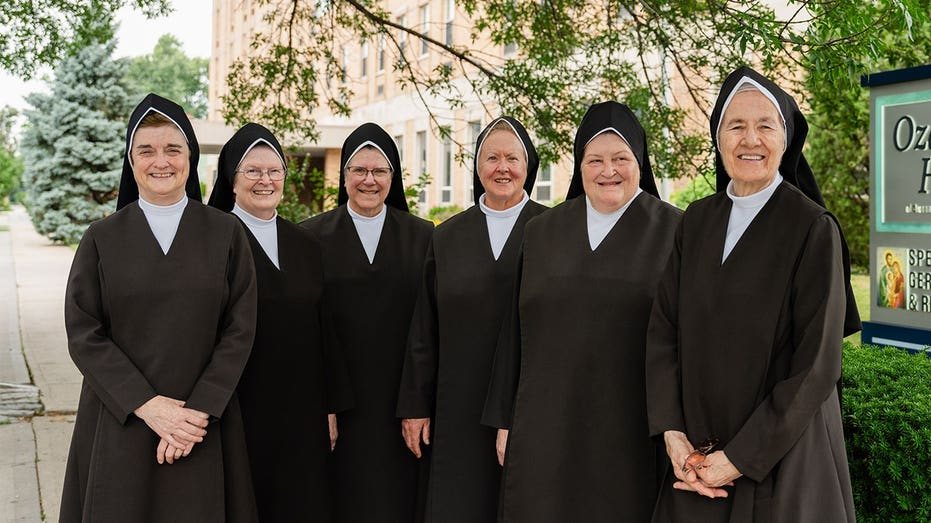
A coalition of Catholic nuns and religious healthcare providers has filed a federal lawsuit against New York, arguing that the state's recently enacted assisted suicide law compels them to violate their faith by participating in a practice they consider morally wrong. The lawsuit, filed Friday in federal court by more than 10 Catholic plaintiffs, challenges the Medical Aid in Dying Act, which was signed into law in February and allows terminally ill adults with six months or less to live to request and self-administer life-ending medication.
The plaintiffs include the Dominican Sisters of Hawthorne, the Carmelite Sisters for the Aged and Infirm, the Little Sisters of the Poor, the Diocese of Rockville Centre, and Catholic Health. They argue that the law forces religious healthcare providers to counsel patients about physician-assisted suicide, make referrals to participating providers, and, in some cases, accommodate assisted suicide in their facilities. According to the complaint, these requirements violate the First Amendment, federal healthcare protections, and longstanding Catholic teaching on the sanctity of human life.
«New York has put the Sisters to a stark choice: either abandon their religious beliefs regarding the sanctity of life or face significant fines and penalties,» the lawsuit states. «Through its euphemistically-named Medical Aid in Dying Act, which builds upon requirements in the Palliative Care Information Act, New York has conscripted even religious healthcare providers and institutions to participate in the provision of physician-assisted suicide.»
The law, supported by the advocacy group Compassion and Choices, is modeled on Oregon's long-standing assisted dying legislation. It permits individuals aged 18 and older who have been diagnosed with a terminal illness and given six months or less to live to request and self-administer life-ending medication if they are experiencing immense suffering. However, the plaintiffs argue that the law could compel religious organizations to facilitate assisted suicide by giving patients information about the practice, permitting staff to discuss it with terminally ill patients, and helping patients complete steps required to qualify for life-ending medication.
Additionally, the lawsuit contends that the law would require referrals to willing providers and prevent religious organizations from disciplining employees who provide such counseling or assistance in conflict with the institutions' religious beliefs. This, the plaintiffs say, undermines their ability to operate in accordance with their faith.
One of the plaintiffs, Rosary Hill Home, run by the Dominican Sisters of Hawthorne, has cared for roughly 45,000 low-income cancer patients in New York, providing free end-of-life care regardless of their faith or cultural background. Mother Marie Edward, O.P., Superior General of the Dominican Sisters of Hawthorne, said in a statement, «For over 125 years, we have ministered to the poor who are dying of cancer as if they were Christ Himself. Our calling is to offer comfort, prayer, and loving medical care to those in their final days—not death.» She added, «We pray the court will protect our freedom to remain faithful to that ministry God has entrusted to us.»
Mother Mary Rose Heery, O. Carm., prioress general of the Carmelite Sisters for the Aged and Infirm, echoed those sentiments, saying, «At our homes, we bring Christ’s unbounded love to elderly New Yorkers of every background and walk of life. We strive to bring His compassion to those entrusted to our care, ensuring that no resident ever has to die alone. This law strikes at the heart of that vocation.»
Mark Rienzi, president of Becket, the religious liberty law firm representing the Carmelite Sisters, the Dominican Sisters, the Benedictine Sisters, the Little Sisters of the Poor, as well as Bishop John O. Barres and the Diocese of Rockville Centre, said in a statement, «New York is forcing sick and dying people to consider suicide at their lowest moment, regardless of whether they ask for it or not. Worse, it’s conscripting the nuns who care for them into its suicide cult on pain of crushing fines and professional ruin. That is both unconscionable and unconstitutional. We’re confident the federal courts will put a stop to it.»
This is not the first legal challenge by the Dominican Sisters of Hawthorne against New York state policies. In April, the order sued Governor Kathy Hochul over a state law that they argued could force them to choose between their faith and their mission or face fines, loss of licensing, and even jail time. That lawsuit challenged the state's «Lesbian, gay, bisexual and transgender, and people living with HIV long-term care facility residents' bill of rights,» which the sisters said conflicted with their religious teachings.
Martin Nussbaum, general counsel for the Catholic Benefits Association, which is representing the Dominican Sisters of Hawthorne in the transgender bill of rights lawsuit, expressed support for the new legal action. «Just as in the Catholic Benefits Association case for the Dominican Sisters of Hawthorne, the State of New York is trampling on the religious liberty and speech rights of Catholic nuns providing selfless service to men and women on their final journey,» Nussbaum said.
Fox News Digital reached out to Hochul, New York Attorney General Letitia James, the Carmelite Sisters for the Aged and Infirm, the Little Sisters of the Poor, the Diocese of Rockville Centre, and Catholic Health for comment, but no responses have been reported as of publication. The lawsuit now heads to federal court, where the plaintiffs are seeking an injunction to prevent the enforcement of the assisted suicide law against religious healthcare providers.