WNBA Faces Backlash Over Mixed Messaging on Political Activism
Recent incidents involving player statements on transgender rights and media reactions have reignited debate over the WNBA's relationship with politics, as analysts call for a renewed focus on basketball.
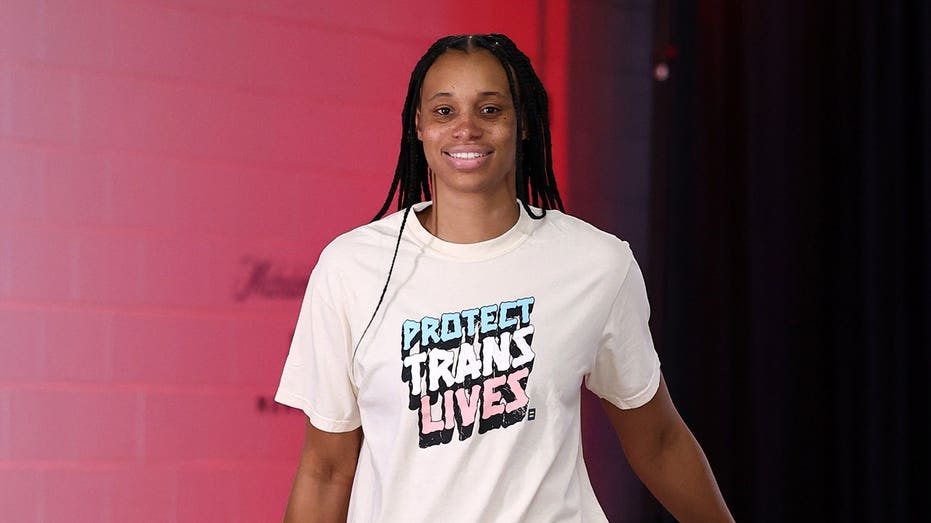
The WNBA is once again at the center of a debate over the role of political activism in professional sports after a series of recent incidents involving player statements and media reactions. On Tuesday night in Seattle, Storm center Stefanie Dolson arrived for a game against the Indiana Fever wearing a shirt that read "Trans rights are human rights." The Seattle Storm promoted the image on its official social media accounts, adding emojis to emphasize the message. This display came just one week after Fever guard Sophie Cunningham publicly stated her opposition to allowing biological males to compete in women's sports. Cunningham's comments had already prompted a demonstration outside the arena before the game, with activists rallying in support of women's sports.
Following the game, a credentialed member of the WNBA media attempted to question Fever coach Stephanie White about the pregame demonstration. The reporter described it as an "anti-trans rally" and asserted that Cunningham's remarks had "ignited right-wing and anti-trans supporters." An Indiana Fever public relations representative quickly intervened, clarifying that neither Cunningham nor the organization had any involvement with the protest and that the team was focused solely on winning basketball games. The spokesperson then asked if there were "any more basketball questions," effectively ending the political line of questioning.
This incident has revived a long-running discussion about the WNBA's relationship with political activism. Former WNBA star and current ESPN analyst Chiney Ogwumike recently addressed the issue on the network's flagship program, "First Take." Ogwumike argued that conversations surrounding the league and its players have moved far beyond the sport itself. She said it is time to "reset the conversation" and called on media outlets to recenter their coverage on the "beautiful basketball" being played during the league's 30th anniversary season. Ogwumike acknowledged that she has not "been perfect" in handling the current discourse.
Ogwumike's call for a return to basketball has been met with scrutiny given her history of supporting player activism. In 2020, she appeared on ESPN to defend athletes using their platforms to advance social and political causes, stating that it is "in our DNA." She also argued that "all lives cannot matter unless Black lives matter equally." The following year, she served as executive producer of ESPN's documentary "144," which celebrated the WNBA's activism during the 2020 season. Critics note that Ogwumike's current position appears to shift with the political winds, advocating for a focus on basketball only when the conversation does not align with her personal views. The WNBA itself has a long history of political engagement, from its support of LGBTQ+ rights to its prominent role in the social justice movements of 2020, when players wore warm-up shirts and spoke out on issues including racial justice and police brutality. The league's activism was widely covered by media outlets, including ESPN, which devoted significant airtime to these efforts.
Another controversy that has drawn attention involves Chicago Sky forward Angel Reese. During a game against the Atlanta Dream, Toronto Tempo head coach Sandy Brondello remarked that Reese was being treated like a "protected species" by game officials. Reese took the comment to social media, tagging Brondello, adding a clown emoji, and writing, "ARE WE SURPRISED?!" The remark quickly escalated into a national controversy, with Reese framing it as an issue of race and discrimination. Brondello later apologized for the choice of phrase, explaining that it is a common expression in her native Australia used to describe any player receiving favorable officiating. The WNBA subsequently suspended Brondello for one game.
The sequence of events highlights the challenge the WNBA faces in navigating a media landscape that often prizes political narratives over on-court performance. The league has historically embraced activism as part of its identity, but recent incidents suggest that some within the league and the media are now seeking to recalibrate that balance. Whether that represents a genuine shift or simply a selective application of the "stick to sports" mantra remains a matter of debate. Meanwhile, players continue to express their views on social issues, and the media continues to cover those expressions, ensuring that the intersection of sports and politics will remain a central topic in women's basketball.