Trump’s Mail-In Ballot Fight Leaves Campaigns Guessing Ahead of Midterms
As the first mail-in ballots for the midterms are set to go out, a federal legal battle over the Postal Service’s role in counting them has campaigns from both parties struggling to plan their turnout strategies.
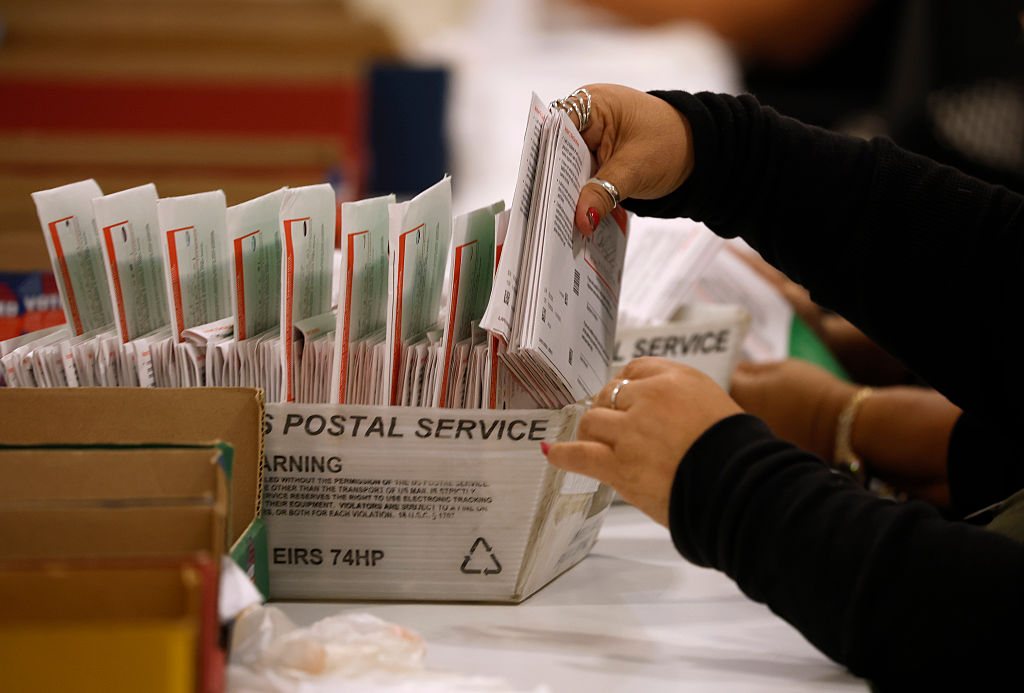
The first mail-in ballots for the midterm elections are set to be sent out this week, even as a federal legal fight raises questions about whether the Postal Service will deliver them in time to be counted. The uncertainty has left campaign operatives from both parties exasperated, with no clear answer on how to advise voters who are weighing whether to vote by mail, vote early in person, or wait until Election Day.
“We’re all flying blind,” said one Democratic campaign consultant. A Republican consultant echoed the sentiment, calling the situation “the 8 million-vote question.” The stakes are high: campaigns are planning millions of dollars in spending to boost turnout, and the possibility that some mail-in ballots could be ignored poses practical problems for those efforts.
At the center of the dispute is President Donald Trump, who has spent over a year pushing for the U.S. Postal Service to take on a new role in deciding which mail-in ballots get counted, using lists of citizens created by the Department of Homeland Security. Experts predict the process would likely lead to the disenfranchisement of many legitimate voters, most of whom are Democrats. Last week, the Supreme Court issued an emergency order that was a procedural and preliminary win for Trump’s plan, but other courts have blocked it on the merits, leaving the legal landscape in flux.
Some election experts downplay the urgency. “I’m annoyed, but not freaked out,” said Michael Waldman, president and CEO of the Brennan Center for Justice, a nonpartisan think tank. “The court’s ruling was a procedural one, with a great deal of legal back and forth to come. The executive order is still illegal and still unconstitutional.” Waldman added that for voters, nothing has changed so far, and that is unlikely to shift before Election Day.
Still, the uncertainty is a logistical headache for campaigns. Significant resources often go into encouraging voters to request a mail ballot, then reminding them to fill it out and return it. Campaigns must now decide whether to maintain those plans or redirect money to get-out-the-vote efforts at early-voting sites and on Election Day. There is no settled answer, leaving a messaging mess on the ground.
Democratic campaigns, in particular, are questioning whether focusing on banking votes via mailed ballots is too risky this cycle. Even if the Supreme Court ultimately strikes down Trump’s plan, anxiety over a last-minute upset targeting mail ballots could deter voters from mailing their ballots. “This is not an easy conversation,” said a long-time Democratic campaign adviser. “We are all operating on assumptions.”
Republican campaigns face a different challenge: pushing mail ballots too hard risks running afoul of Trump. In practice, GOP strategists in Washington are advising campaigns to run their races locally and tune out the national noise. “Why would we not go after every vote on every day we can?” asked a second GOP operative.
Mail-in voting rules vary by state, but their use has been growing. In 2024, 29% of votes were cast by mail, accounting for tens of millions of ballots. Democrats vote by mail more than Republicans, but as many as a quarter of Republicans also used the option in 2024. Trump has for years advanced debunked conspiracy theories that U.S. elections are rife with fraud, and he continues to insist he won the 2020 election, which he lost to Joe Biden. In 2024, GOP advisers convinced him that discouraging mail-in voting was self-sabotaging, but this year he has swung back, railing against mail ballots despite casting his own ballot that way in the Florida Republican primary.
The outlook around mail ballots is likely to remain muddled for at least a little while longer, but campaign managers do not have that kind of time to settle on their plans. The first mail-in ballots are due to be ready for North Carolina voters this Friday.
84