Trump and Cabinet Offer Conflicting Accounts of Ukraine Starshield Slowdown
Trump administration officials and Elon Musk are giving contradictory explanations for restrictions on Ukraine's Starshield satellite service, as Kyiv says the speed cap remains in place and a Senate inquiry is launched.
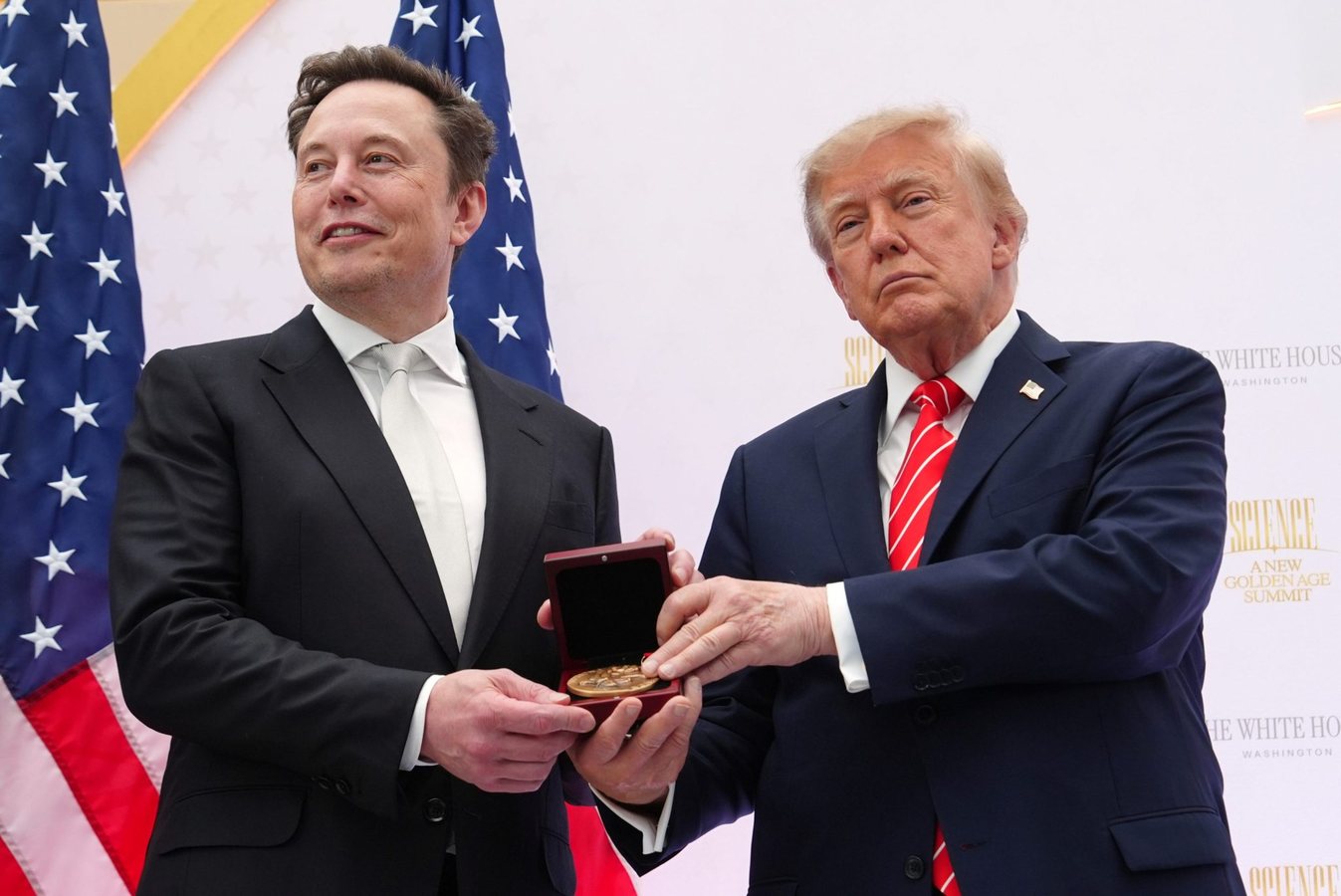
Senior Trump administration officials are offering sharply conflicting accounts of who ordered restrictions on Ukraine's access to Starshield, the military-grade satellite system that underpins Kyiv's drone operations and battlefield communications, leaving Ukrainian officials without a clear explanation and prompting a new congressional inquiry.
The limits, imposed last week, alarmed Ukraine's military and government. Commanders reported lost drones and disrupted missions after speeds were capped, and a senior European official familiar with conditions on the ground said the cap remained at roughly 160 kilometers per hour as of Thursday. President Donald Trump said Thursday that the service was running again at full speed, but Serhii «Flash» Beskrestnov, an adviser to President Volodymyr Zelenskyy, said Friday that restrictions were still in place. «We have not seen any indication that Starlink's restrictions have been lifted,» he wrote on social media, noting that isolated cases of slightly higher speeds were likely due to SpaceX algorithms or operating conditions rather than a policy change.
Trump has repeatedly denied ordering the restrictions. «Well, I don't know if it was anybody, but it wasn't me, and I don't think it was Elon,» he told reporters Friday, adding that «from what I understand, it's the same as it's always been.» Asked whether he had requested the cap be lifted, Trump was noncommittal: «You know, whether I called or whether somebody else called, doesn't make any difference. I guess the bottom line, he put it back.»
Vice President JD Vance, speaking in Cincinnati, suggested the White House had coordinated with SpaceX chief Elon Musk, framing the issue as a question of American policy rather than one man's decision. «I think that fundamentally, Elon Musk runs a private corporation,» Vance said. «And I think it's completely understandable that he doesn't want to get in the middle of what is a war between two state actors without the United States government effectively directing him on what to do.» He added that «I don't think this is about Elon.»
Secretary of State Marco Rubio and Defense Secretary Pete Hegseth have taken a different line, denying any administration role while pointing responsibility toward Musk's company. Speaking in India on Wednesday, Rubio said for the third time in four days that neither Trump nor anyone in the administration requested changes to the system. «The president has nothing to do with the decisions that are made by Starlink and Starshield and by Mr. Musk,» Rubio said. «That's a private company.» He suggested Musk himself may have been involved.
Hegseth echoed that denial on Tuesday. «We haven't pulled anything back,» he told reporters, before adding that «there are terms of service that ultimately need to be complied to» and that «Starlink has the option to make those decisions.» He did not specify which terms Ukraine was expected to meet.
Musk, one of the Republican Party's largest donors and a prominent Trump ally, placed the onus on the federal government, saying Starshield systems are owned and controlled by the U.S. government and that questions about the service should go to the Pentagon.
The lack of a clear answer has unsettled Ukraine's allies in Congress. Democratic Sen. Richard Blumenthal announced a new inquiry into how the technologies were slowed for Ukraine's defense systems. The episode has sent shock waves through Russia hawks on Capitol Hill, who have spent years treating Ukraine's satellite link as a critical counter to Moscow's attacks. For now, Ukrainian officials say they are still waiting for an official explanation of who ordered the restrictions and why.
10