The Atlantic: US still gives Ukraine targeting intelligence for strikes inside Russia
The report says American intelligence remains free to Ukraine and includes targeting packages for Russian forces and energy sites. Earlier Reuters reporting and a public Senate statement support the broader policy, while current operational details remain classified.
The United States continues to provide Ukraine with intelligence at no direct charge, including targeting packages for strikes against Russian military positions in Ukraine and energy infrastructure inside Russia, according to a report published Sunday by The Atlantic. The claim adds new detail to a policy that had already surfaced in public reporting and in a U.S. senator’s remarks, but the current operational scope remains classified.
The distinction matters. The Atlantic is not reporting that Washington publicly released a list of targets or acknowledged involvement in individual Ukrainian strikes. Rather, the magazine cites American and Ukrainian sources describing an ongoing intelligence relationship. Targeting packages can include information used to identify, verify and prioritize an objective, but the publication does not disclose the contents of any current package.
There is substantial prior context for the broader policy. Reuters reported in October 2025, citing two U.S. officials, that the United States would provide Ukraine with intelligence on long-range energy infrastructure targets in Russia. The report said the new data could make it easier to strike facilities such as refineries, pipelines and power plants. Washington had already been sharing intelligence with Kyiv, but the change expanded the focus on targets deeper inside Russia.
In February 2026, Republican Sen. Jerry Moran of Kansas described that expansion on the Senate floor. Moran said the United States had broadened intelligence sharing the previous October to help Ukraine target energy infrastructure deep inside Russia and had lifted range restrictions on certain weapons. His remarks did not reveal operational details, but they publicly confirmed the direction of policy reported months earlier.
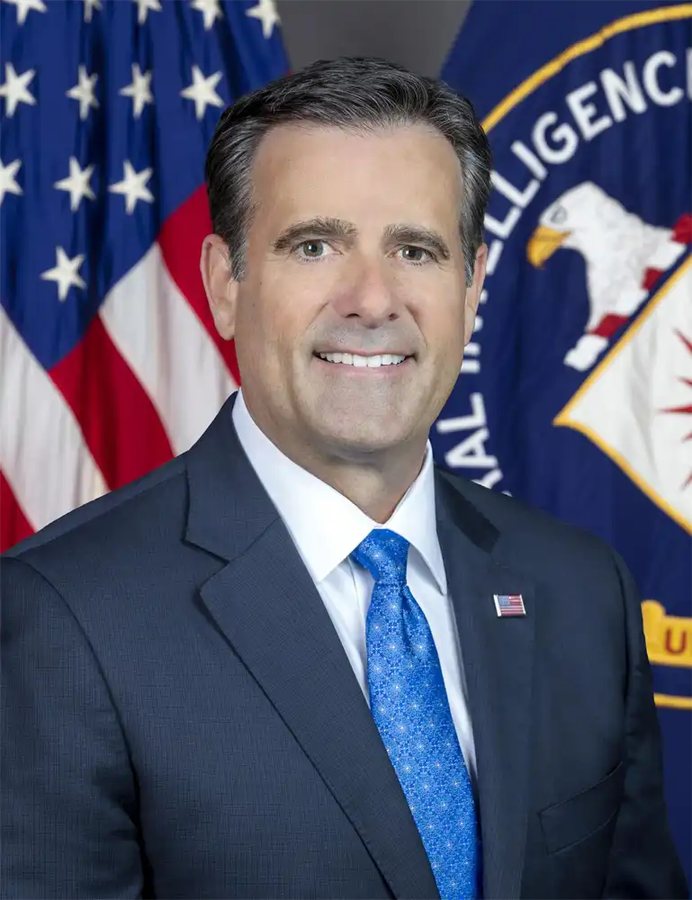
The Atlantic now assigns unusual personal importance to CIA Director John Ratcliffe, who has led the agency since January 2025. According to the magazine’s sources, Ratcliffe has helped preserve the policy by presenting President Donald Trump with data on Russian battlefield losses. The article includes an anecdote that Ratcliffe impresses Trump with such figures while the two are on the golf course. That private-scene detail is sourced reporting, not an independently verifiable public record, and should be treated accordingly.
The casualty figure in the article also requires precision. Ukraine’s General Staff estimated that Russian forces suffered 42,860 personnel losses in July, the highest monthly figure of 2026 and the first this year above 40,000. The estimate includes killed, wounded, missing and captured personnel; it is not a count of deaths alone. Based on the same Ukrainian statistics, the 2026 monthly average through July was closer to 34,000. The “over 40,000 a month” description therefore reflects the latest high month rather than the year’s average pace.
Ukraine’s long-range campaign is continuing. The Associated Press reported Aug. 6 that Ukrainian forces struck oil facilities in Russia’s Bashkortostan and Yaroslavl regions. Kyiv presents such attacks as part of an effort to undermine Russia’s wartime economy and impose costs on the infrastructure that supports its invasion. Russia, meanwhile, continues large-scale attacks on Ukrainian cities and energy systems, creating a wider conflict over infrastructure and endurance.
That economic logic does not settle the legal status of a target. The International Committee of the Red Cross states that energy infrastructure is, in principle, civilian. A specific facility may become a military objective only if it makes an effective contribution to military action and attacking it offers a definite military advantage in the circumstances. The ICRC also stresses that merely weakening an adversary’s economy is not enough by itself to make a civilian energy site a lawful target.
The legal issue is not abstract. A June report by the United Nations Human Rights Monitoring Mission in Ukraine documented systematic Russian attacks on Ukrainian power generation, transmission and heating during the 2025-26 winter and also recorded Ukrainian attacks on electricity and heating infrastructure in Russia’s Belgorod region. The mission said energy attacks during the period appeared to have violated fundamental principles of international humanitarian law. Each strike, however, must be assessed on its specific facts.
For U.S. politics, The Atlantic’s report illustrates a form of support that is less visible than a weapons package but potentially highly consequential. Intelligence can improve the value of weapons Ukraine already possesses by helping commanders choose targets more accurately. The public record supports the existence of expanded U.S. intelligence sharing for deep energy targets; what remains unconfirmed is the exact present-day menu of targeting support and the magazine’s account of Ratcliffe’s private influence on Trump.
81