Supreme Court Justices Signal Sympathy for Catholic Preschools Over Colorado Funding Rules
The Supreme Court's conservative majority appeared receptive Tuesday to Catholic preschools that say Colorado's public preschool funding program unconstitutionally excludes them over their policies on same-sex families.
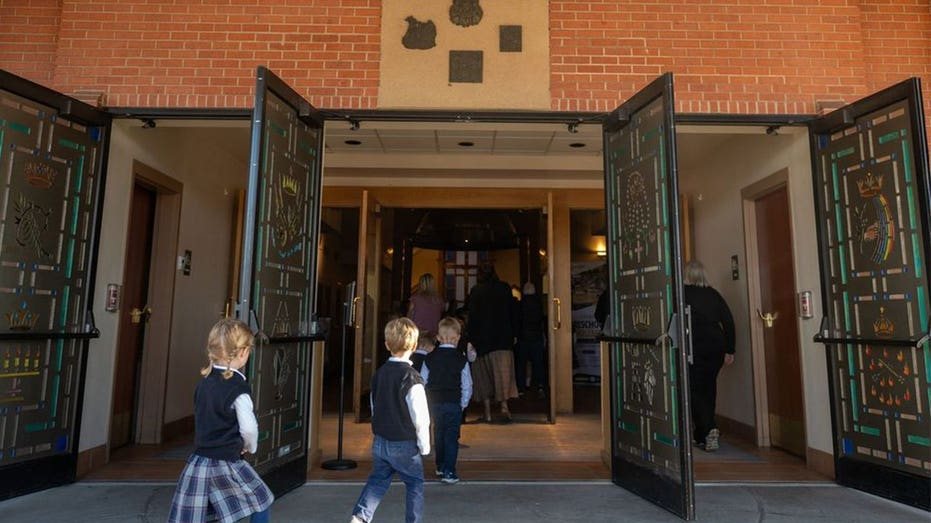
The Supreme Court's conservative majority signaled clear support on Tuesday for Catholic preschools that argue Colorado's taxpayer-funded preschool program unfairly shuts them out, in violation of their religious rights. The case centers on whether private schools that refuse admission to children of LGBTQ+ parents can be denied a generally available public benefit under state anti-discrimination law.
The case is the latest high-profile religious liberty dispute to reach the high court in recent years, several of which have originated in Colorado. During a lively two-hour oral argument, the justices weighed competing interests: the free exercise of religion on one side, and the state's interest in ensuring equal opportunity for gay and lesbian parents on the other.
Justice Sonia Sotomayor pressed the lawyer for the plaintiffs on the core of the request. "I'm hard-pressed to think that, given those [Catholic] teachings, that any homosexual family is going to choose to go to one of these schools, but that should be their choice, not your choice to exclude them," she said. She added that the plaintiffs were asking the state to subsidize them with public money while they reserved the right to reject certain children.
Justice Brett Kavanaugh took a different view, arguing that the state's intentions, however well-intentioned, were promoting a kind of conformity the Constitution does not allow. He asked the attorney for the state why it had not pursued a solution that would respect both sides. "Why not seek the win/win?" Kavanaugh asked, pointing to roughly 2,000 schools in Colorado where LGBT parents could find an appropriate fit. "It seems like this is a would-be solution in search of a problem that is unnecessary to create this clash," he said.
The dispute traces back to a 2020 ballot measure that created Colorado's Universal Preschool Program. The program distributes public funds to participating schools on the condition that they "provide eligible children an equal opportunity to enroll and receive preschool services regardless of race, ethnicity, religious affiliation, sexual orientation, gender identity, lack of housing, income level, or disability." The state provides a benefit of $6,300 per child per year for up to 15 hours of preschool weekly, funded through a tobacco tax.
Two Catholic parishes sued, arguing the policy targets their sincerely held beliefs about same-sex marriage. The archdiocese in the state operates 34 preschools and admits only students from families who support Catholic teaching, including on same-sex relationships and gender identity. The plaintiffs are seeking exemptions from the Colorado requirements, arguing that their exclusion amounts to religious discrimination in violation of the First Amendment. The Trump administration has signaled its support for the religious plaintiffs.
The state counters that its conditions are neutral and applied generally to every preschool. Officials told the nine-member bench that religious schools are free to participate but must follow nondiscrimination laws, the same rules that apply to programs serving low-income and disabled students.
The justices are also weighing whether to narrow a 36-year-old precedent holding that religious practices do not create exemptions from broadly applicable laws. The First Amendment states that Congress "shall make no law respecting an establishment of religion, or prohibiting the free exercise thereof." Earlier Supreme Court decisions focused largely on the establishment clause and the separation of church and state. In recent years, however, the current conservative bench, led by Justice Samuel Alito, has tended to favor religious institutions raising free exercise claims. The court has separately sided with a Colorado baker, a mental health counselor and a website developer who challenged the state's anti-discrimination policies.
The arguments appeared to divide along ideological lines. Justice Amy Coney Barrett questioned the difference between explicitly excluding Catholic schools and imposing a condition the schools know they cannot accept. Justice Elena Kagan countered by citing the court's prior cases, which she said established that religious institutions cannot be treated differently. "The principle at issue here is: Do you have to treat them better?" Kagan said.
Chief Justice John Roberts questioned both sides and may prove decisive. He expressed skepticism that recent rulings favoring religious schools should control here, noting that the laws in those cases expressly discriminated against religious schools on their face. "That's not the case here," Roberts said, suggesting Colorado's law may apply fairly across the board. The plaintiffs include St. Mary Catholic School, whose families have been directly affected by the funding rules.
Source: foxnews.com
5