Socialist mayors now lead four of the nation's largest cities after Tuesday's elections
Democratic Socialists of America members won mayoral races in Los Angeles, Washington, D.C., and Seattle, joining New York in leading four of the 20 largest U.S. cities, a shift that could affect roughly 44 million people in their metro areas.
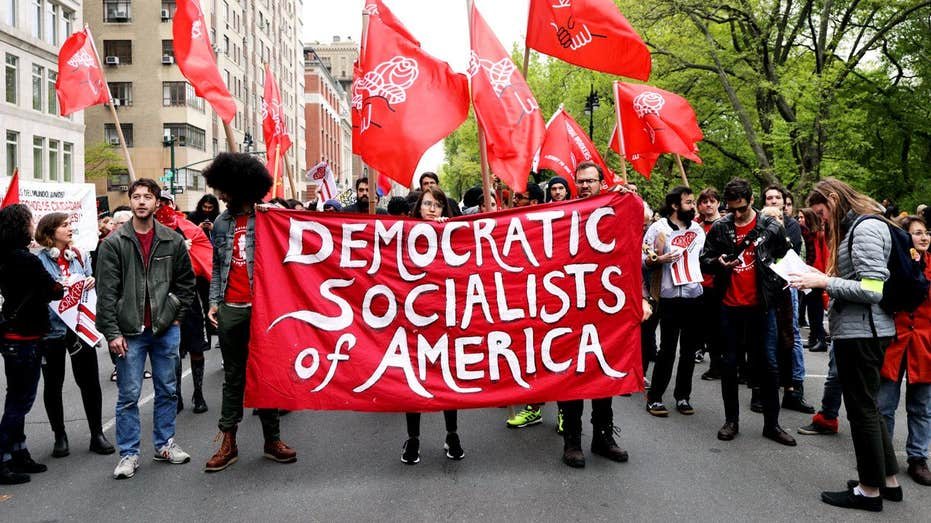
Four of the 20 largest cities in the United States are now led by socialist mayors following Tuesday's elections, a shift that could reach tens of millions of residents across the cities' surrounding metropolitan areas. Democratic Socialists of America member Nithya Raman defeated incumbent Karen Bass in Los Angeles, and fellow DSA member Janeese Lewis George won the mayoralty of Washington, D.C. Seattle Mayor Katie Wilson and New York City Mayor Zohran Mamdani complete the group.
Raman will take office in December, when she will lead a city of about 4 million residents. Washington, D.C., has roughly 700,000 residents. Taken together, the four cities hold about 14 million people, and including their metro areas, the total population potentially affected rises to roughly 44 million. Commentators have noted that effects could spill over into suburban communities through crime rates, real estate markets and the local business climate.
The mayoral results come alongside wider gains for the movement at the congressional level. Seven DSA-backed or affiliated candidates won House seats, including candidates in New York, Pennsylvania, Colorado, Michigan and California. Heritage Foundation fellow Mike Gonzalez framed the Los Angeles outcome as the fourth large city now led by socialists.
Public opinion on the economic labels is mixed. A Fox News poll found 32 percent of voters viewed socialism favorably and 64 percent unfavorably, a favorable rating that matches the highest the network has recorded since its polling on the question began in 2019. A Gallup poll from September put the positive image of socialism at 43 percent, its highest level since 2010. The same Fox poll found 51 percent viewed capitalism favorably and 46 percent unfavorably.
Local fights over development are also drawing attention. In Harwood, North Dakota, a town of about 940 people 10 miles from Fargo, voters rejected a measure that would have limited large industrial developments. About 75 percent of the 430 votes cast opposed the measure, which would have required independent reviews and public hearings for industrial projects. According to Redbud Consulting, Harwood's result was the only pro-data-center outcome among 45 data center ballot measures nationwide.
The measure grew out of a 160-acre data center overseen by Applied Digital, with Oracle as the end user. The project could expand to 900 acres and is scheduled to become operational next year. Residents said they learned of the construction about three weeks before it began in September 2025. The mayors of Harwood and Fargo reportedly signed nondisclosure agreements with Applied Digital.
Opponents of the project cited added costs of $300,000 to $544,000 and lost tax benefits, while Harwood Mayor Hankey projected $1.65 million in taxes by 2028. Residents continue to raise concerns about noise near an elementary school and the unvetted long-term effects of the facility. Analysts suggested the opposition was likely driven by affordability worries and fear of losing tax revenue. A Pew survey found that half of Americans expect data centers to raise their energy costs.
Source: foxnews.com
16