Russia’s election field narrows as old posts become ballot bans
At least 21 politicians were documented as barred after “extremist symbols” cases, while Yabloko’s federal list remains registered for September.
Russia’s September parliamentary election is increasingly being shaped before voters reach the polls. A growing number of would-be candidates have been removed from the race through administrative cases over online material that courts classify as “extremist symbols.” In many of the documented cases, the punishment itself is tiny. The political consequence is not: a fine can trigger a one-year ban on running for office.
Novaya Gazeta Europe counted at least 21 politicians affected by such cases as of July 20, according to Meduza. Fourteen were members of the liberal Yabloko party, four belonged to the Communist Party, one represented A Just Russia, and two were independents. The Telegraph reported on August 8 that the total had reached at least 23. We could not independently verify that updated number, so the clearest confirmed baseline remains 21.
Most of those cases grew out of digital material connected to Alexey Navalny: photographs of the late opposition leader, imagery linked to his organizations, or footage from his funeral. In 18 of the 21 documented cases, the fines ranged from just 1,000 to 2,000 rubles. Under Russian election rules, however, a finding under the relevant administrative statute can prevent a politician from standing for a year. The sanction therefore lands not on a bank account but on access to the ballot.
Yabloko chairman Nikolai Rybakov is the highest-profile example. He was fined 1,500 rubles over a social-media condolence post after Navalny’s death. A court said the post displayed prohibited symbols. Rybakov appealed through the judicial system, but on July 28 Russia’s Supreme Court left the ruling in place, keeping him off the ballot for the current election cycle.
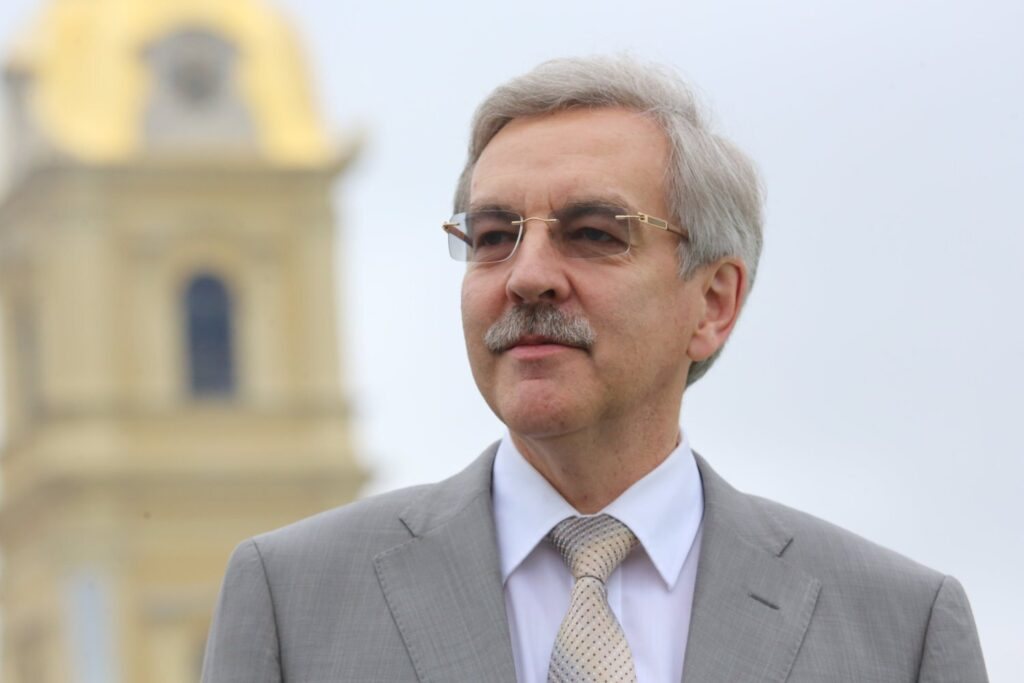
Alexander Shishlov, a senior Yabloko figure in St. Petersburg, faced a similar outcome. His case stemmed from a Telegram repost of an interview published in 2023. The St. Petersburg City Court rejected his appeal on July 15, leaving a 1,500-ruble fine and the resulting electoral ban intact. Yabloko says at least 13 of its members have been held administratively liable under the same “extremist symbols” provision.
The pressure extends far beyond small fines. In June, a Moscow court sentenced Yabloko deputy chairman Maksim Kruglov to seven years in a penal colony over two social-media posts about civilian deaths in Ukraine. Amnesty International described the sentence as punishment for antiwar expression and part of a wider campaign against Yabloko ahead of the Duma election. The Times reported in July that eight Yabloko members were behind bars on cases it characterized as politically motivated.
Independent politician Boris Nadezhdin offers another example of how multiple legal tools can converge. Russian authorities designated him a “foreign agent” in July and later fined him 1,000 rubles after he shared a link to a video that included a photograph of Navalny. Both the designation and the administrative ruling blocked his path to the State Duma race.
One important correction is necessary. Yabloko as a party has not been removed from the federal election. Russia’s Central Election Commission unanimously registered its federal list on July 29, with 269 candidates remaining. The Supreme Court case that has been verified concerned Rybakov personally, not a lawsuit to strike the entire party from the State Duma ballot. Separate disputes exist at the regional level, including the refusal to register Yabloko’s list for the St. Petersburg legislature.
That distinction reveals how the system works. A party can remain formally legal and present on the ballot while recognizable leaders, regional lawmakers, and independent figures are filtered out one by one. The outward structure of multiparty competition survives, but the range of people capable of mounting a visible campaign becomes narrower.
The Telegraph links the escalation to Kremlin concerns about protest voting amid the war and economic strain. Meduza has separately reported that officials in the presidential administration and United Russia are worried about the unpredictability of public sentiment ahead of the vote. Those reports describe possible political motives; they do not prove that every individual case was ordered from the same center.
What is verifiable is the effect. Before the September 20 election is decided by voters, courts, administrative statutes, and government registries have already decided that a growing group of politicians will not be allowed to compete. In an election environment where the ruling party enters with overwhelming institutional advantages, those pre-ballot decisions may matter as much as the campaign itself.
68