Physician argues both parties mishandle Islamism and Muslim identity in scrutiny of Abdul El-Sayed
A Muslim physician writing in a Fox News opinion piece argues that Democrats and Republicans alike fail to separate legitimate scrutiny of Islamist groups from prejudice against Muslims, using Michigan Democrat Abdul El-Sayed as the central example.
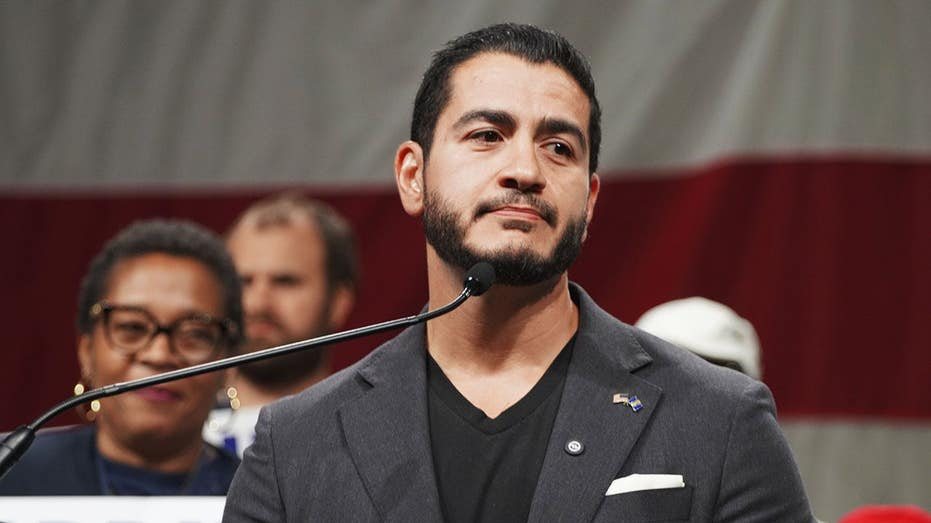
A Muslim physician writing in a Fox News opinion column argues that American politicians of both parties mishandle the question of Islamism and Muslim identity, and that the debate over Abdul El-Sayed, the Michigan Democrat who will become the country's first Muslim senator, shows the problem clearly. The author contends that legitimate concern about Islamist political movements is too often blurred with suspicion of Muslims as a group, and that scrutiny of any candidate should rest on verifiable evidence rather than on religion or insinuation.
The column focuses on El-Sayed's record and public statements. According to the piece, El-Sayed has denied family ties to the Muslim Brotherhood and has mocked critics who raised the issue. The author also points to a 2012 column in which El-Sayed wrote about Mohamed Morsi and the Brotherhood, and to an appearance at an Arab America Foundation event where a crowd chanted « from the river to the sea », a slogan whose meaning remains disputed. The piece further notes that El-Sayed appeared on a program hosted by Hasan Piker and later distanced himself from that appearance.
The opinion piece says that harsh criticism of El-Sayed came from prominent national figures. Senator JD Vance and President Donald Trump were cited as having attacked him sharply, and Representative Nancy Mace was described as having questioned whether Muslims are fit for public office. The author treats those remarks as an example of the problem: a politically useful attack that moves from a candidate's record to his faith.
To support the broader argument, the column cites a 2025 report by the French government on Islamist « entryism », a term used to describe efforts by Islamist movements to gain influence within public institutions and civil society. The author uses the report to argue that concern about organized political Islam is not inherently bigotry, while insisting that such concern must be tied to specific, documented conduct.
The column also raises an unrelated security matter. It refers to an attack at Temple Israel in Michigan and to a remark by El-Sayed, « hurt people hurt people », that the author describes as disputed in how it has been interpreted. Separately, CNN questioned Representative-elect Adam Hamawy about Iran, a line of questioning the piece cites as another example of scrutiny directed at Muslim officials.
Several points remain unresolved. The column does not establish whether El-Sayed's views on the Muslim Brotherhood have changed over time, whether family charitable activity has any substantiated links to Islamist groups, or what the « river to the sea » chant was intended to mean. The author's central claim is that both parties should judge Muslim candidates by the same standards applied to everyone else, and that accusations should be backed by evidence rather than by assumptions about faith.
Source: foxnews.com
12