Michigan Senate Democratic Debate Highlights Intraparty Clashes Over AIPAC Funding and Rhetoric
In a fiery debate, Michigan Democratic Senate candidates Rep. Haley Stevens and Dr. Abdul El-Sayed sparred over campaign finance, foreign policy, and electability a week before the Aug. 4 primary.
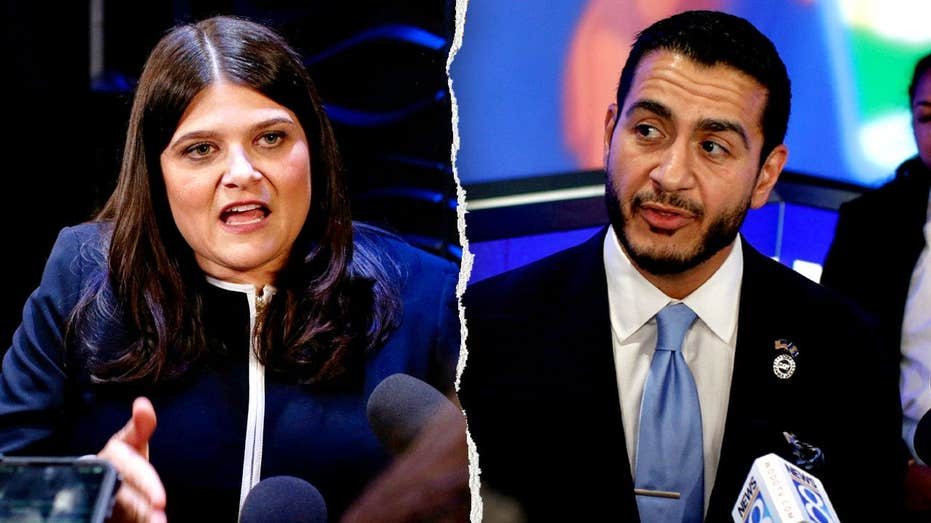
The battle between the Democratic Party's left and establishment wings intensified Monday night during a heated Michigan Senate debate, as Rep. Haley Stevens and Dr. Abdul El-Sayed traded sharp attacks over campaign funding, foreign policy, and electability just one week before the state's Aug. 4 primary. The winner will face former Republican Rep. Mike Rogers in the November general election for the open Senate seat.
El-Sayed, a former Detroit health department director, faced repeated questions about his recent remark that he wanted to «put one ogre on a pike» to send a message to other Democrats. He clarified that the comment was directed at Pennsylvania Sen. John Fetterman, not Stevens, but declined to apologize for the metaphor. «I was referring to a guy named John Fetterman,» El-Sayed said, accusing the Pennsylvania Democrat of abandoning his principles once elected. Stevens responded dryly, «Thank you for clarifying that you didn't call me an ogre.» The remark had drawn criticism from within the party, with Rep. Hillary Scholten calling it a «violent, vulgar» threat.
A central flashpoint was the massive outside spending in the race. The moderator noted more than $46 million in spending by groups affiliated with the American Israel Public Affairs Committee supporting Stevens. El-Sayed argued that such spending revealed a fundamental difference between the candidates, claiming Stevens would be a reliable vote for AIPAC's agenda. He tied the funding to Stevens' vote for additional aid to Israel, accusing the Israeli government of undermining Palestinian self-determination. «I want your tax dollars spent in Michigan to provide schools, health care, and roads,» El-Sayed said, adding that money sent overseas to «kill kids and women» was a misuse of funds.
Stevens defended her record, stating that she supports a two-state solution and that outside groups do not influence her votes. She countered by questioning El-Sayed's financial transparency, accusing him of refusing to release his full tax returns while earning approximately $300,000 in outside income from podcasting and other ventures. «You talk about getting money out of politics, but you haven't disclosed your own income,» Stevens charged. She also noted that El-Sayed benefited from a super PAC partly funded by his father-in-law.
The debate also touched on El-Sayed's political identity. He rejected the «socialist» label, describing himself as «just a capitalist who understands how capitalism works.» Stevens portrayed El-Sayed as a risky general-election candidate whose rhetoric and national political ambitions could hurt Democrats in Michigan, a key swing state. A recent poll indicated that the candidate backed by Senate Majority Leader Chuck Schumer — Stevens — dominates with critical voting blocs, raising concerns for the party's left flank.
The primary is seen as a proxy fight between the progressive and moderate wings of the Democratic Party, with implications for the party's direction nationally. Both candidates made their final pitches to voters, emphasizing their ability to defeat Rogers and hold the Senate seat once held by Democrat Debbie Stabenow.
94