Maine Senate candidate Graham Platner faces sexual assault allegation as deadline nears
Democratic Maine Senate candidate Graham Platner is facing a sexual assault allegation from a former acquaintance, adding to a series of controversies as a key deadline approaches for potential replacement on the ballot.
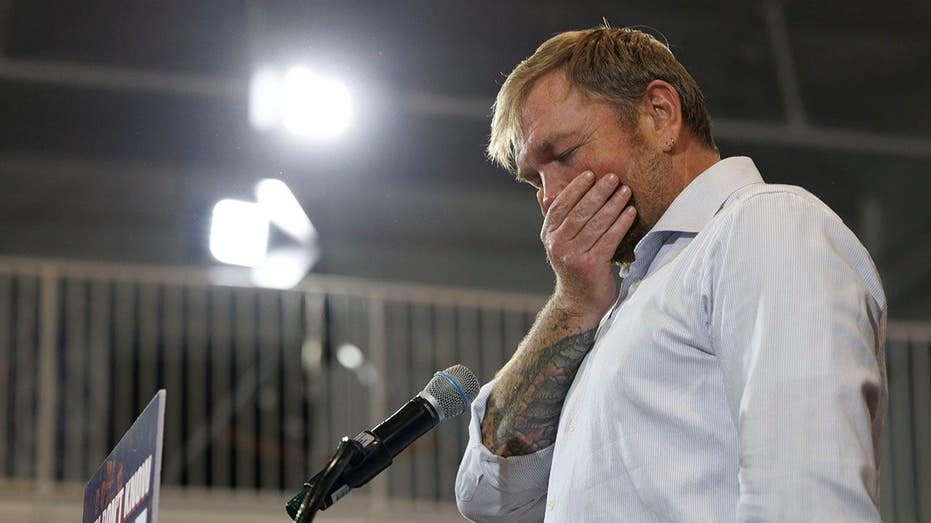
Democratic Maine Senate candidate Graham Platner is facing a new sexual assault allegation, further complicating his campaign as a critical deadline approaches that could determine whether he can be replaced on the November ballot. The allegation, reported by Politico on Monday, comes from Maine resident Jenny Racicot, who claims Platner forced her to have sex against her will five years ago.
Racicot, 41, told Politico over three interviews that the incident occurred while Platner was «almost blackout drunk.» She described a moment when she felt the encounter was no longer consensual. «I remember him grabbing my pelvis and being really forceful of me,» she said. «I remember the specific moment where I thought to myself, like, ‘This is no longer my choice.’» The report also noted that a man Racicot dated afterward confirmed she had told him about the incident, and emails between Racicot and her therapist corroborated her account.
Platner denied the allegation in a statement to Politico, calling it «troubling, serious, and false.» He added that «any accusation of non-consensual behavior is categorically untrue.» In a video posted on X shortly after the story broke, Platner reiterated that the allegations were false and said he planned to «reflect» on the best path forward for his campaign.
The new allegation adds to a growing list of controversies that have dogged Platner since he launched his bid for the U.S. Senate seat currently held by Republican Senator Susan Collins. Previous reports have detailed allegations of infidelity, physical abuse from an ex-girlfriend, a Nazi-linked tattoo, disparaging comments about the military, and a history of inflammatory posts on a deleted Reddit account where he referred to himself as a «communist.» Despite these issues, Platner has held a polling lead over Collins, though a recent Fox News Poll showed that only 44% of respondents believed he has «good character,» while 47% said he is «too extreme» for the state.
The timing of the sexual assault allegation is particularly significant because of a key deadline in Maine election law. Under state rules, if Platner formally withdraws as the Democratic nominee by 5 p.m. on July 13, the Maine Democratic Party can replace him on the general election ballot by selecting a new nominee through its party process, with the replacement required to be chosen by July 27. If he remains the nominee past that deadline, the party generally loses its ability to substitute another candidate through the normal replacement process, except in limited circumstances defined under state law.
Speculation about Platner’s future had already been swirling over the weekend after several of his campaign events were canceled without explanation. Multiple events scheduled for the Fourth of July holiday weekend were called off, with one organizer saying Platner was «not feeling well.» Conservative outlets and pundits seized on the cancellations, with the Maine Wire news outlet posting on X that «Graham Platner cancels MULTIPLE scheduled town hall events as progressive allies tease another scandal is about to hit his campaign.» The National Republican Senatorial Committee also weighed in, posting that «Graham Platner no-showed Fourth of July celebrations across Maine. Now, he's canceling everything else.»
Online prediction markets reflected the uncertainty, with users on Polymarket betting that Platner would drop out before the midterms. A post from the Washington Reporter claimed that «a well-placed source told us that Graham Platner is dropping out of the Maine Senate race this week,» though the campaign has not confirmed any such decision.
Racicot told Politico that she came forward now because of the «huge moral conflict» she felt between supporting Platner’s politics and not supporting him «as a person.» She said, «I just want the truth out there. I just want people to have a whole scope of who he is as a person.»
The Platner campaign did not respond to requests for comment from Fox News Digital. As the July 13 deadline approaches, the Maine Democratic Party faces a difficult decision about whether to stand by its nominee or seek a replacement in a race that could determine control of the U.S. Senate.
101