Iceland Summons U.S. Ambassador Over Trump’s Flag Map
A Truth Social image showing Iceland, Canada, Greenland and other territories under U.S. symbolism has triggered a formal diplomatic protest from Reykjavik.
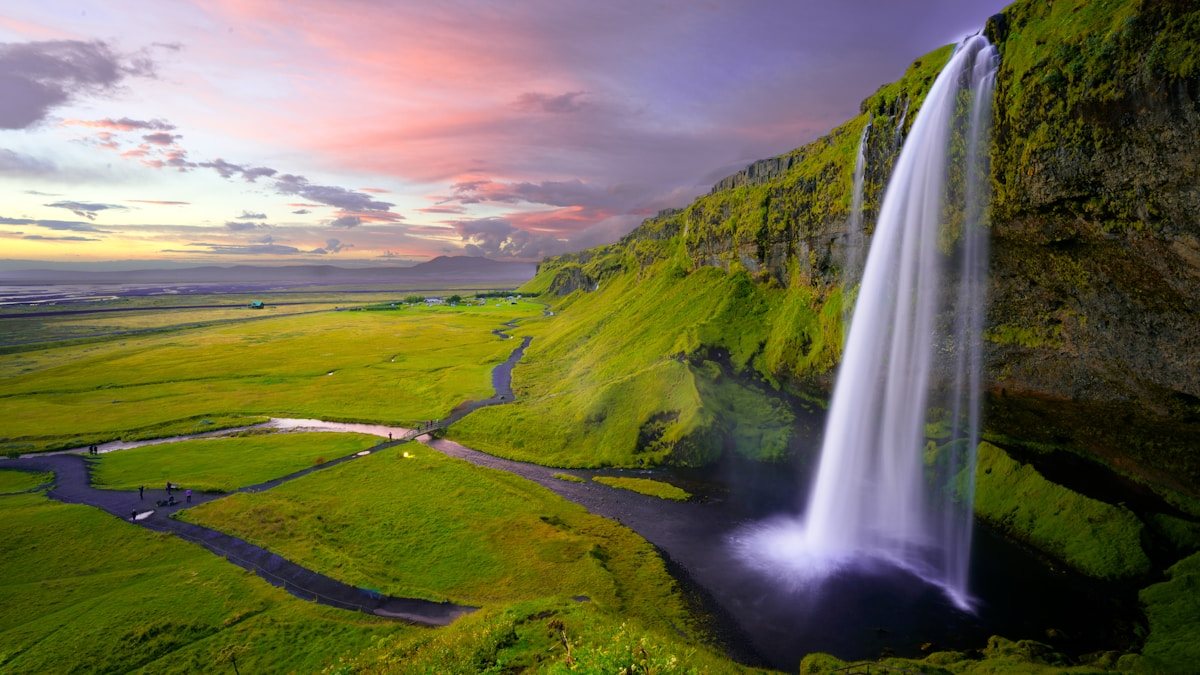
Iceland has summoned the U.S. ambassador after President Donald Trump posted a map on Truth Social depicting Iceland and several other countries and territories under American flag imagery, turning a social-media post into a formal diplomatic dispute with a NATO ally.
The image, posted September 7 without an accompanying explanation, showed the United States alongside Canada, Greenland, Iceland, Mexico, Central America and parts of the Caribbean covered by U.S. symbolism and labeled as the United States of America. The post was not an official territorial proposal, but officials in Reykjavik made clear they did not regard it as harmless political artwork.
Iceland called in U.S. Ambassador Billy Long. Foreign Minister Þorgerður Katrín Gunnarsdóttir described the image as completely inappropriate, while Prime Minister Kristrún Frostadóttir called it unacceptable and an insult to Icelandic sovereignty. The reaction gives the post a consequence beyond online outrage: an allied government has demanded an explanation through diplomatic channels.
The context makes the map more sensitive than a typical provocative meme. Trump has repeatedly spoken about Canada as a potential 51st state and has revived U.S. interest in acquiring Greenland, an autonomous territory within the Kingdom of Denmark. Those earlier statements mean that a map placing multiple North Atlantic territories under American symbols arrives with a record of real political rhetoric behind it.
For the United States, the immediate cost is diplomatic distraction. Iceland is a small country but occupies a strategically important position in the North Atlantic and is a NATO member. Greenland is central to Arctic security and already hosts a U.S. military presence. Treating the sovereignty of partners as material for ambiguous territorial imagery can complicate cooperation precisely where Washington seeks stronger coordination on security.
The episode also illustrates how presidential communication can blur the boundary between personal posting and state signal. A map on a social platform can be dismissed domestically as provocation or humor, yet foreign governments must decide whether it reflects an intention, tests a political reaction or simply disregards their sovereignty.
The White House may ultimately characterize the image in a way that lowers the temperature. That would not erase the fact that Iceland has already taken the formal step of summoning the ambassador. For now, the diplomatic message from Reykjavik is unambiguous even if the original post was not: Iceland does not accept being portrayed as part of the United States.
81