House Republicans seize on Democratic primary battles as midterm campaign weapon
House Republicans are leveraging recent far-left Democratic primary victories in New York as evidence of a party shift to the left, aiming to sway swing-district voters in the 2026 midterm elections.
House Republicans are preparing to use the deepening ideological divide within the Democratic Party as a central campaign theme in the 2026 midterm elections, arguing that recent primary victories by far-left candidates in New York signal a radical shift that will alienate moderate voters. The battle for control of the House is expected to be decided in a handful of competitive districts, including several in the New York City suburbs, where Republican incumbents and challengers are already framing their Democratic opponents as aligned with a socialist agenda.
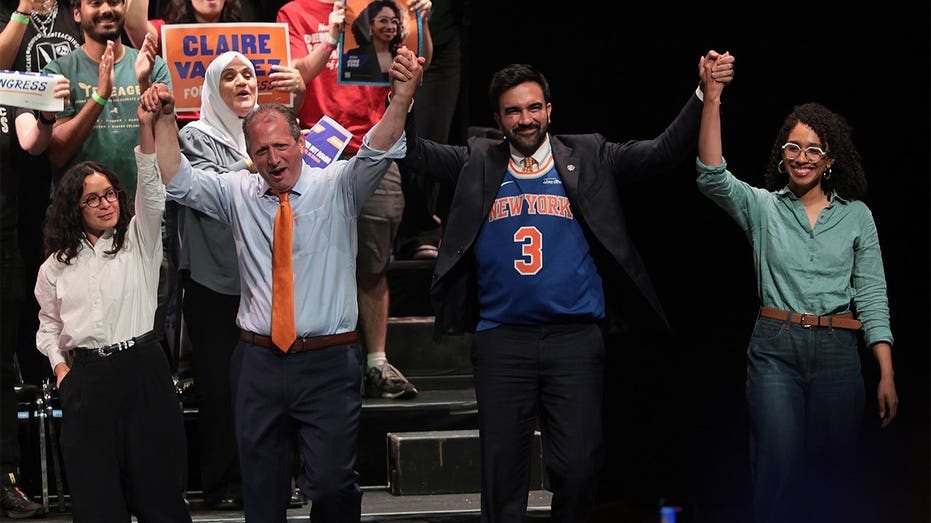
In recent weeks, three candidates backed by the Democratic Socialists of America and allied groups defeated more moderate, establishment-backed rivals in primary contests that drew national attention. Two of the winners are running for Congress, while the third is seeking a state legislative seat. Republican Representative Mike Lawler, who represents New York's 17th Congressional District in the northern suburbs, described the results as evidence that the Democratic Party is moving further left. «Democrats have gone further and further and further to the left with no end in sight,» Lawler said in an interview. He argued that the influence of New York City Mayor Zohran Mamdani, a socialist who has endorsed several of the winning candidates, is reshaping the party's identity.
Lawler's Democratic opponent in the general election, Cait Conley, is not directly backed by the DSA or other far-left groups. However, Lawler contended that her policy positions align with the progressive wing. «The fact is that she agrees with them from a policy standpoint, even if she doesn't couch herself in the same title of socialist,» he said. Conley, a West Point graduate and military combat veteran who earned three Bronze Stars during deployments to Afghanistan and Iraq, pushed back against the characterization. She described Lawler as a political insider more focused on reelection than solving problems. «Voters are sick of political insiders, politicians, political operatives who care more about their next reelection than they do solving the actual problems,» Conley said.
The race in NY-17 is one of roughly two to three dozen contests nationwide that will determine whether Republicans retain their narrow House majority. Two other competitive Long Island districts, NY-3 and NY-4, are also expected to be battlegrounds. In NY-4, Republican nominee Jeanine Driscoll, the receiver of taxes in the town of Hempstead, is challenging Democratic Representative Laura Gillen. Driscoll said the recent primary results in neighboring New York City would resonate with voters in her district. «Bringing in three ultra left wing people who are proclaiming themselves to be socialists, really communists, is going to wake people up,» Driscoll said. In NY-3, Republican nominee Mike LePetri is facing Democratic Representative Tom Suozzi, who narrowly defeated LePetri in 2024. LePetri said voters on Long Island and in northeast Queens are concerned about the direction of the Democratic Party.
Suozzi and Gillen are among a group of moderate House Democrats who earlier this year launched the «Promise to America,» a centrist pledge that rejects socialism, supports secure borders, and promotes fiscal responsibility. Suozzi described himself as a «new kind of old-fashioned Democrat» who believes in capitalism and traditional values. «We're for capitalism, not socialism. We're for safety, not lawlessness. We're proud of America, not ashamed of America,» Suozzi said in a recent interview. The pledge reflects an effort by centrist Democrats to distance themselves from the party's progressive wing ahead of the midterms.
Democratic Congressional Campaign Committee Chair Suzan DelBene dismissed Republican attacks as «desperate» and argued that the midterms will be a referendum on economic issues. «The midterms will ultimately be a referendum on who is going to lower costs and help improve the lives of everyday Americans — which House Republicans have failed spectacularly to do,» DelBene said. She accused Republicans of resorting to «baseless spin» that falls flat with voters focused on pocketbook concerns. The competing messages set the stage for a contentious campaign season in which both parties will seek to define the stakes for swing-district voters.
94