Fauci's Fifth Amendment Invocation Sparks Legal Debate Over Biden Pardon
Dr. Anthony Fauci refused to answer over 100 questions during a Senate hearing, invoking the Fifth Amendment despite a sweeping pardon from former President Biden. Legal experts are divided on whether the pardon eliminates the need for such protection, as Sen. Rand Paul pushes for contempt proceedings.
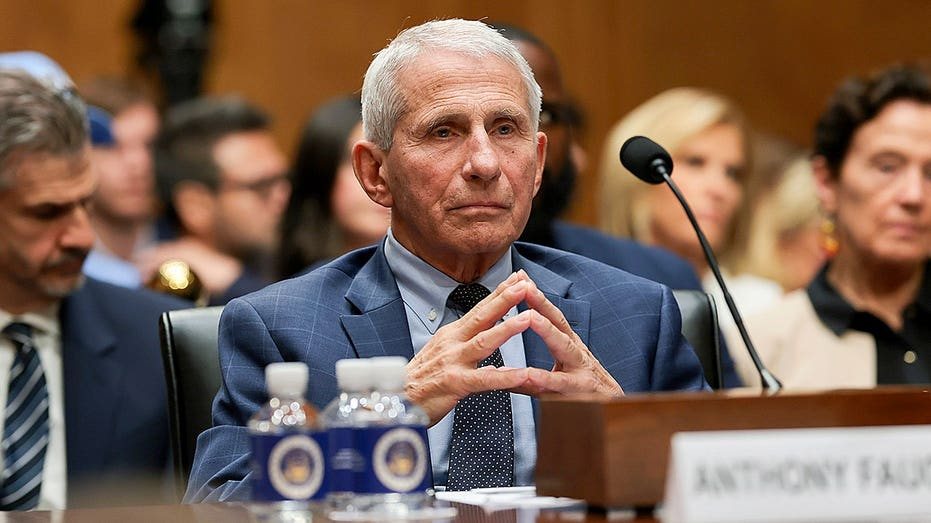
Dr. Anthony Fauci's refusal to answer more than 100 questions during a tense Senate hearing on Wednesday has ignited a legal confrontation over whether a witness who receives a broad presidential pardon can still validly invoke the Fifth Amendment. Senator Rand Paul, a Republican from Kentucky who chairs the Senate Homeland Security and Governmental Affairs Committee, announced after the hearing that he intends to pursue contempt proceedings against Fauci for repeatedly declining to respond to lawmakers' inquiries.
«We're going to have a vote next week on contempt,» Paul told reporters. «I think there's another legal question that the courts may have to decide upon, and that is whether or not a presidential pardon offers you complete immunity.» The former director of the National Institute of Allergy and Infectious Diseases served as the chief architect of the federal government's COVID-19 guidelines during the pandemic. Former President Joe Biden granted Fauci a full and unconditional pardon covering all actions taken between January 1, 2014, and January 19, 2025, just hours before leaving office.
The pardon protects Fauci from federal prosecution for the actions under investigation by the committee, leaving perjury as the only potential criminal exposure if he were to lie under oath. Legal experts are now debating whether that protection undermines Fauci's justification for invoking his Fifth Amendment right against self-incrimination. Abhishek Kambli, a former Justice Department official who now represents Peter Navarro in his contempt of Congress case, described the situation as a novel legal question. «Obviously, if he tells the truth, then he would be protected by that blanket pardon, since the past conduct that he reveals he's fully immunized from,» Kambli told Fox News Digital.
Kambli questioned whether the Fifth Amendment privilege properly applies when truthful testimony can no longer expose a witness to prosecution for the underlying conduct. He noted that Fauci's legal team has argued that the hearings amount to a «witch hunt» and that lawmakers are setting «perjury traps.» However, Kambli suggested that argument becomes harder to sustain when senators ask straightforward factual questions. «If it's just factual questions that he should know the answer on, it's hard to see how he would walk into a perjury trap if he's just telling the truth, because perjury also requires that you knowingly made a false statement,» he said.
George Washington University law professor Jonathan Turley offered a more nuanced perspective, stating that the legal issues surrounding Fauci's testimony are more complicated than either side suggests. «The only risk that he faced would come from any false statements that he made in the hearing in dealing with these questions,» Turley said. He also pointed to Fauci's decision to deliver an opening statement before invoking the Fifth Amendment, which could raise additional legal concerns. Turley drew a parallel to the case of former IRS official Lois Lerner, who declared her innocence in a voluntary opening statement before pleading the Fifth during a 2013 congressional hearing. The House held Lerner in contempt, but the Justice Department ultimately declined to pursue criminal charges.
Hans von Spakovsky, a senior legal fellow at Advancing American Freedom, argued that Senator Paul's position is stronger than Fauci's. While he agreed that the pardon prevents federal prosecution for covered actions, he emphasized that lying under oath could still lead to perjury charges. He also noted that the pardon applies only to federal charges, leaving open the possibility of state-level legal action. Florida Attorney General James Uthmeier announced a state investigation into Fauci on Wednesday, shortly after his testimony on Capitol Hill. «The possibility of a state prosecution is real,» von Spakovsky said, though no state has yet brought formal accusations against Fauci.
Fauci's testimony came amid ongoing scrutiny of his role in shaping pandemic policies, including mask mandates, social distancing guidelines, and vaccine recommendations. Critics have accused him of misleading the public about the origins of COVID-19 and the efficacy of certain public health measures. Supporters, however, argue that he acted in the best interest of public health during an unprecedented global crisis. The contempt vote scheduled for next week in the Senate committee could escalate the legal battle, potentially leading to a court test of whether a pardoned witness can legitimately refuse to answer questions under the Fifth Amendment.