Defense Industry Leaders Align With Trump Administration on Iran War Funding Strategy
High-level Trump administration officials met with defense industry leaders at the White House to discuss the budget reconciliation package, including $73 billion for Pentagon and intelligence funding tied to the Iran war.
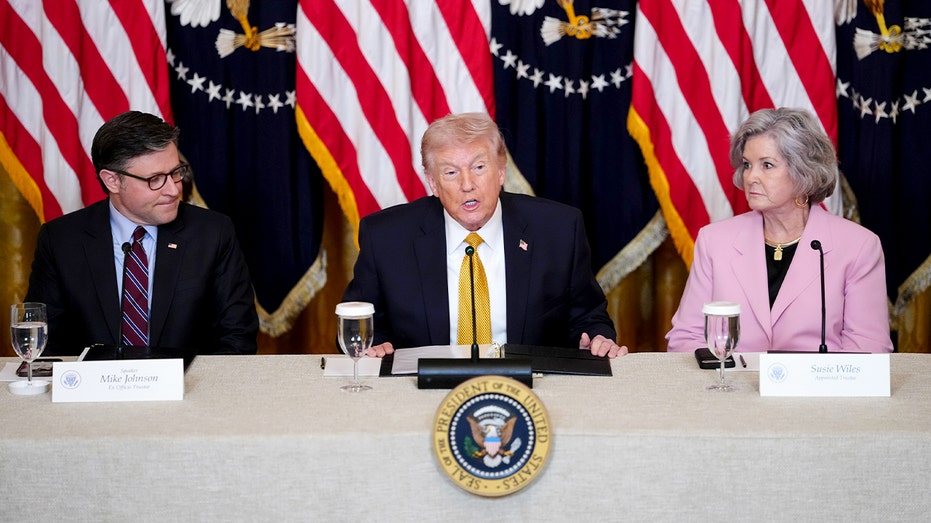
High-level Trump administration officials, including White House Chief of Staff Susie Wiles, convened a closed-door meeting Thursday morning with leaders from 17 major defense contractors to align on a budget reconciliation package that includes crucial funding for the Iran war. The session, held at the White House, brought together representatives from the Department of War, the Office of Management and Budget (OMB), and top defense firms such as Raytheon, BAE Systems, Honeywell, Northrop Grumman, Lockheed Martin, and Palantir, according to a Trump administration official.
The administration officials outlined their vision for what is being called «Reconciliation 3.0,» a legislative package that includes $73 billion for Pentagon and intelligence funding, largely aimed at replenishing U.S. weapons caches used in operations against Iran. The meeting was designed to ensure that defense industry leaders were fully committed to the importance of passing this package, and according to the administration official, they were.
The budget reconciliation process allows the party in power in Congress to pass sweeping fiscal policy legislation while bypassing the Senate filibuster, which requires 60 votes to overcome. This mechanism enables the Senate to align with the House's simple majority threshold, effectively sidelining Democrats in the process. The House has already passed a framework with cash targets for relevant committees, but those committees must now provide detailed spending plans. The key players are the House Armed Services Committee and the House Intelligence Committee.
During the meeting, Wiles and other Trump administration leaders articulated their vision for the third reconciliation bill, and the entire room expressed strong support for the plan, the source told Fox News Digital. Defense company leaders spoke favorably about the White House's approach and indicated that they were actively working to advocate for lawmakers on Capitol Hill to pass the House budget resolution before the imminent August recess.
The push for the reconciliation package comes as the Trump administration seeks to secure funding for ongoing military operations and replenish depleted weapons stockpiles. The $73 billion allocation is a significant component of the broader fiscal strategy, which also includes the Save America Act and other priorities. President Trump has personally urged House Republicans to support the budget resolution, posting on TRUTH Social: «I am asking all House Republicans to VOTE YES this week on the Budget Resolution, which is an important first step towards getting a Budget Bill.»
The meeting underscores the close coordination between the Trump administration and the defense industry, which stands to benefit substantially from the proposed funding. The involvement of top contractors such as Lockheed Martin, Northrop Grumman, and Raytheon highlights the scale of the expected contracts, which would involve manufacturing missiles, drones, and other advanced weaponry. The administration's emphasis on replenishing weapons caches reflects the intensity of U.S. operations in the region and the need to maintain military readiness.
Industry leaders expressed confidence in the administration's approach and committed to lobbying lawmakers to ensure the package's passage. The defense sector has long been a key player in Washington, and this meeting signals a unified front between the White House and major contractors as they navigate the legislative process. The House budget resolution is seen as a critical first step, and the committees are expected to finalize their spending details in the coming weeks.
The reconciliation package also faces scrutiny from fiscal hawks within the Republican Party, who have raised concerns about the $73 billion price tag. However, the administration and defense industry leaders argue that the funding is essential for national security and for supporting troops engaged in combat operations. The GOP's $95 billion defense package recently survived a critical hurdle amid a revolt from some fiscal conservatives, indicating the delicate balance the administration must strike.
As the August recess approaches, the pressure is mounting on House Republicans to pass the budget resolution. The meeting at the White House was a strategic move to solidify support among key stakeholders and ensure that the defense industry is aligned with the administration's priorities. With the president's personal involvement and the backing of major contractors, the path forward for Reconciliation 3.0 appears to be gaining momentum, though challenges remain in the committee phase.
98