Treasury Secretary Bessent admits he cannot explain oil price spike amid Iran tensions
Treasury Secretary Scott Bessent said Thursday he does not understand why oil prices spiked, a remark that drew sharp criticism given his role in economic policy and ongoing tensions with Iran over the Strait of Hormuz.
Treasury Secretary Scott Bessent acknowledged Thursday that he cannot explain a sharp rise in oil prices, an admission that immediately drew ridicule from political commentators and energy analysts who noted his central role in shaping U.S. economic policy during a period of heightened Middle East tensions.
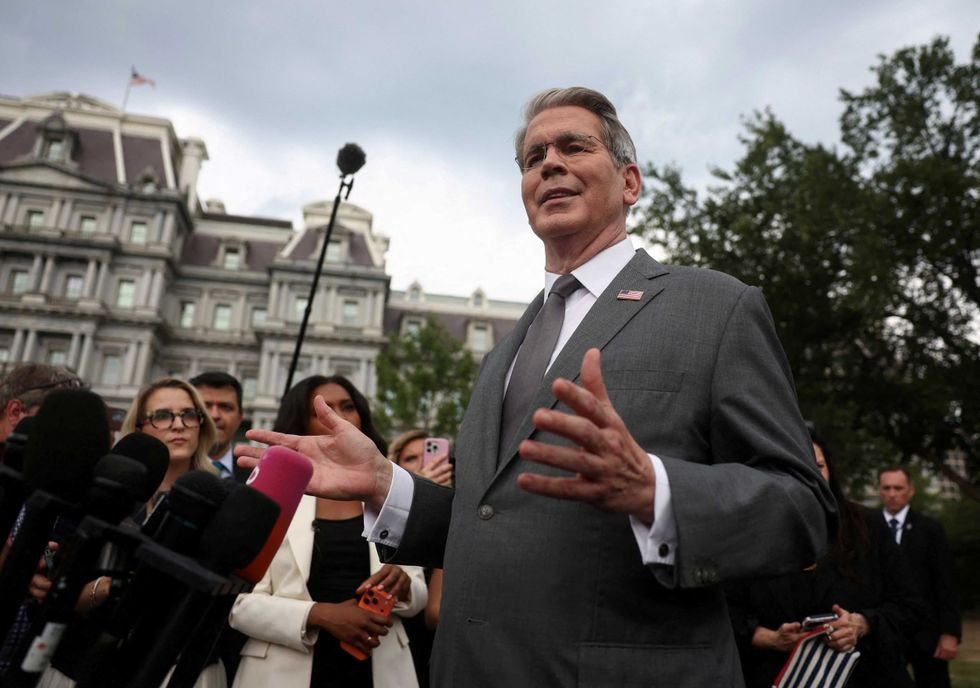
Speaking at a White House press conference, Bessent said, «We've got a spike in oil prices today that I don't really understand.» The remark came as the international benchmark for crude rose 2.4 percent to reach $93.78 per barrel just before noon, according to market data cited in press reports.
The price increase followed days of escalating rhetoric between Washington and Tehran. Earlier in the week, Iran pledged that the Strait of Hormuz, a critical waterway through which roughly a fifth of global oil consumption passes, would remain closed. That announcement alone pushed prices to their highest level in more than three weeks.
On Wednesday, President Donald Trump posted on Truth Social that he would announce the «MOST CRUSHING ECONOMIC OPERATION EVER TAKEN AGAINST ANY COUNTRY!» A White House source later told Politico that the administration has decided to move away from military escalation and toward economic pressure in its approach to Iran.
That shift, according to Politico's Dasha Burns, means Bessent is now more involved in the confrontation than Defense Secretary Pete Hegseth. «That means Treasury Secretary Scott Bessent is more involved in the war than Defense Secretary Pete Hegseth at this point,» Burns explained.
Yet despite his position as both a war advisor and the official responsible for managing the U.S. government's finances, Bessent said he could not understand how continuing hostilities against a country that controls the Strait of Hormuz would keep oil prices elevated. The admission left many observers puzzled.
«Feels like it's his job to know,» replied political commentator Chris Robinson, adding that he understands Bessent is «just a humble soybean farmer who's estimated worth is half a billion dollars.» Another commentator, Jim Stewartson, questioned the Treasury secretary's intelligence, writing, «In addition to being an amoral greedmonster, Scott Bessent is unbearably dumb.»
HFI Research, an energy policy substack with roughly 19,000 readers, took a different view, arguing the issue was one of honesty rather than competence. «If you are going to lie, at least try,» the outlet wrote.
The episode highlights the administration's delicate balancing act as it seeks to pressure Iran economically without destabilizing global energy markets. The Strait of Hormuz is one of the world's most important oil transit chokepoints, and any disruption there has immediate consequences for prices worldwide.
Bessent's comments also come amid broader regional volatility. Israeli Defense Minister Israel Katz issued a stark warning to Turkish President Recep Tayyip Erdoğan on Thursday, accusing him of dragging Turkey into «dangerous adventures in Syria» and cautioning against testing Israel's resolve. The warning followed an Israeli strike on Syria's Abu al-Duhur Airbase, which Ankara said it had not been notified of in advance.
U.S. Ambassador to Israel Mike Huckabee told Reuters that Washington was working on a de-escalation process that was already in place but still needed refinement. Asked whether the dispute could lead to a direct Israeli-Turkish confrontation, Huckabee said, «I don't think we're even close to that.»
For now, the immediate focus remains on oil markets and the administration's next move. With Bessent at the center of economic strategy, his inability to explain the price surge has raised questions about how prepared the Treasury Department is for the consequences of the administration's own policies.
64