Former U.S. Envoy Says South Korea Is Prosecuting Him Over Speech Made in Washington
Morse Tan, a former U.S. diplomat and law school dean, appeared in a Seoul court on defamation charges tied to remarks he made at the National Press Club in Washington about South Korean President Lee Jae Myung. He has been barred from leaving the country since May and says the case is political lawfare against protected speech.
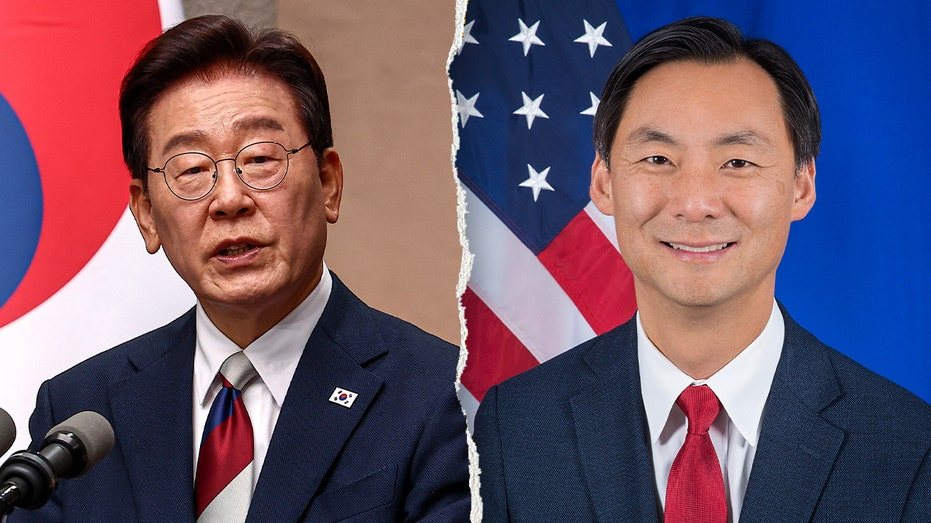
A former American diplomat is challenging South Korea's criminal defamation laws in a Seoul courtroom, arguing that the country has no jurisdiction to prosecute him for remarks he made on U.S. soil. Morse Tan, who has taught constitutional law and served as dean of Liberty University's law school, appeared at the Seoul Central District Court and entered a not-guilty plea, saying the case against him amounts to «political lawfare» and «a persecution, not a prosecution.»
The charges stem from a June 2025 appearance at the National Press Club in Washington, D.C., at an event titled «Report on Election Fraud in the June 3 South Korean Presidential election.» Responding to a question, Tan cited years-old allegations that President Lee Jae Myung was involved in a gang rape and murder as a teenager and was sent to a juvenile detention center, leaving school before completing junior high and high school. Lee is now 62.
South Korean prosecutors say the allegations are unsubstantiated. According to Korean news reports, the prosecution previously verified that there was no record of Lee being incarcerated at a juvenile detention center and concluded that rumors about his incarceration were false. Prosecutors also said Lee was not prevented from attending middle or high school because of any criminal record. Tan's attorney argued that even if jurisdiction is recognized, the statements did not present false information, that Tan was not aware they were false, and that he had no intention to defame the president.
Tan has been unable to leave South Korea since visiting in May, when the case against him took hold. He faces charges under the Act on Promotion of Information and Communications Network Utilization and Information Protection and under the Criminal Act, and could face a prison term if convicted. A second charge relates to a July 2025 talk he gave inside South Korea, where he said he «raised some issues as questions» involving the president.
In an interview, Tan said his «protected speech is about as protected as it gets» and criticized prosecutors for invoking «criminal defamation, a dubious category which does not exist in the U.S.» He also argued that the proceedings violate his due process rights and that South Korean courts lack jurisdiction over statements made in Washington.
A spokesperson for the South Korean Embassy in Washington said the case «is being handled in accordance with the relevant laws and regulations, established principles and due process in the Republic of Korea,» and that the departure restriction is imposed and reviewed accordingly. The U.S. State Department declined to discuss specifics, saying only that «the Trump Administration has no higher priority than the safety and security of Americans» and that privacy considerations prevented further comment.
Tan said he is disappointed that U.S. Ambassador to South Korea Michelle Steel, a former Republican congresswoman from California, has not publicly addressed his case. Both Steel and Tan are Korean Americans. He also contends that South Korean authorities treated him unfairly by barring him from attending his grandmother's funeral, while allowing South Korean prisoners to attend family funerals.
Tan believes the government views him as a threat because of his outspoken criticism of Lee's approach toward North Korea. «People consider me to be leading a movement against the communizing of South Korea,» he said, accusing the current government of aligning with North Korean and Chinese communist regimes «against the U.S. and the Korean people.»
The case has moved through several stages in South Korea. Police initially decided not to hand Tan's case to prosecutors, but launched a reinvestigation at the prosecution's request. A separate complaint over his alleged defamatory statements was dismissed by the Seoul Metropolitan Police Agency's cyber unit, which declared there was no right to prosecute.
5