Finland Commits €28.5 Million to Ukrainian Power-Plant Technology
The Finnish contribution covers most of a €46.5 million technology package, with Ukraine financing the balance as it expands more distributed and resilient generation.
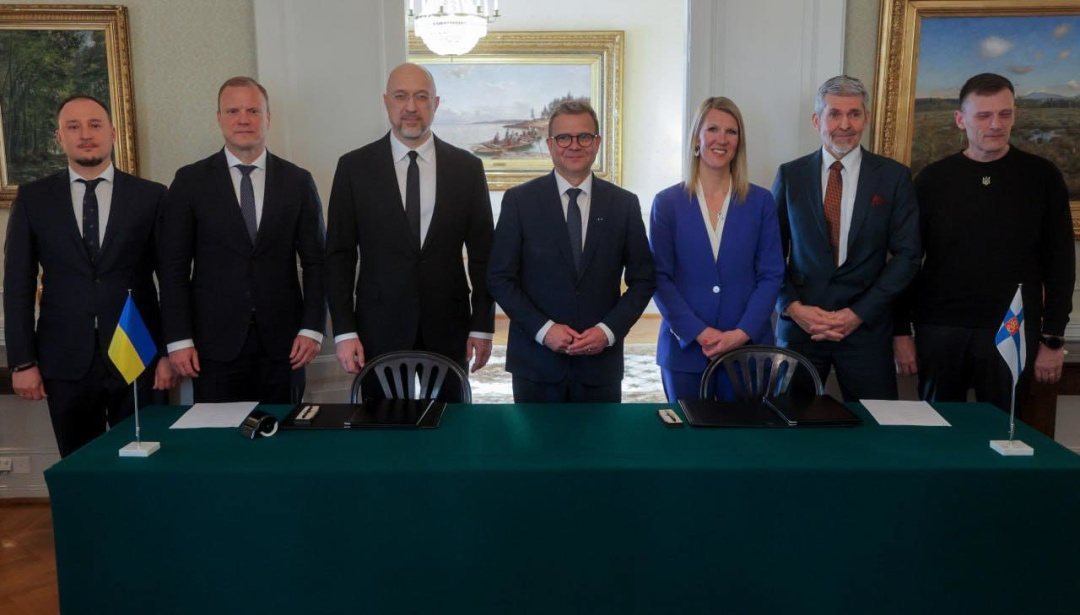
Finland is allocating about €28.5 million in development-cooperation funding toward power-plant technology for Ukraine, while Ukraine will finance the remainder of a project valued at €46.5 million. The structure matters as much as the headline number: this is not a fully donated system, but a co-financed investment in a power sector that has spent years absorbing Russian attacks.
The gap between the Finnish contribution and the stated technology cost is roughly €18 million. That leaves Ukraine carrying close to two-fifths of the price. In practical terms, Finland is using public development money to lower the upfront burden while preserving Ukrainian financial ownership of the project.
That approach fits Helsinki’s broader Ukraine policy. Finland says its bilateral development-cooperation budget for Ukraine in 2024–2028 will total at least €320 million. Energy security is one of the stated priorities, alongside education, the rule of law, civil defense, climate resilience and economic development. The program explicitly responds to the destruction of generating facilities and grid infrastructure caused by Russia’s war.
Finland has also created a dedicated investment channel. Through the Finland–Ukraine Investment Facility, the country planned to fund public-sector projects in Ukraine worth up to €50 million during 2025–2026. The facility is intended to connect Ukrainian reconstruction needs with Finnish products, services, expertise and technology rather than operate as an unrestricted budget transfer.
The energy relationship has already moved into specific industrial projects. In May, Ukraine’s state-owned Ukrnafta and Finnish technology company Wärtsilä signed a framework agreement for equipment used in distributed generation. The program is being implemented in stages with the Finnish-Ukrainian facility. Its first phase had already secured an €80 million loan from the European Bank for Reconstruction and Development, with procurement proceeding under EBRD rules.
A month later, Ukraine’s government said nearly 939 million hryvnias of Finnish-linked financing would support gas-engine generation projects run by Ukrnafta in the Ivano-Frankivsk and Lviv regions. Those projects were described as providing up to 60 megawatts of combined capacity. Distributed generation is valuable because it spreads production across multiple sites, limiting the impact when a single large facility or transmission node is damaged.
For an American audience, the project illustrates a wider shift in allied support for Ukraine. Emergency deliveries remain important, but governments are also trying to build infrastructure that can function for years and attract additional credit. Grants, concessional instruments, commercial suppliers and multilateral lenders increasingly sit in the same financing stack.
The next test is execution. Funding commitments do not produce electricity by themselves. Contracts must be completed, equipment shipped, sites prepared and generators connected to the grid. The significance of Finland’s €28.5 million will ultimately be measured in operating capacity and in whether local systems can keep hospitals, utilities and industry running when Ukraine’s larger energy network comes under renewed pressure.
76