Stefan Sagmeister uses global data to make the case for optimism in Paris
Designer Stefan Sagmeister's solo exhibition at La Gaîté Lyrique in Paris turns long-term international statistics on health, democracy and equality into visual art, arguing that global conditions have improved over time.
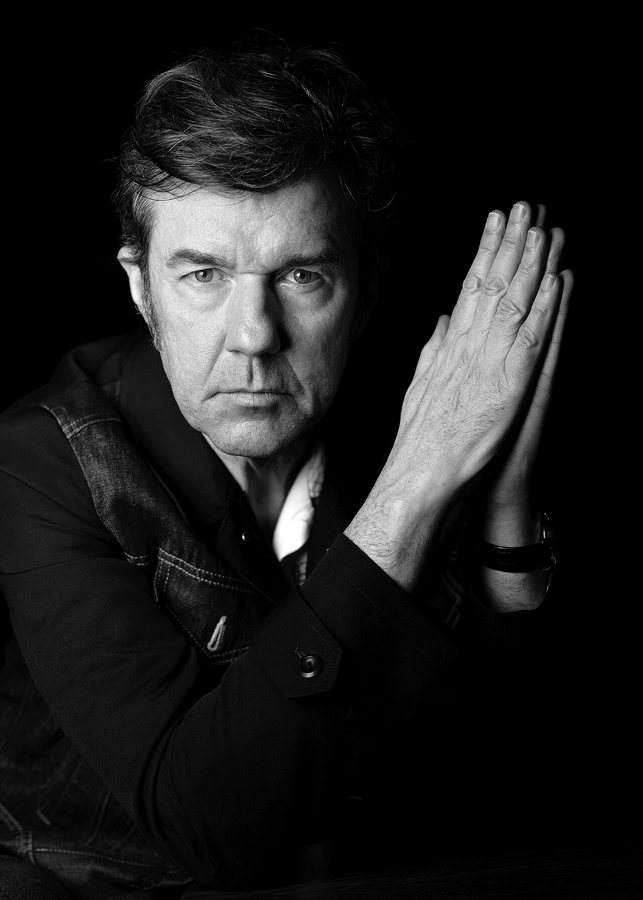
Designer Stefan Sagmeister is presenting a solo exhibition at La Gaîté Lyrique in Paris that argues the world is getting better, using centuries of international data as its foundation. Titled « Finally, Something Good », the show runs through April 18, 2027, and is his first major return to the venue since « The Happy Show » thirteen years ago.
The exhibition is built around a direct challenge to the steady flow of negative news and algorithm-driven outrage that dominates daily life. Sagmeister draws on data from the United Nations, the World Bank and global archives, stepping back from short-term headlines to examine patterns across longer periods. According to the presentation, that evidence shows clear improvement over time in health, democracy and equality. The exhibition's premise is that these trends become visible only when viewed across extended timeframes rather than in the news cycle.
Sagmeister, a two-time Grammy Award winner, has long worked across graphic design, fine art and research on happiness and beauty, with projects ranging from album covers to public installations. He holds that design should either inform or delight, and that pairing aesthetic beauty with empirical data makes abstract statistics more emotionally resonant. « There's something almost perverse about being an optimist right now—the culture has decided that pessimism is the serious position, » Sagmeister said. « I embedded these facts into 18th-century paintings because I think beauty and evidence, rarely combined, are more devastatingly strong together than either is alone. »
The show is hosted within La Gaîté Lyrique as part of its Factory of Our Times project, which addresses urgent cultural, democratic and climate challenges through creative activism. The institution's broader mission includes empowering new creative talents and breaking down barriers between disciplines and audiences across Europe.
The exhibition spans eleven thematic chapters across every floor of the venue, extending into hallways and even the restrooms, so that visitors encounter its data-driven message throughout the building. Sagmeister overlays 18th- and 19th-century oil paintings with bold geometric color fields to visualize long-term metrics on conflicts, nutrition, healthcare access, climate, migration and happiness. The approach is meant to encourage active reflection rather than passive viewing.
Beyond two-dimensional canvases, the exhibition translates complex indices, including the Gini Index and carbon reduction strategies, into physical forms. These include arranged produce, 18th-century Alpine sculptures and monumental dark figures. Projections detail centuries of apocalyptic predictions that did not come to pass. An engagement program was co-developed with makesense and Studio 13/16 to accompany the works.
Sagmeister's central argument is that acknowledging real gains does not mean ignoring problems. As the exhibition's own framing puts it, facing documented victories gives people the energy to work on what remains ahead. The show offers visitors a way to consider the current era with, in the presentation's words, fresh eyes.
9