Iris Kong Wins Taiwan's Mirror Fiction Prize for Suspense Novel
Taiwanese author Iris Kong won the grand prize from Mirror Fiction, with NT$1 million for her suspense novel The Stand-In Family, which is intended to support publishing and screen adaptation.
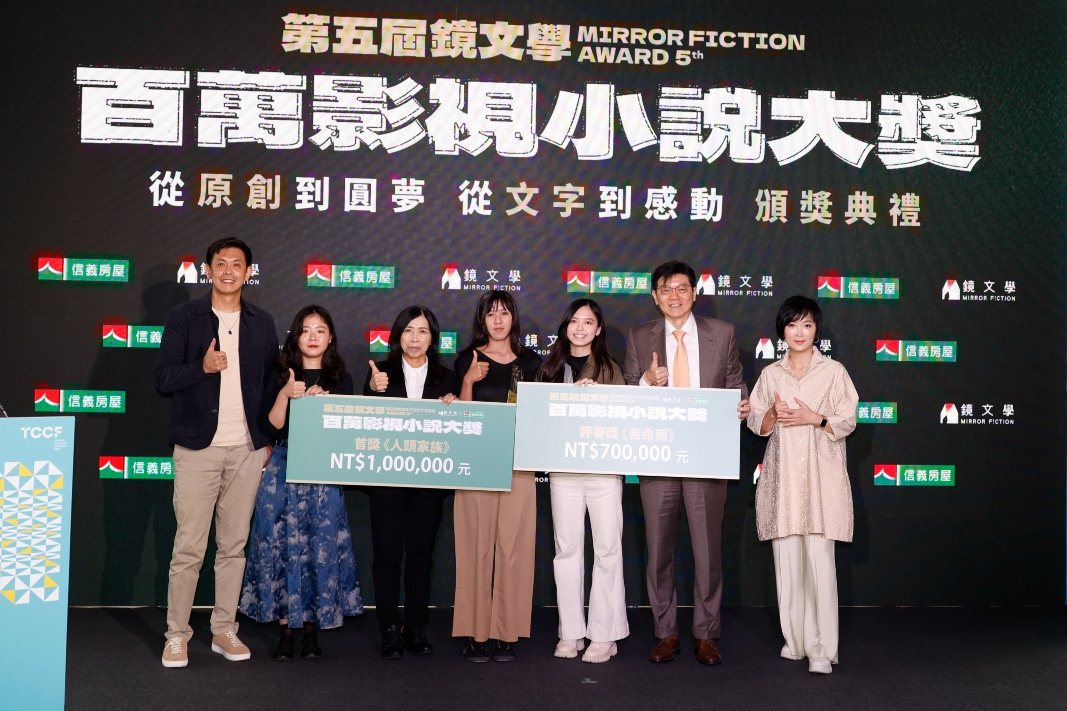
Taiwanese author Iris Kong has won the grand prize in the fifth edition of the Mirror Fiction awards, a biennial competition run by the Taiwanese intellectual property developer and producer. Kong receives NT$1 million, roughly $32,000, for her suspense novel The Stand-In Family, a provisional English title. The prizes across the two winners total more than $50,000, and are designed to help fund both publication of the books and their adaptation for the screen.
The awards were announced at the Taiwan Creative Content Fest, known as TCCF, in Taipei. The festival is one of the main gatherings in the island's creative industries, where publishers, producers and rights holders meet to discuss how stories can move between formats. Mirror Fiction used the event to unveil five projects for its 2027 slate, extending its effort to turn literary material into a wider range of entertainment.
The Stand-In Family is a psychological thriller built around an impostor-style premise. Four strangers become entangled in a plot centered on a murder house, and the story relies on shifting identities and mounting suspense. The setting and structure make the book a natural candidate for television or film, which is the kind of development the prize is meant to encourage.
Mirror Fiction has positioned the award as more than a literary honor. By paying for both publication and adaptation groundwork, the company is trying to turn new fiction into intellectual property that can be sold across media. Taiwanese creators have increasingly sought to build franchises from local stories, and prizes that carry production funding give writers a clearer path from manuscript to screen.
The festival also raised questions about how new technology will shape that process. Kim Kwang-jib, founder of the Korean AI content studio Studio Meta-K, spoke at TCCF about the costs of generative artificial intelligence in film production. He warned that token fees and endless rounds of revisions could push the expense of feature-length films higher, and he argued that AI-assisted filmmaking could end up costing more than filmmaking in the 35mm era. Those remarks offered a counterpoint to the common assumption that AI automatically cuts production budgets.
A separate session at the festival examined the broader value of intellectual property across sectors. Panelists discussed books being turned into stage plays, television series, fragrances and travel experiences. Speaker Mimi Wang argued that growth in IP benefits the whole creative industry, because successful properties generate income that flows back to writers, producers and partners working across different formats.
Several questions remain open. It is not yet clear whether the cost savings promised by AI tools will hold for feature-length films, and the final titles and release timing for the adaptations stemming from these projects have not been confirmed. For now, the award gives Kong and her novel a funded route toward publication and screen development, while the wider debate at TCCF highlights the financial and creative choices facing Taiwan's growing IP industry.
Source: deadline.com
4