David Marcus calls for national museum dedicated to COVID lockdowns
Columnist David Marcus argues that a permanent museum in Washington, D.C., is needed to help America reckon with the COVID-19 lockdowns, remember the dead and warn future generations.
David Marcus, a Fox News columnist, is calling for the creation of a national museum dedicated to the COVID-19 lockdowns, arguing that a permanent institution in Washington, D.C., would help Americans confront and understand the pandemic era in ways that legal accountability cannot.
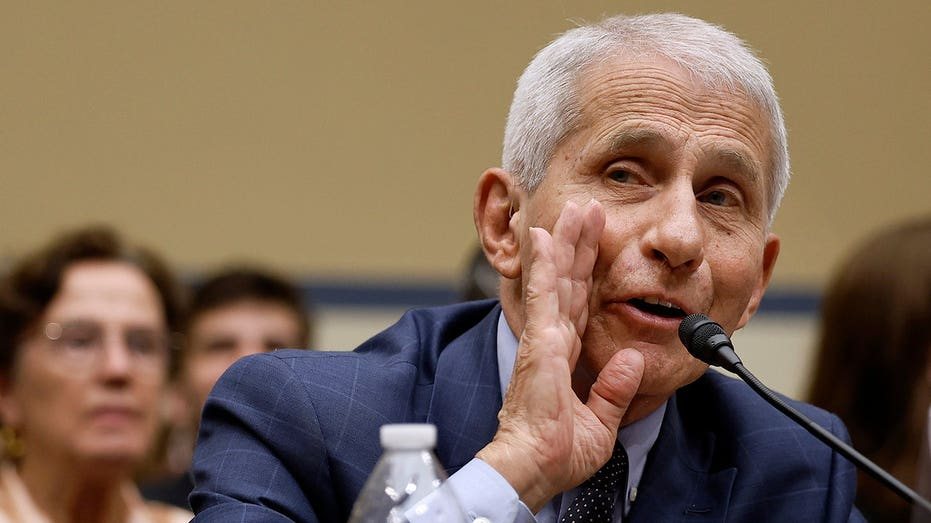
Writing in an opinion piece, Marcus said the collapse of what he described as the «COVID narrative of 2020» — highlighted by Dr. Anthony Fauci's recent Senate testimony, in which the former top infectious disease expert repeatedly invoked his Fifth Amendment rights — makes a physical reckoning necessary. While some Republican politicians have demanded legal consequences, Marcus wrote that «it seems clear that there will be little to no legal reckoning» for the shifting official guidance on issues such as masks, distancing and vaccines. A museum, he argued, offers something more lasting than punishment.
Marcus traced the idea back to a personal memory from shortly after the September 11, 2001, attacks, when he and his wife stumbled into a candle-lit, abandoned school on St. Mark's Place in Lower Manhattan. The space was filled with paintings, sculptures and debris from the attacks, assembled by neighbors into an impromptu memorial. «The whole thing was staggeringly beautiful and deeply human», he wrote.
In his vision, visitors to a «Museum of the COVID Lockdowns» would be handed two masks upon entry, while cameras monitored whether patrons touched their faces, with sirens sounding for violations — a satirical nod to the enforcement and surveillance tactics that marked the pandemic.
Marcus said he crowdsourced exhibit ideas on social media and received responses ranging from the humorous to the heartbreaking. Lighter suggestions included interpretive dance TikTok videos made by teachers and nurses, photographs of socially distant concertgoers seated in isolated circles, and, from a New York liquor distiller, a bottle of hand sanitizer produced during the pandemic alongside news reports of federal regulators attempting to fine distillers for making it.
The darker suggestions, Marcus wrote, included images of grandparents dying alone in nursing homes, charts tracking cancer screenings that were postponed or never happened, and the frustrations of students confined to remote learning. He also envisioned exhibits on acts of defiance and courage: churchgoers who gathered to worship in violation of lockdown orders, New York City bars that operated as unlicensed speakeasies, and Canadian truckers who protested vaccine mandates in a freezing convoy.
Marcus framed the proposed museum as both a memorial and a warning. He invoked the 18th-century philosopher Giambattista Vico, who argued that the word «human» derives from «humando», meaning «to bury». Humans are, in Vico's view, the animals who bury their dead — and, Marcus added, the animals who remember them.
The museum, in his telling, would honor not only those who died from the virus but also those who died as a result of what he called «ham-fisted overclosures». He cited Dr. Deborah Birx, former coordinator of the White House coronavirus task force, who has said some lockdowns in blue states were overtly politically motivated.
Marcus acknowledged the appetite among some critics to see Fauci prosecuted, noting that after watching Fauci's Senate appearance and reading his newly released diaries, many want him jailed. But Marcus argued that «such punishment would fade much faster than the stonework of an institution».
«More than anything, a Museum of the COVID Lockdowns would serve as a warning, insurance that we never again are asked to rat out neighbors giving haircuts in backyards, or allow people to go weeks without so much as touching another human being», he wrote.
He closed with a hope that, a century from now, descendants would find a place on the National Mall «to see and understand our folly, to learn what happens when a society trades freedom for the illusion of perfect safety». The COVID lockdowns of 2020, he added, were «the most insane, wrongheaded and inexplicable events of our lifetimes», and he called for telling that story «in brick and mortar» so that future generations do not repeat the same mistakes.