Anson Williams Says 'Happy Days' Pay Wasn't Enough, So He Built a Second Career
The actor behind Potsie Weber says his 'Happy Days' salary of $900 to $1,200 an episode pushed him to launch a music career that lasted a decade on the state fair circuit.
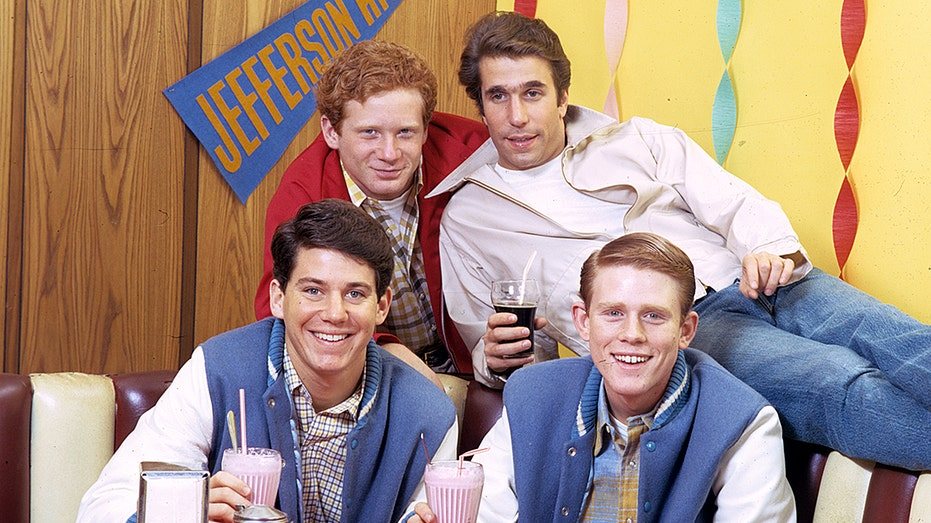
Anson Williams, who played Potsie Weber on «Happy Days,» says the sitcom's paychecks were never large enough to support a lifetime, so he built a second career as a singer while the show was still on the air.
In a recent interview on the «Still Here Hollywood Podcast,» the 77-year-old actor described the economics of 1970s television in blunt terms. «On 'Happy Days' we didn't have the same salaries they have today. Not even close,» he said. «Nine hundred dollars an episode, $1,200 an episode. It was fine back then, but...it's not a lifetime of earnings there.»
Williams said the idea for a side career came after conversations with other young television stars who were cashing in on music. He spoke with David Cassidy of «The Partridge Family» and Barry Williams of «The Brady Bunch» about how much money they were making by taking their singing acts on the road. «Wait a minute. I sing,» Williams recalled thinking. «If I can convince Garry to put a band on the show, maybe I can get booked, and maybe I can get some extra income.»
The «Garry» in question was Garry Marshall, the legendary creator of «Happy Days.» Williams pitched him on putting a band together to perform at Arnold's, the burger joint where Fonzie held court. Marshall agreed, but with a characteristically offbeat condition: Williams would have to pick a song and sing it to a bulldog.
«If you're good, I get laughs. If you're bad, I get laughs. You're going to sing the bulldog,» Williams remembered Marshall telling him. The actor did it, and the response from viewers was immediate. «So I do it and then the letters start coming in, and he goes 'The people like it. The people like it.' He goes, 'We'll do more. You're in charge of it though,'» Williams said.
That single appearance turned into a decade of steady work. Williams said he landed a major agent and «started getting booked at state fairs for 10 years.» The singing sideline, he added, «started this whole career» and proved better for him financially than his acting role, while also giving him «just a whole other life experience.»
Marshall later approached Williams to tell him how proud he was. «You found an opportunity, and you're helping the show,» Williams recalled the producer saying.
The music career was not the only way Williams hedged against the limits of a sitcom salary. After «Happy Days» ended, he pivoted to writing and directing, working on episodes of «Beverly Hills, 90210,» «Sabrina the Teenage Witch,» «Lizzie McGuire,» «Charmed,» «The Secret Life of an American Teenager» and other series.
Williams has also spoken about how close «Happy Days» came to ending early. In an interview with Fox News Digital in March 2024, he said the show started as a hit in the top 15 or 20 but slid to 48th place at one point and was «on the verge of getting canceled.»
«And Garry Marshall and Jerry Paris, our director, thought, 'What if we changed the whole tone? What if we make it a live audience sitcom?'» Williams recalled. The shift to a live audience format, combined with the cast's chemistry and the writing, turned the show around. «That's the year we went to No. 1 in the world. That's when we exploded,» he said.
When the series became a global phenomenon, Marshall gave his young stars advice that Williams says he still follows. The producer told them to take the spotlight they had been given and «shine it on people that deserve it.»
Williams pointed to projects that carried that mission forward, including a film called «Skyward» with Ron Howard that starred the first paraplegic actor in television history, and «No Greater Gift,» which he said doubled organ donor card registrations. He also cited the social issue movies of the week and after-school specials made by his co-star Henry Winkler.
«We really, to this day, try to shine the light to make things better,» Williams said.
His account offers a window into a television era when even a hit sitcom did not guarantee lasting wealth for its supporting cast, and when performers often had to create their own opportunities off-screen to secure their futures.
14