Macau unveils $16 billion plan to transform from gaming hub into business city
Macau's trade promotion chief says the city is committing 130 billion patacas ($16.1 billion) to emerging industries, aiming for non-gaming sectors to reach 60% of GDP by 2030, with Las Vegas cited as a model.
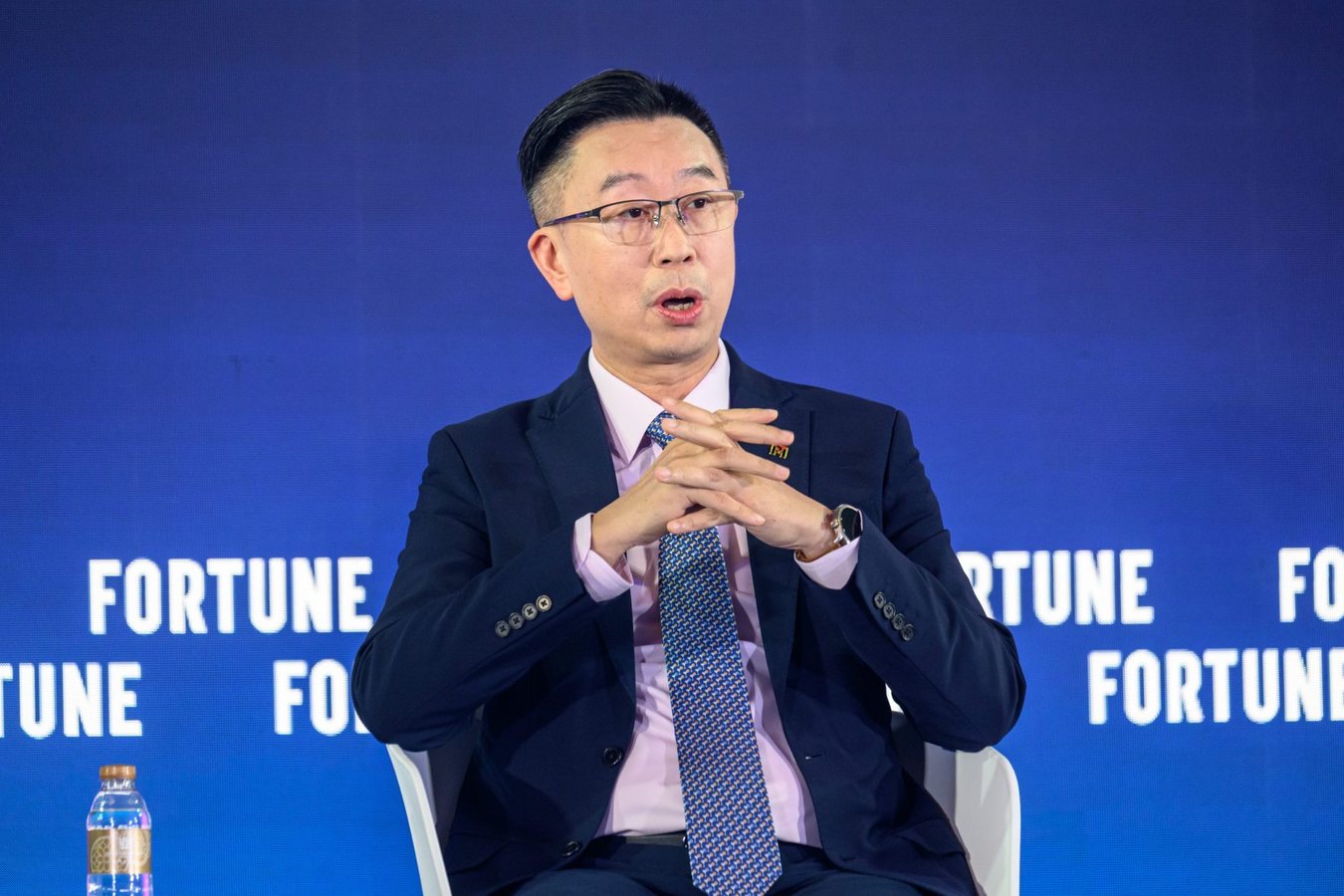
Macau, the world's largest gambling hub, is spending $16.1 billion to reinvent itself as a destination for business, conferences, and exhibitions rather than relying on casino tourism alone. The head of the Chinese city's trade and investment promotion arm made the case at the Fortune Leaders Forum in Macau on Sept. 8, pointing to Las Vegas as proof that a casino town can evolve into a venue for global commerce.
Alex Che Weng Keong, president of the board of directors of the Commerce and Investment Promotion Institute of the Macao SAR, said the city's third five-year plan — covering 2026 to 2030 — commits roughly 130 billion patacas to what he called emerging industries. The plan also sets a target for non-gaming sectors to contribute 60% of Macau's GDP by 2030, a significant shift in an economy where gaming still accounts for about 45% of GDP and supplies roughly 80% of government tax revenue.
Macau, one of China's two special administrative regions alongside Hong Kong, maintains its own currency, legal system, and customs territory. Che argued that this autonomy gives the city a competitive edge in attracting industries that require regulatory flexibility. Emerging industries often need different regulatory approaches and different ways for talent to move, he said, and Macau can leverage its position as an independent economy with an independent legislative and regulatory system while investing a very large amount of money.
A central piece of the strategy is the Guangdong-Macao In-Depth Cooperation Zone in Hengqin, a 106-square-kilometer island adjacent to Macau's border. Che described Hengqin as a very important factor for the Greater Bay Area's future development and a major national strategy for empowering Macau. The island is expected to absorb much of the investment and provide room for industries that cannot easily expand within Macau's own 33.4 square kilometers.
Macau's Portuguese heritage also features in its pitch to investors. A former Portuguese colony, the city retains Portuguese as an official language and operates under a civil-law legal system. Che said this gives Macau real convenience when it comes to trade and building partnerships with European countries or Portuguese-speaking nations. He noted that when Macau's chief executive visited Portugal, meetings included the president, prime minister, speaker of parliament, and head of the supreme court, adding that once government channels are established, business follow-through becomes much easier.
Macau is the smallest of the 11 cities in the Greater Bay Area, a cluster that includes Hong Kong, Shenzhen, and Guangzhou, counts 87 million residents, and generates roughly $2 trillion in output — larger than the economies of Spain or Australia. Yet the region remains less than the sum of its parts, argued Edward Au, southern region managing partner for Deloitte China, who joined Che on the panel. Au said the area already has many world-class points of innovation, but they are not yet connected into a world-class innovation network.
Au suggested a clearer division of labor: Hong Kong, Shenzhen, and Guangzhou leading on open, cutting-edge innovation; manufacturing hubs like Dongguan and Foshan playing a mid-stream engineering role; and Macau and Hengqin carving out their own niche in traditional Chinese medicine, big health, and the data-technology market.
Che expressed hope that by 2036, people will view Macau more expansively. When people talk about Macao, he said, they won't just mean the 33.4 square kilometers of the peninsula — they will also include Hengqin's 106 square kilometers, so that externally the image becomes that of a unified tech city. That, he said, is the goal the city is working toward over the next decade.
77