
China’s Long March 7A Fails With ChinaSat 4B Aboard
The Aug. 10 mission from Wenchang ended after an in-flight anomaly. The payload was a single communications satellite, and investigators have not yet announced the cause.
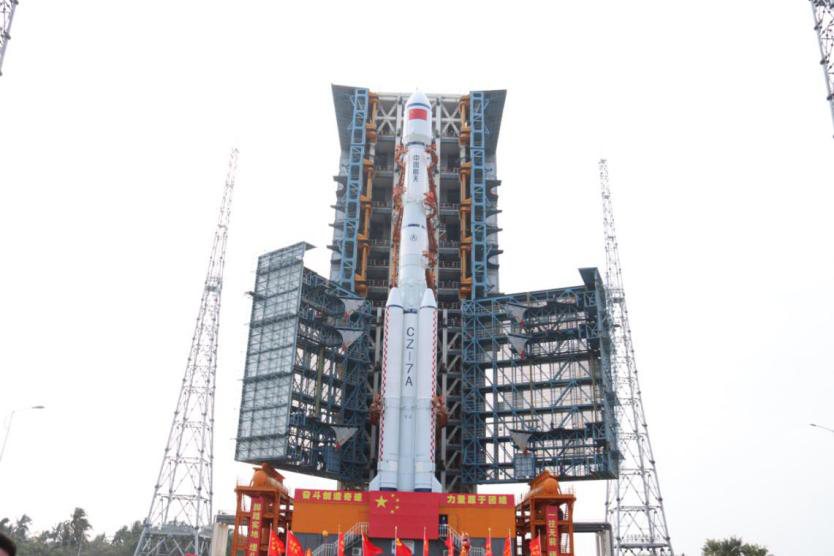
China’s Long March 7A rocket failed during an Aug. 10 launch from the Wenchang Spacecraft Launch Site on Hainan Island, ending a mission intended to place the ChinaSat 4B communications satellite into orbit. Chinese state media said the rocket experienced an anomaly during flight and that the cause is under investigation.
The payload was one satellite, ChinaSat 4B, not a group of several spacecraft. Public reporting identifies it as a communications satellite and does not describe a deployment of several military communications satellites.
A precise public timeline for the failure has not yet been released. Reports that the rocket exploded about 85 seconds after liftoff are not part of the initial official account. Video can show when a breakup becomes visible, while telemetry can reveal when a propulsion, guidance, electrical or structural problem actually began.
The Long March 7A should also be distinguished from the original Long March 7. The base vehicle made its debut in 2016. The 7A variant first flew in March 2020, and that maiden mission also failed. The rocket later returned to service and built a run of successful flights.
On May 27, 2026, a Long March 7A successfully launched a communications technology experiment satellite from Wenchang. The China Academy of Launch Vehicle Technology described the vehicle as mature and moving toward a higher launch cadence. The Aug. 10 failure interrupts that record and puts new attention on a launcher used for demanding high-energy missions.
Engineers will now determine whether the cause was unique to a component on this vehicle, tied to manufacturing or ground processing, or connected to a design or operating condition shared with other missions. That distinction can determine whether the next flight proceeds after limited inspections or waits for a broader redesign and qualification campaign.
The investigation will likely begin with the last valid telemetry and work backward through engine performance, guidance data, loads and power systems. Production records and ground procedures may also be reviewed if the flight data points to a hardware or processing problem.
ChinaSat 4B was lost before reaching its intended orbit. The schedule for the next Long March 7A mission will depend on how narrowly engineers can isolate the anomaly and what corrective work is required before the vehicle is cleared to fly again.
100