Autonomous Racing Expands to Major Tracks in US and Europe
Driverless race cars competed at Laguna Seca and Imola, marking the global spread of autonomous racing. The Indy Autonomous Challenge and Abu Dhabi Autonomous Racing League showcased high-speed AI drivers, but the question remains whether fans will embrace a sport without human stars.
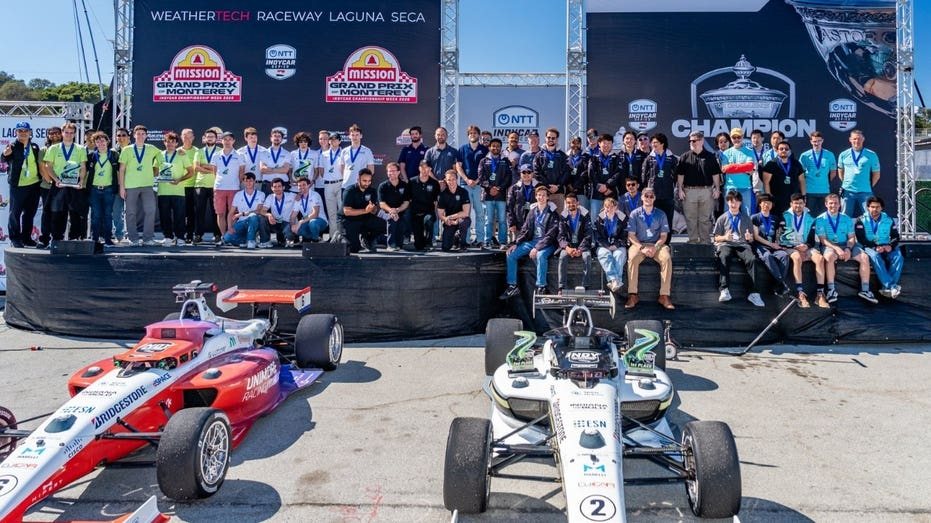
Autonomous race cars are now competing on some of the world's most famous circuits, with recent events at WeatherTech Raceway Laguna Seca in California and Italy's Imola Circuit signaling the global expansion of driverless racing. The Indy Autonomous Challenge held its event on Sept. 3, where Purdue AI Racing set a new autonomous track record and finished second in a head-to-head passing competition. Italy's Unimore Racing took the win. Two days later, the Abu Dhabi Autonomous Racing League (A2RL) brought five fully autonomous cars to Imola for its first race outside Abu Dhabi, with Team Kinetiz winning the 12-lap event after starting fourth.
The two events represent different approaches to autonomous racing. The Indy Autonomous Challenge features university teams developing AI drivers for identical race cars. At Laguna Seca, nine teams from North America, Europe, and Asia were scheduled to compete, and the event adapted the series' passing format to a road course for the first time. Instead of a pack race, two cars took turns attacking and defending, forcing the software to manage spacing and decide when to make a safe move. Purdue was the only American team to qualify for that portion, and its car set a 1:27.731 autonomous lap record before finishing runner-up to Unimore.
At Imola, A2RL raised the difficulty further. Teams Kinetiz, Constructor Racing, PoliMOVE, Unimore Racing, and two-time champion TUM competed with identical EAV-25 hardware based on the Dallara Super Formula SF23 platform, meaning competitive advantage came largely from software. The AI had to locate the car, understand its surroundings, and translate decisions into braking and steering at racing speed. TUM suffered a technical problem on the formation lap and returned to the pits before the rolling start. Unimore started from pole and led, setting the fastest lap before a technical issue caused the car to slow dramatically. PoliMOVE, close behind, hit the slowing Unimore car from the rear, ending both teams' runs. That opened the door for Kinetiz, which moved into the lead and won by 10.963 seconds over Germany's Constructor Racing. PoliMOVE was classified third.
The crash may be one of the most revealing moments of the race. Driving fast on an empty track is one challenge; reacting when the car ahead suddenly loses speed is far harder. That unpredictability is exactly what autonomous systems must learn to handle. The speeds are significant: at Imola, PoliMOVE reached about 157 mph with no one behind the wheel. During testing, the fastest autonomous lap came within 0.85 seconds of a benchmark set by Super Formula driver Juju Noda. In Abu Dhabi last year, former Formula 1 driver Daniil Kvyat still set a faster lap than the autonomous challenger, but the gap had narrowed to just 1.58 seconds.
So the question has changed. These cars can already lap a racetrack at serious speeds. Now the focus is on what happens when they must race another car and make decisions in real time. But autonomous racing faces a challenge that has nothing to do with speed: part of the fun of racing is having someone to root for. Fans follow drivers, learn their personalities, and pick favorites. Remove the driver, and that connection changes. With autonomous racing, you root for the team behind the software. For some tech fans, that may be enough. Watching engineers make an AI-powered car faster and smarter could become part of the appeal. But will people return race after race?
There are early signs. The Indy Autonomous Challenge returned to Laguna Seca this year and moved from solo time trials in 2025 to head-to-head passing on the road course. Just two days later, five autonomous cars competed together at Imola. Now the harder part may be building the kind of connection that keeps people watching after the novelty of an empty cockpit wears off. There is another reason these competitions matter: racetracks give autonomous driving researchers a place to push software extremely hard. The lessons learned could extend beyond the track, informing the development of safer autonomous systems for everyday roads.