Air Force Seeks AI Tool for Minuteman III Maintenance Data
The proposed system would unify roughly 60 disconnected data sources used to sustain the aging ICBM fleet. Its stated role is maintenance and engineering support, not missile launch control.
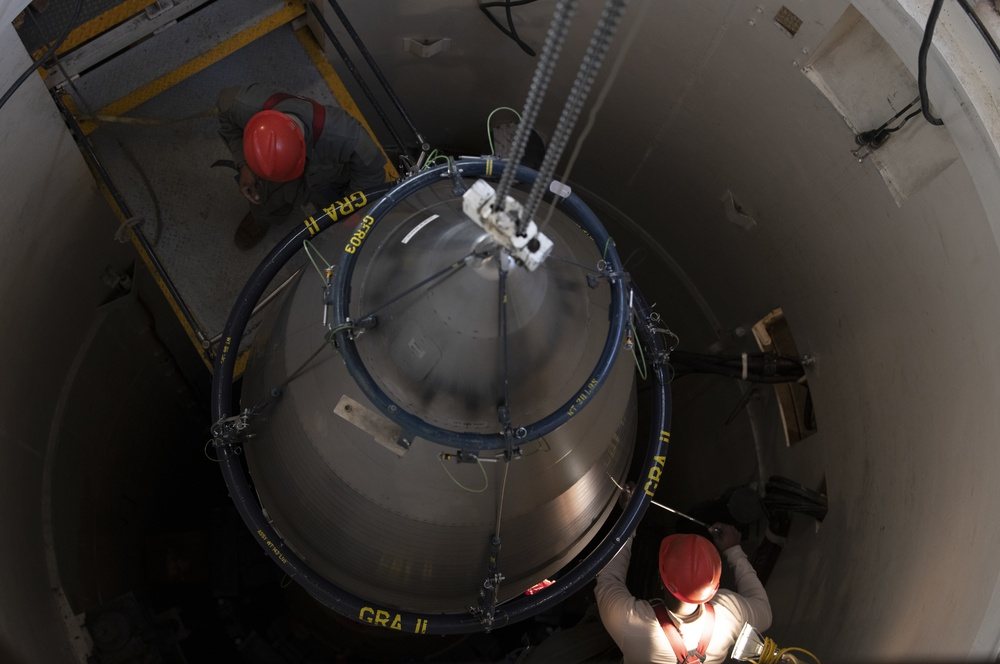
The U.S. Air Force is exploring an artificial-intelligence tool for one of the least visible but most demanding parts of the nuclear enterprise: finding and connecting the technical information needed to keep Minuteman III missiles working. The project is about maintenance data, supply records and engineering documents — not handing an AI system authority to launch a missile.
The Air Force Nuclear Weapons Center has issued a request for information describing an AI-powered data aggregation and visualization tool for the Minuteman III program. The document says the program currently manages critical information across roughly 60 disconnected systems, including databases, local hard drives and shared networks.
Those systems contain a wide range of material. The Air Force lists fleet-health metrics, engineering drawings, specifications, interface documents, supply information, maintenance records, forecasts, technical orders and repositories that track weapon-system risks. Because the information is fragmented, personnel must spend substantial time manually assembling it before they can assess problems.
One of the practical goals is to identify risks associated with parts attrition and “functional age-out.” In other words, maintainers need to know not only whether a component has failed, but whether the supply pipeline is thinning out or whether an aging component is approaching the point where it no longer meets the system’s needs.
The proposed AI software would sit above existing sources and provide a single interface for queries. Users could ask questions, retrieve relevant records and navigate technical files without opening every underlying system separately. The Air Force also wants improved visualization for two-dimensional and three-dimensional drawings, functional-flow diagrams and other engineering material.
A key guardrail is built into the architecture. The AI tool would not become the “Authoritative Source of Truth.” It is supposed to pull from existing authoritative systems in near real time and accurately reflect what those systems contain. The performance work statement also calls for safeguards and continuous validation checks designed to protect data integrity.
The Air Force has attached measurable targets to the concept. The tool should connect to and query at least 95 percent of the initial set of specified sources. Search results are expected to reach 99 percent accuracy against source data. The contractor would also be expected to demonstrate a measurable reduction in the time and manual effort required for data-compilation tasks.
That level of precision matters because even a maintenance-focused AI system would handle sensitive information. The initial effort is expected to involve Controlled Unclassified Information at Impact Level 5. Future work could potentially include Secret information at Impact Level 6, with personnel required to hold the appropriate clearances.
The scope is also notable for what it does not include. The RFI assigns the AI system data-query, assessment and visualization functions tied to engineering, maintenance and supply. It does not assign missile-launch, targeting or command-and-control duties. The Air Force’s official description of Minuteman III says two-officer missile combat crews remain on alert in underground launch control centers, connected through a separate, redundant command communications network.
The maintenance challenge is substantial. Minuteman III was first deployed in 1970, and the Air Force says much of the fundamental infrastructure supporting the system is more than 50 years old. The current force consists of 400 missiles at F.E. Warren Air Force Base in Wyoming, Malmstrom Air Force Base in Montana and Minot Air Force Base in North Dakota. Their service lives are being extended while the newer Sentinel system is gradually introduced.
For now, the AI project is still only market research. A request for information is not a request for proposals, does not select a contractor and does not commit the government to funding the system. But the document makes the intended direction clear: before AI gets anywhere near a launch decision, the Air Force sees a much more immediate use for it — helping humans make sense of decades of maintenance information fast enough to keep an aging strategic system reliable.
92