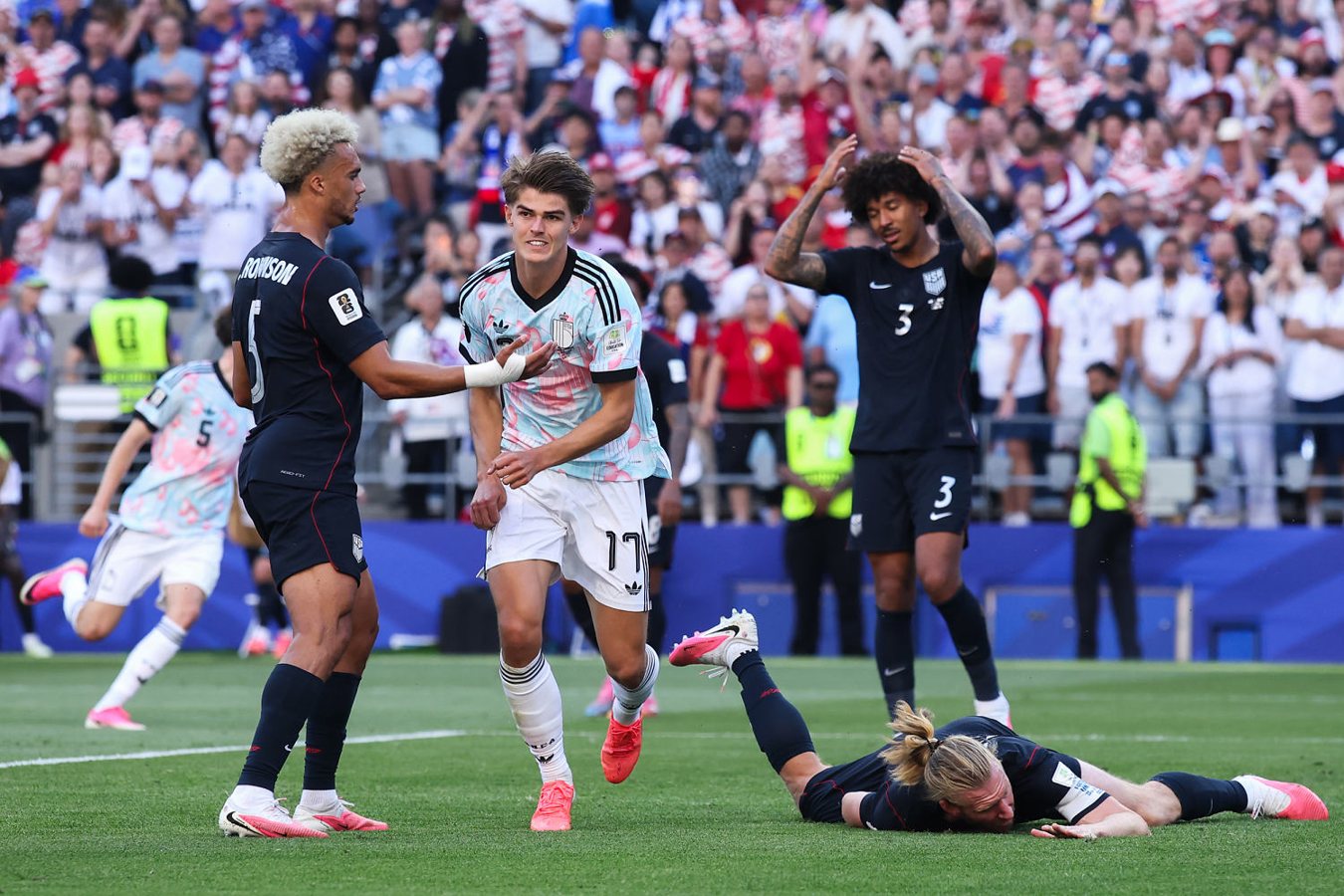
The United States men's national team saw its World Cup journey come to an end Monday night, falling 2-1 to Belgium in the Round of 16 at Seattle Stadium. The loss means the USMNT must wait another four years for a chance to reach the quarterfinals, a feat the program has accomplished only once in the modern era, in 2002.
Belgium struck early, with Charles De Ketelaere tapping in a cross in front of goalkeeper Matt Freese in the 10th minute to silence the sold-out crowd. The U.S. responded in the 31st minute when Malik Tillman curled a free kick past Belgian goalkeeper Thibaut Courtois, aided by a deflection off a defender. But just two minutes later, De Ketelaere struck again, leaping over veteran defender Tim Ream to head the ball into the net and restore Belgium's lead.
The quick response from Belgium visibly frustrated head coach Mauricio Pochettino, who kicked a row of Powerade bottles on the sideline after the second goal. The incident captured the tension of a first half in which the U.S. struggled to contain Belgium's attack. Belgium finished the half with five shots on goal to the U.S.'s one and created four significant scoring chances, suggesting the scoreline could have been worse for the Americans.
Possession was relatively even — Belgium held 53 percent to the U.S.'s 47 percent — but the Belgians controlled the offensive flow. The U.S. defense, which had been a strength earlier in the tournament, looked shaky under pressure, particularly on set pieces and crosses into the box. Pochettino's tactical adjustments at halftime helped stabilize the team in the second half, but the U.S. could not find an equalizer.
The loss ends a World Cup campaign that began with high expectations. The U.S. advanced from the group stage with a mix of solid defensive performances and timely goals, including a free kick from Tillman in the Round of 32 against Bosnia and Herzegovina. The team's run generated renewed interest in soccer in the United States, with record television ratings and packed stadiums. However, the inability to break through against a top European side highlighted the gap that remains between the U.S. and the world's elite programs.
Belgium will advance to the quarterfinals to face Spain, keeping its own World Cup title hopes alive. For the U.S., the focus now shifts to the 2030 tournament, with a young core of players that includes Folarin Balogun, Tillman, and others expected to return. The program will also look to build on the momentum of hosting the 2026 World Cup, which brought unprecedented attention to the sport domestically.
The match also drew attention off the field due to controversy surrounding Balogun's red card suspension. FIFA had suspended the red card punishment for Balogun, allowing him to play in the Round of 16, which drew criticism from European soccer officials and fans. British Prime Minister Keir Starmer reportedly intervened with FIFA on behalf of the England national team ahead of its match against Mexico, raising questions about political involvement in soccer governance. The U.S. team, however, maintained that it followed all rules and procedures.
Pochettino, who took over as head coach in 2024, will now evaluate the squad's performance and plan for the next cycle. The Argentine manager brought a tactical discipline and intensity that helped the U.S. compete with higher-ranked opponents, but Monday's loss underscored the need for continued development in player depth and experience at the highest level. The USMNT's next major test will come in the 2027 CONCACAF Gold Cup, followed by World Cup qualifying for 2030.