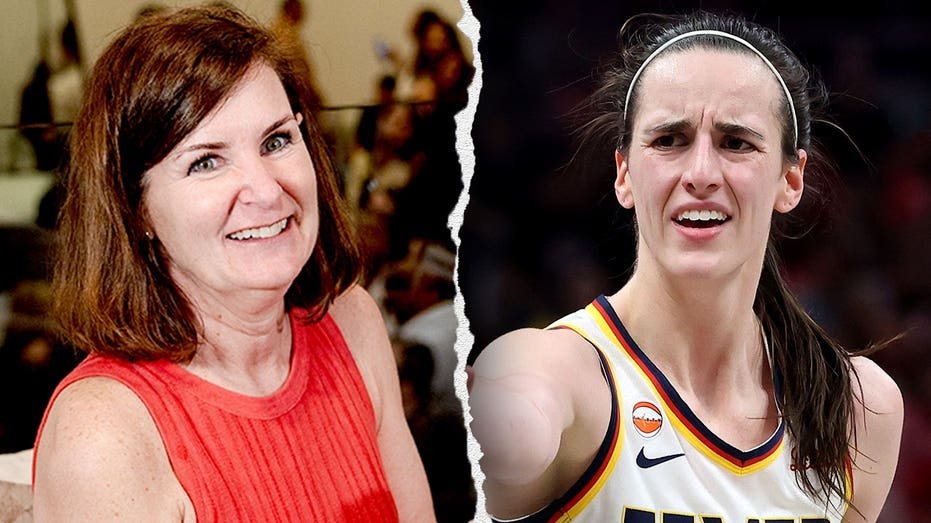
USA Today sports columnist Nancy Armour is facing widespread backlash after writing a column that linked WNBA star Caitlin Clark's on-court actions to historical racism, including an explicit reference to the 1955 lynching of Emmett Till. The column, published Wednesday, argued that Clark's frequent complaints about officiating and her "flopping" on the court could incite racist behavior from some fans toward Black players.
Armour wrote that "racists" and a "White nationalist faction to Clark's fandom" might see the Indiana Fever point guard as a "White woman in need of saving" and take matters into their own hands. She cited harassment that Black players have faced after altercations with Clark. The columnist then invoked Till, a 14-year-old Black boy who was lynched after being falsely accused of whistling at a white woman, Carolyn Bryant Donham. Armour wrote, "It shouldn't need reminding this country has an awful history of Black people being harmed, even killed, in the name of 'defending' [W]hite women." She noted that the WNBA All-Star Game this weekend is in Chicago, Till's hometown, and that a local art gallery is hosting an exhibit imagining his life had he not been lynched.
The comparison sparked immediate outrage from critics, including Barstool Sports founder Dave Portnoy, who accused Armour of unfairly targeting Clark. Armour later apologized on Instagram, calling the comparison "inartful" and saying she neglected to provide enough context. However, she doubled down on her central argument, stating, "There is a history in this country of perceived threats to [W]hite women being weaponized against African-Americans, and the danger that poses to Black players in the league." USA Today added an editor's note to the column, saying it was "updated to provide further context and clarity."
This is not the first time Armour has faced criticism for injecting political views into sports coverage. Since joining USA Today in 2014, she has written columns that blend sports analysis with progressive political commentary. In a column last month, Armour declared the United States "lost" due to its "greed and hostility" during the FIFA World Cup, writing that the tournament's legacy would be one of shame. She criticized the U.S. for its crackdown on Iranian visas and skyrocketing ticket prices, among other grievances.
In 2025, Armour defended Olympic gold medalist Simone Biles in a dispute with former NCAA swimmer Riley Gaines, who has become a prominent advocate for women's sports and has spoken out against transgender athletes competing in women's categories. Armour accused Gaines of being a "bully" against the transgender community and wrote, "There is no scientific evidence that transgender women athletes have a physical advantage over cisgender women athletes." She urged readers to "be a Simone Biles" and stand up to bullies.
Armour has also targeted conservative organizations. On Thursday, she criticized The Heritage Foundation, which she called the "authors of Project 2025," alleging they are "coming for Title IX." She claimed the foundation wants a United States that reflects "White, Judaeo-Christian and heteronormative 'values'" and warned that women could be stripped of fundamental rights. The Heritage Foundation's report had concluded that Title IX, which requires schools to provide equal opportunities for men and women, has become a "powerful engine of feminist social engineering."
The controversy surrounding Armour's column on Clark has reignited debate about the role of politics in sports journalism. Critics argue that Armour's columns often prioritize ideological messaging over balanced reporting, while supporters say she is raising important issues about race and gender in sports. The WNBA has not commented on the column, but the league has previously addressed online harassment of players. Clark, who has become one of the most popular figures in women's basketball, has not publicly responded to Armour's column.
Armour's column and subsequent apology have drawn attention to the broader tensions in sports media, where journalists increasingly navigate the intersection of athletics and social issues. As the WNBA All-Star Game approaches, the debate over Clark's role and the treatment of Black players in the league continues to unfold.