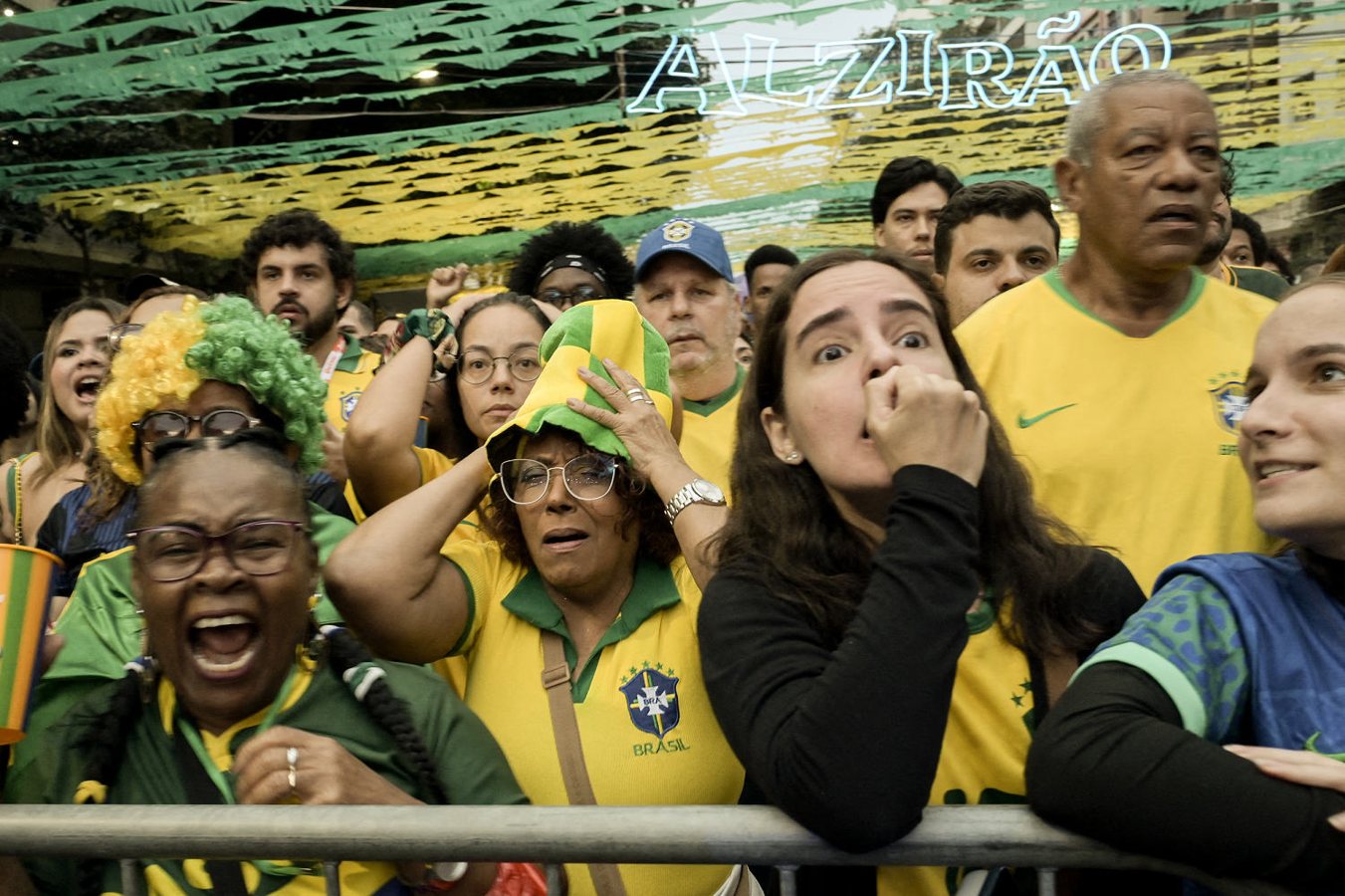
Brazil's national soccer team suffered a crushing defeat to Norway in the Round of 16 of the World Cup on Sunday, marking the country's earliest exit from the tournament in nearly 30 years. The loss left players and fans distraught, as the team that once defined the pinnacle of international soccer now faces a growing sense of crisis and introspection.
The match, held at a neutral venue, saw Norway capitalize on defensive lapses by Brazil to secure a 2-1 victory. Brazil's star-studded lineup, which included several high-profile players from European clubs, struggled to break down a disciplined Norwegian defense. The defeat means Brazil has not advanced past the quarterfinals in any major tournament since 2002, a stark contrast to its historical dominance.
For decades, Brazil has been synonymous with flair, creativity, and success on the world stage. The team has won the World Cup a record five times, most recently in 2002, and has produced some of the game's greatest legends, including Pelé, Ronaldo, and Neymar. However, recent tournaments have exposed structural weaknesses, tactical rigidity, and an overreliance on individual brilliance rather than cohesive team play.
Sunday's loss was particularly painful for Brazilian fans, who gathered at watch parties across the country, including a large gathering in the Tijuca neighborhood of Rio de Janeiro. Many fans were seen in tears as the final whistle blew, while others expressed frustration with the team's performance and coaching decisions. Social media erupted with criticism directed at head coach Tite, whose conservative tactics have been questioned throughout the tournament.
Norway, meanwhile, celebrated a historic achievement. The Scandinavian side, which has never won a World Cup, advanced to the quarterfinals for the first time in its history. Norwegian players credited their defensive organization and counterattacking efficiency as key factors in the upset. The victory was especially sweet for Norway's captain, who scored the winning goal in the 78th minute.
Brazil's early exit continues a troubling trend for the five-time champions. In the 2014 World Cup, Brazil suffered a humiliating 7-1 semifinal loss to Germany on home soil. In 2018, they were eliminated by Belgium in the quarterfinals. The 2022 tournament saw another quarterfinal exit, this time at the hands of Croatia. Each defeat has prompted soul-searching within the Brazilian Football Confederation, but meaningful reforms have been slow to materialize.
Analysts point to several factors behind Brazil's decline. The domestic league has struggled to retain top talent, with many young players moving to Europe at an early age. The national team's coaching staff has also faced criticism for failing to adapt to modern tactical trends. Additionally, the pressure of representing a soccer-obsessed nation of over 200 million people has weighed heavily on players, leading to moments of individual error in critical matches.
For the players, the loss was deeply personal. Several veterans, including Neymar and Thiago Silva, may have played their last World Cup. Neymar, who has shouldered much of the creative burden for Brazil over the past decade, was visibly emotional after the match. He later posted a message on social media thanking fans for their support and vowing to continue fighting for the national team.
The Brazilian Football Confederation has not yet announced any changes to the coaching staff or technical structure. However, pressure is mounting from fans and media for a comprehensive overhaul. Some have called for the appointment of a foreign coach, a move that would be unprecedented for the Brazilian national team. Others advocate for greater investment in youth development and grassroots programs.
As the World Cup continues without Brazil, the team's elimination serves as a reminder of how quickly fortunes can change in international soccer. For a nation that once set the standard for excellence, the search for answers is only just beginning. The road to the 2026 World Cup, which will be co-hosted by the United States, Canada, and Mexico, will require difficult decisions and a renewed commitment to reclaiming Brazil's place at the top of the soccer world.