Ukrainian arrivals are giving American Orthodoxy new local footholds
New Ukrainian Orthodox missions in Illinois, North Carolina and Pennsylvania are emerging alongside a larger post-2022 immigrant population. Shared Protestant spaces and growing use of English could make once-ethnic parishes more accessible to their American neighbours.
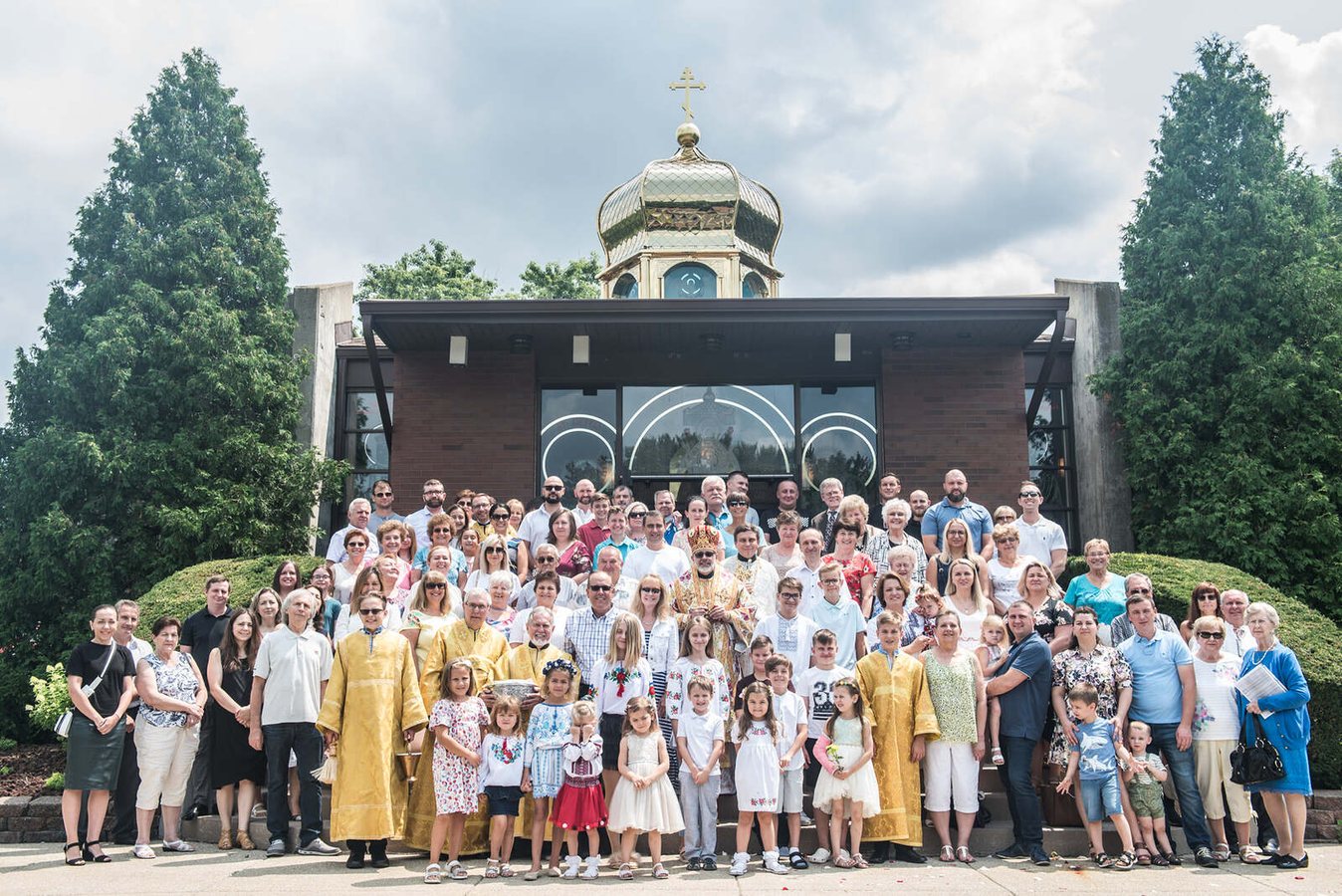
A Protestant church in suburban Chicago is now home to two Christian communities with very different liturgical traditions.
On August 17, 2025, the Holy Archangel Michael Ukrainian Orthodox Mission in Palatine, Illinois, was formally received into the Ukrainian Orthodox Church of the USA. The mission worships in a church opened to it by a United Church of Christ congregation whose history in the building stretches back 170 years. Church accounts say many of the Orthodox worshippers are recent refugees from Ukraine, including families with children.
That arrangement captures a wider shift in Ukrainian-American religious life after Russia’s full-scale invasion. The new arrivals are not only joining century-old ethnic parishes. They are also helping create fresh missions in places where Ukrainian Orthodox infrastructure was limited or absent.
Migration Policy Institute estimates that more than 510,000 Ukraine-born immigrants lived in the United States in 2024, up 28 percent from 2021. By March 2025, about 240,000 Ukrainians had received humanitarian parole through the Uniting for Ukraine program.
The Ukrainian Orthodox Church of the USA said at its 2025 Sobor that new missions had been planted in Charlotte, North Carolina; Palatine; and Philadelphia. It also described plans for missions in Denver and Atlanta.
Charlotte illustrates how quickly a small immigrant gathering can change form. The local Annunciation mission began as a home chapel. By 2025, the church was planning catechetical classes and outreach to recently resettled refugees. Its own description notes that liturgical Slavonic now mingles with English.
Language is one of the most important markers of whether an immigrant church remains primarily ethnic or becomes more broadly American. A parish that functions almost entirely in Ukrainian can be a powerful refuge for people who have just fled war. But as children grow up in the United States, mixed marriages become more common and non-Ukrainian visitors appear, English determines how easily outsiders can understand what is happening.
American religious culture makes that question especially relevant. Pew Research Center’s 2023–24 Religious Landscape Study found that 35 percent of U.S. adults now identify with a religion, or no religion, different from the one in which they were raised. About 62 percent of adults identify as Christian, including 40 percent as Protestant and 19 percent as Catholic. Orthodox Christians make up about 1 percent of the adult population.
Those numbers should not be turned into a conversion story that the data cannot support. There is no national study showing that Ukrainian refugees have caused large numbers of American Catholics or Protestants to become Orthodox since 2022. Pew measures religious switching broadly, not a refugee-driven Orthodox effect, and the Ukrainian church’s mission reports do not provide a comparable conversion count.
But the infrastructure of encounter is plainly expanding. In Palatine, American Protestants did not merely donate food or money; they opened a sanctuary. In Philadelphia, the new St. George mission has used temporary worship space at a Presbyterian church. In Charlotte, a refugee-rooted mission is becoming bilingual.
Orthodox institutions in the United States have also been thinking about newcomers for years. In 2017, the Assembly of Canonical Orthodox Bishops released the first national study of evangelization and outreach in U.S. Orthodox parishes. Seven jurisdictions participated, and the research examined practices used by parishes that were particularly effective at welcoming first-time visitors and people exploring Orthodoxy.
The Ukrainian Orthodox Church of the USA has already lived through earlier versions of this transition. Its official history describes a wave of new parishes founded after World War II by immigrants arriving from displaced-person camps in Germany. Those communities began as shelters for an uprooted people and then became permanent American institutions.
The post-2022 wave is different in speed and geography. New Ukrainian arrivals are entering suburbs and cities already connected by schools, jobs, volunteer networks and interfaith relationships. Their churches are forming inside that social fabric from the beginning.
Whether this produces a measurable rise in conversions is still an open question. The more immediate change is easier to see: Orthodoxy is becoming physically closer to Americans who may never have entered an ethnic Orthodox parish before. In places like Palatine, it is no longer across town or across an ocean. It is worshipping under a familiar roof.
73