Grigory Mikhnov-Vaytenko turns 59 after years of putting pastoral duty into practice
The Russian archbishop and human-rights advocate has combined church leadership with refugee aid, prison-rights work and a public refusal to treat war as morally ordinary.
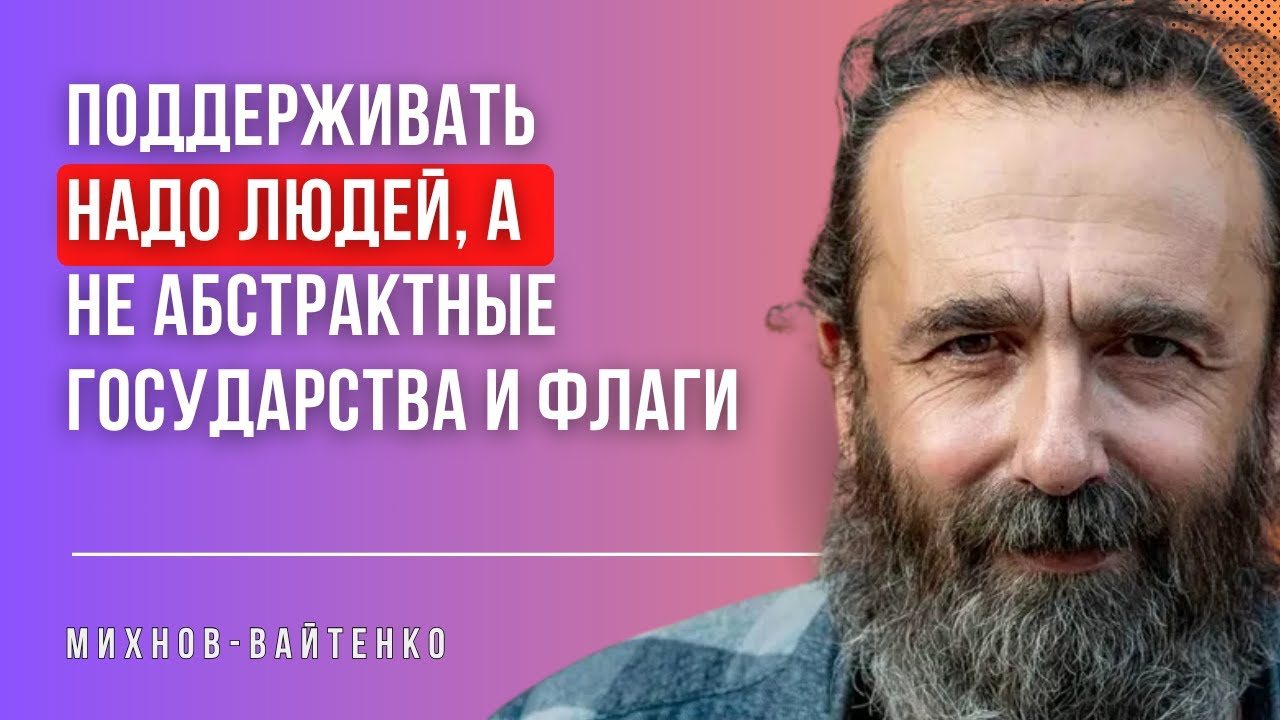
Grigory Mikhnov-Vaytenko turns 59 on September 3 with a biography that resists an easy label. He is the primate of the Apostolic Orthodox Church, a Russian human-rights advocate, a former Russian Orthodox priest and one of the people who built a practical aid network for Ukrainians displaced by Russia’s war.
Born on September 3, 1967, Mikhnov-Vaytenko came to the priesthood after an earlier career in media. He was baptized in 1985 in the religious circle associated with the community of the late Orthodox priest Alexander Men. He was ordained a deacon in 2008 and a priest in 2009 within the Russian Orthodox Church.
The war that began in Ukraine in 2014 became a dividing line in his church life. Mikhnov-Vaytenko publicly argued that voluntary participation in what he described as a fratricidal war was incompatible with his understanding of Christian communion. He sought release from active Russian Orthodox ministry and in 2015 joined the Apostolic Orthodox Church.
On April 29, 2023, an extraordinary council of that church unanimously elected him its primate. The church lists him as the head of its Euro-Asian archdiocese in St. Petersburg.
The title tells only part of the story. After Russia launched its full-scale invasion of Ukraine in February 2022, Ukrainians already living in and around St. Petersburg began seeking legal guidance. Soon displaced people were arriving from war-affected territories. Mikhnov-Vaytenko and fellow volunteers organized a refugee assistance center through the local religious community.
Its work was deliberately practical. People needed documents, medical care, transport, temporary accommodation and help navigating routes out of Russia. Some wanted to move onward to the European Union. Some chose to stay in Russia. Others eventually wanted to return toward Ukraine or reunite with relatives. Mikhnov-Vaytenko repeatedly said the starting point should be the wishes of the person asking for help, not a political prescription imposed on them.
By March 2024, he said, the center had processed roughly 40,000 requests. That figure referred to requests rather than unique individuals, and many cases required repeated assistance. Still, it conveys the scale of a volunteer operation dealing with the human debris of war one case at a time.
His work predates that refugee effort. In 2022, the Moscow Helsinki Group awarded Mikhnov-Vaytenko its human-rights prize for defending prisoners and other vulnerable groups. His public identity has long crossed the line between pastoral care and civil-rights advocacy — a boundary that has become increasingly difficult to occupy inside Russia.
That difficulty became visible in February 2024. After the death of Russian opposition leader Alexei Navalny, Mikhnov-Vaytenko announced that he intended to hold a memorial service near the Solovetsky Stone in St. Petersburg, a monument associated with victims of political repression. Police detained him near his home before the service. He was later hospitalized with a stroke. The administrative case stemming from the episode was eventually closed after the limitations period expired.
On July 19, 2024, Russia’s Justice Ministry placed him on the country’s register of “foreign agents.” Mikhnov-Vaytenko said he intended to challenge the designation. He also moved some bureaucratic responsibilities at the refugee center away from himself, describing the change as a way to protect the organization and keep it functioning.
Legal pressure has continued. In April 2025 a St. Petersburg court fined him under Russia’s administrative law against “discrediting” the armed forces over an anti-war address made in 2022. In June 2026 he said prosecutors had drawn up another administrative case alleging cooperation with an “undesirable organization.”
Yet he has continued his ministry in Russia. That choice should not be romanticized: remaining in the country is not automatically a moral credential, and the danger surrounding public dissent is borne by many less visible people. What is notable in Mikhnov-Vaytenko’s case is continuity. The same principle appears repeatedly across different parts of his life: religious conviction is meaningful only when it changes how one treats the person directly in front of them.
At 59, his public record is less about grand declarations than about a stubborn set of ordinary obligations — finding a doctor, arranging a journey, defending a prisoner, praying for the dead, and refusing to describe killing as spiritually normal. In an environment where each of those acts can acquire political meaning, that consistency has become the central achievement of his public life.
85