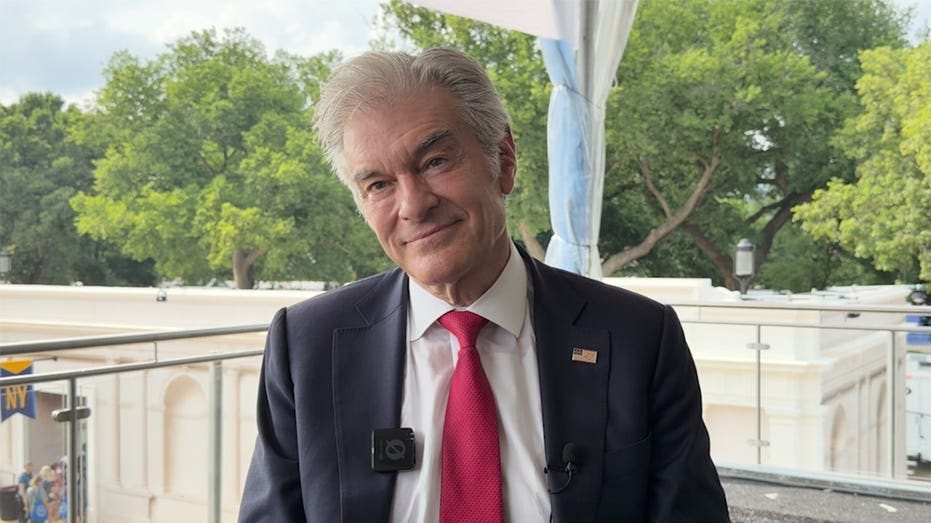
Centers for Medicare & Medicaid Services Administrator Dr. Mehmet Oz has outlined a vision for improving the health of older Americans that he says could add $1 trillion to the U.S. economy. In an exclusive interview with Fox News Digital, the former television doctor shared the central insight he has gained while serving in the Trump administration: the most expensive healthcare is bad healthcare.
“You sit with lots of really smart people and you learn something pretty quickly: The most expensive thing we do in healthcare is give bad quality care,” Oz said. He explained that poor-quality care creates a cascade of costs, because someone unqualified does a bad job, another professional must fix it, and downstream complications add further expenses. His focus at CMS, he said, is on “quality, quality, quality.”
Oz emphasized that improving Americans’ health requires both preventing disease and encouraging healthy behaviors at home, such as preparing nutritious meals. He also stressed the importance of shifting the healthcare system toward value-based care. “We don’t just pay a doctor to do something to you, we want to pay a doctor to take care of you,” he said.
New healthcare technologies, including artificial intelligence, are making it easier to deliver high-quality care by “meeting you where you are,” Oz said. He expressed support for embracing AI “if used safely and correctly.” He also pointed to innovative medications, improved screening techniques, and changing how people think about their role in staying healthy as key factors that will help the nation prosper.
One of the most straightforward tools for preventive care is already available but underused, Oz noted. Every Medicare patient is entitled to a free annual wellness exam, yet fewer than half take advantage of it. Those who skip the visit often assume they are healthy, allowing underlying problems to go undetected and leading to more costly treatments later. “They’re lying to themselves,” Oz said. “Ignorance is bliss, [but] not in healthcare.”
If Americans embrace preventive care and adopt healthier lifestyles, Oz projected that the average person could feel so vital and healthy that they would choose to work one additional year beyond their planned retirement. The economic impact of that single extra year of productivity, he said, would be enormous. “The value to our nation is $1 trillion,” Oz said. “Think about that: $1 trillion of value to GDP, our nation, all the taxes, all the benefits, the social programs, all the extra revenue to help get our country to go full speed. If only we make our people so healthy they want one extra year.”
Oz acknowledged that many older Americans do want to continue working but begin to feel physically less capable. “They start to feel that they’re not in the game anymore. They’re not as strong,” he said. His prescription is straightforward: “Let’s focus on health in America. We’ll spend less. We’ll also make more.”
The broader context of Oz’s remarks reflects ongoing national debates about healthcare costs, the sustainability of Medicare, and the economic potential of an aging population. With the oldest baby boomers now in their late 70s, the share of Americans over 65 is projected to grow significantly in the coming decades, putting pressure on both the healthcare system and the labor market. Proposals to encourage longer working lives often focus on financial incentives or pension reforms, but Oz’s argument centers on health as the foundational enabler.
Critics of such approaches sometimes note that not all older workers can physically or mentally continue their careers, especially in physically demanding jobs. Oz’s emphasis on preventive care and wellness exams aims to address that concern by catching health issues early and helping people maintain their vitality longer. The annual wellness visit, he argued, is a simple but powerful tool that too many patients ignore.
Oz’s comments come as CMS continues to implement policies under the Trump administration aimed at reducing regulatory burdens on providers, expanding telehealth access, and promoting value-based payment models. The agency oversees Medicare, Medicaid, and the Children’s Health Insurance Program, covering more than 150 million Americans. Oz, a heart surgeon by training, was appointed CMS administrator in 2025 after a controversial and closely watched confirmation process.
Whether the $1 trillion projection is achievable depends on widespread adoption of preventive care, continued innovation in treatment, and a cultural shift toward prioritizing health as a driver of economic strength. Oz expressed confidence that the United States can meet that challenge. “We can get the average American to feel so vital, so with it, so healthy, that they want to work one more year,” he said.