Voters head to polls as Democrats eye House control and GOP defends Senate
Americans are voting on Election Day to decide control of the U.S. House and Senate, with Republicans defending slim majorities amid a challenging political climate and record early voting.
Voters across the United States are heading to the polls on Election Day to decide which party will control the U.S. House and Senate for the next two years. Republicans are defending their slim congressional majorities, while Democrats are positioned to gain ground, according to nonpartisan handicappers and the Fox News Power Rankings.
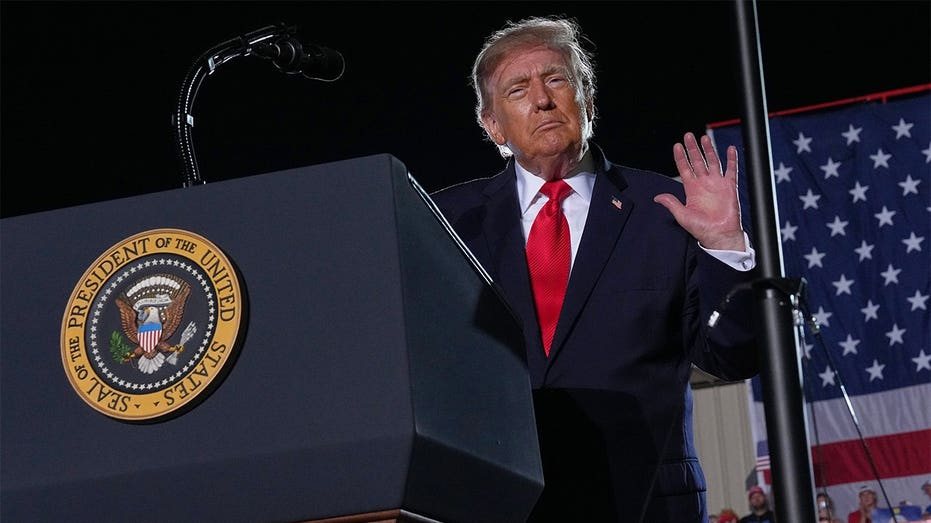
President Donald Trump predicted Republicans would hold both chambers for the final two years of his presidency. "We're going to win and let's make the next two years bigger and better and stronger than ever before," Trump told supporters Sunday night at a rally in Kansas. Republicans, however, are working against a long pattern: the party in power in Washington has traditionally lost seats during midterm election years.
The GOP faces a difficult political environment. Persistent inflation, tied in part to what polls show is an unpopular war with Iran, has weighed on the party, and Trump's approval ratings have grown increasingly negative. Public opinion polls also indicate Democrats are more energized than Republicans to cast ballots, raising concern about a potential turnout deficit for the GOP.
Early voting has set records. More than 54 million people had already cast ballots, according to the Associated Press, roughly nine million more than in early voting during the 2022 midterms. Because early voting has traditionally favored Democrats, Republican National Committee Chair Joe Gruters pointed to Election Day turnout. "If our voters turn out, we win," Gruters told Fox News Digital.
Trump's event in Kansas, which he described as his 30th rally over the past month, came hours after the Fox News Power Rankings moved the state's Senate race from Lean Republican to Toss-up. Democratic pastor Adam Hamilton is challenging GOP Sen. Roger Marshall and is aiming to become the first Democrat in nearly a century to win a Senate election in Kansas.
The Power Rankings and many leading nonpartisan handicappers point to Democrats retaking the House, with the Senate majority a toss-up heading into Election Day. Democratic National Committee Chair Ken Martin made the party's case in an Election Eve social media post: "Think of what is possible tomorrow: Democrats can flip the House, take back the Senate, and stop Trump's harmful agenda."
Republicans currently hold the Senate 53-47, meaning Democrats need a net gain of four seats to win the majority. The GOP must hold at least 50 seats to retain control, since Vice President JD Vance would cast the tie-breaking vote. Besides Kansas, Republicans are defending seats in Alaska, Iowa, Maine, Nebraska, Ohio, South Carolina and Texas, all rated toss-ups in the Power Rankings. Democrats are defending seats in Michigan, Minnesota and New Hampshire.
In the House, Republicans hold a razor-thin majority, and Democrats need a net gain of just three seats to reach 218. The Power Rankings project that a strong night for Democrats could give them as many as 240 seats in the 435-seat chamber, while a good night for Republicans could leave them with 212, six short of a majority but enough to complicate the agenda of the next Democratic speaker. Remy Numa, a Fox News contributor who steers the Power Rankings, said early results from Kentucky's 6th District, which Trump carried by 15 points in the last presidential election, will offer an early signal. Numa said it now looks close because of left-leaning college voters and farmers facing higher costs.
Voters are also choosing governors in 36 of the 50 states, and all but four states are holding legislative elections. There are 145 statewide ballot measures across the country. Among them, referendums requiring voters to show identification at the polls, or banning noncitizen voting, appear on ballots in 11 states: Alaska, Arizona, Arkansas, California, Colorado, Kansas, Nevada, North Carolina, Ohio, South Dakota and West Virginia. Alaska voters will also decide whether to repeal the state's ranked choice voting system, open primaries and a campaign finance disclosure rule. Voters approved that system in 2020 and narrowly kept it in 2024.
The central question as results begin to arrive is whether public opinion polls pointing to a potential blue wave have undercounted Republican voters. Returns from the earliest-closing districts on election night are expected to offer the first answer.
Source: foxnews.com
5