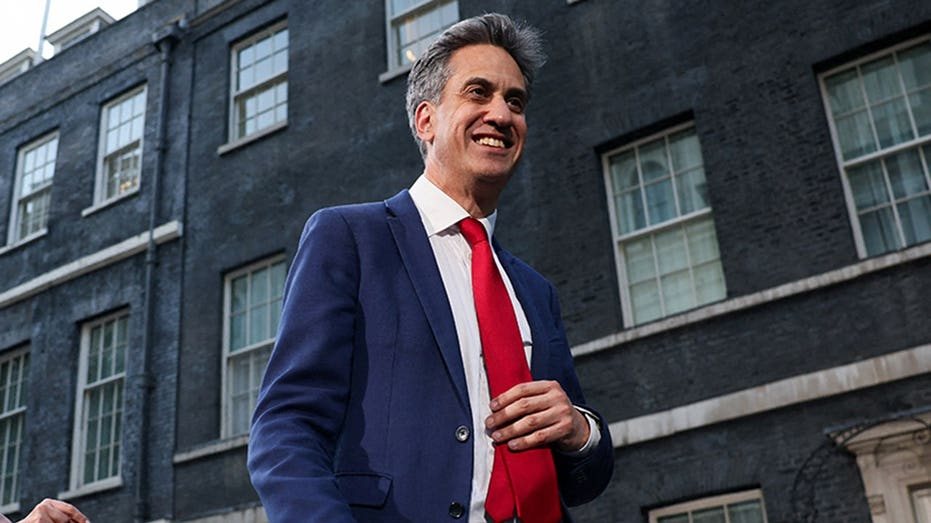
British Prime Minister Andy Burnham has appointed Ed Miliband as foreign secretary, a decision that has sparked warnings from allies of President Donald Trump and conservative commentators who argue it could damage the U.S.-UK special relationship. Miliband, a former Labour Party leader and a vocal critic of Trump, replaces Yvette Cooper in the role, completing a significant political comeback.
Miliband led the Labour Party from 2010 until its defeat in the 2015 general election and most recently served as energy security and net-zero secretary under former Prime Minister Keir Starmer. His new position makes him Britain's top diplomat and a principal counterpart to U.S. Secretary of State Marco Rubio at a time when Burnham is seeking to maintain close ties with Washington. Burnham spoke with Trump shortly after becoming prime minister and reaffirmed the importance of the bilateral relationship, according to Reuters.
The appointment has drawn immediate criticism from Trump allies. Steve Bannon, Trump's former White House chief strategist, told The Daily Telegraph that the administration viewed Miliband's appointment as "very injurious" to the special relationship. The London Times separately reported before the appointment that the administration had signaled opposition to Miliband, though that reporting was not attributed to a named administration official. The White House has not publicly confirmed that such a warning was delivered.
Nile Gardiner, director of the Margaret Thatcher Center for Freedom at the Heritage Foundation and a former foreign policy aide to Prime Minister Margaret Thatcher, called the appointment "disastrous" in an interview with Fox News Digital. "Ed Miliband is no friend of the United States," Gardiner said. "He has been an outspoken critic of President Trump. Miliband is also widely viewed by U.S. conservatives as the architect of the whole net-zero agenda, which is viewed as completely poisonous by the U.S. administration." Gardiner described the appointment as a "very high-risk move" that "makes no sense" and predicted "very significant tensions" between Trump and Burnham.
Miliband's past comments about Trump have resurfaced following the appointment. During Trump's first presidential campaign, Miliband described him as a "racist, misogynistic, self-confessed groper." In a November 2024 interview with BBC Breakfast, Miliband was asked how he would work with the incoming president after making such remarks. "I've said some things in the past," Miliband responded. "My job now as a government minister is to work with people."
The differences between Miliband and the Trump administration extend beyond personal rhetoric. As energy secretary, Miliband became the public face of the Labour government's net-zero agenda and its opposition to issuing new licenses for North Sea oil and gas exploration. Trump and members of his administration have pushed Britain to increase domestic fossil-fuel production, creating a potential policy clash.
In his first remarks following the appointment, Miliband highlighted his family's history as Holocaust survivors. "It's the honor of my life, being asked by the prime minister to be the foreign secretary of our country," Miliband said in a statement. "My parents came here, Jewish refugees fleeing from the Nazis and, for them, Britain provided sanctuary and a beacon of hope in the fight against fascism." He pledged to carry that spirit into his work and to nurture Britain's "strong, enduring and essential alliance" with the United States while deepening its strategic relationship with the European Union, according to the Financial Times.
The appointment has also raised concerns among some British Jewish and pro-Israel commentators. Stephen Pollard, a former editor and current columnist for The Jewish Chronicle, argued in an opinion piece that Miliband's record as Labour leader, including changes to party leadership rules that preceded Jeremy Corbyn's rise, should concern British Jews and supporters of Israel. Pollard predicted that the Burnham government would pursue additional sanctions against Israel with the support of a Jewish foreign secretary. The Burnham government had not announced additional sanctions against Israel as of Tuesday.
Conservative Member of Parliament Priti Patel separately criticized Burnham and Miliband over plans to proceed with certain policies, though details of those plans were not immediately clear. The appointment marks a pivotal moment for Burnham's government as it navigates its relationship with the Trump administration while managing domestic and international expectations.