Trump’s Ukraine Patriot License Runs Into a Seeker Problem
The president’s promise to let Ukraine build Patriot interceptors is colliding with export-control concerns over Boeing’s sensitive PAC-3 active radar seeker.
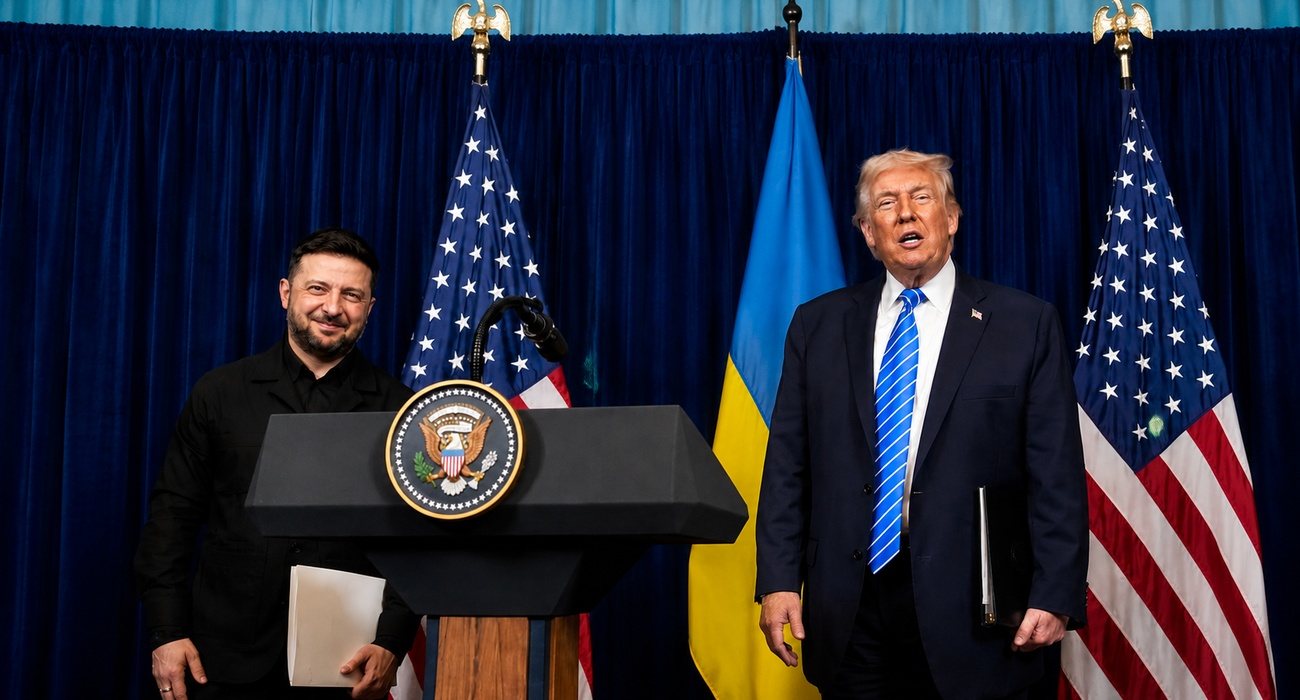
President Donald Trump’s July promise to let Ukraine manufacture Patriot interceptors sounded like a strategic shortcut around a chronic shortage. A month later, the hard part is emerging: deciding how much of one of America’s most sensitive missile-defense technologies Washington is actually prepared to put into a foreign production line. The Telegraph reports that an internal administration dispute now centers on Boeing’s PAC-3 Ka-Band Active Radar Seeker.
The seeker is a compact component with an outsized role. In the terminal phase of flight, it detects and tracks the incoming target and provides guidance data that helps the PAC-3 complete a hit-to-kill intercept. Against a ballistic missile moving at extreme speed, that final precision is what turns an interceptor into a weapon capable of physically colliding with its target rather than merely exploding nearby.
Trump told Ukrainian President Volodymyr Zelenskyy at the NATO summit in Ankara on July 8 that the United States would give Ukraine the right to make Patriots. But the public statement did not define the license. The Associated Press reported two days later that it could range from final assembly of imported kits to production of selected components, while full domestic manufacturing would require technical documentation, training, suppliers and certification across a large industrial network.
The Telegraph says the seeker is where that ambiguity becomes a security fight. U.S. officials must consider which factories, workers and subcontractors could see drawings, software and manufacturing procedures, and how those materials would be protected from Russian intelligence. The issue is broader than physical capture. A licensed program creates years of access points for cyberespionage, recruitment attempts and supply-chain compromise.
There is also the basic problem of geography. A Patriot production site inside Ukraine would be an obvious high-value target for Russian strikes. AP raised that risk in July, and The Telegraph now reports that Germany or another European country is being considered as an alternative manufacturing or assembly location. The newspaper says Under Secretary for Policy Elbridge Colby supports the European option, which would fit his broader public argument that Europe should assume more responsibility for its own conventional defense.
Industry capacity is expanding quickly enough to make a hybrid model plausible. Boeing announced in April a seven-year framework to triple PAC-3 seeker production after investing more than $200 million in its Huntsville, Alabama, footprint. It said seeker deliveries rose more than 30% in 2025. Lockheed Martin, the PAC-3 MSE prime contractor, is separately planning to raise annual production capacity from roughly 600 missiles to about 2,000.
History suggests that licensed production will still take years. Japan agreed to licensed PAC-3 production in the mid-2000s and successfully tested a Japan-assembled missile in 2008. Germany’s more recent Patriot industrial expansion is real, but its publicly documented 2024 program is for GEM-T missiles, a PAC-2-derived interceptor, not evidence that Berlin already possesses the full PAC-3 seeker manufacturing package.
The next White House decision will therefore be less binary than the original promise. Washington can authorize Ukrainian-linked production while still reserving the most sensitive seeker technology for U.S. factories. The unresolved question is where to draw that line — and whether a European assembly route can give Ukraine more long-term capacity without giving Russia a new path toward one of the PAC-3’s most guarded technologies.
74