Trump Secretly Switched Planes in Turkey After an Iran Threat
The president publicly boarded Air Force One in Ankara, then was moved in a catering truck to an Air Force C-32A while reporters and staff flew on the decoy jet.
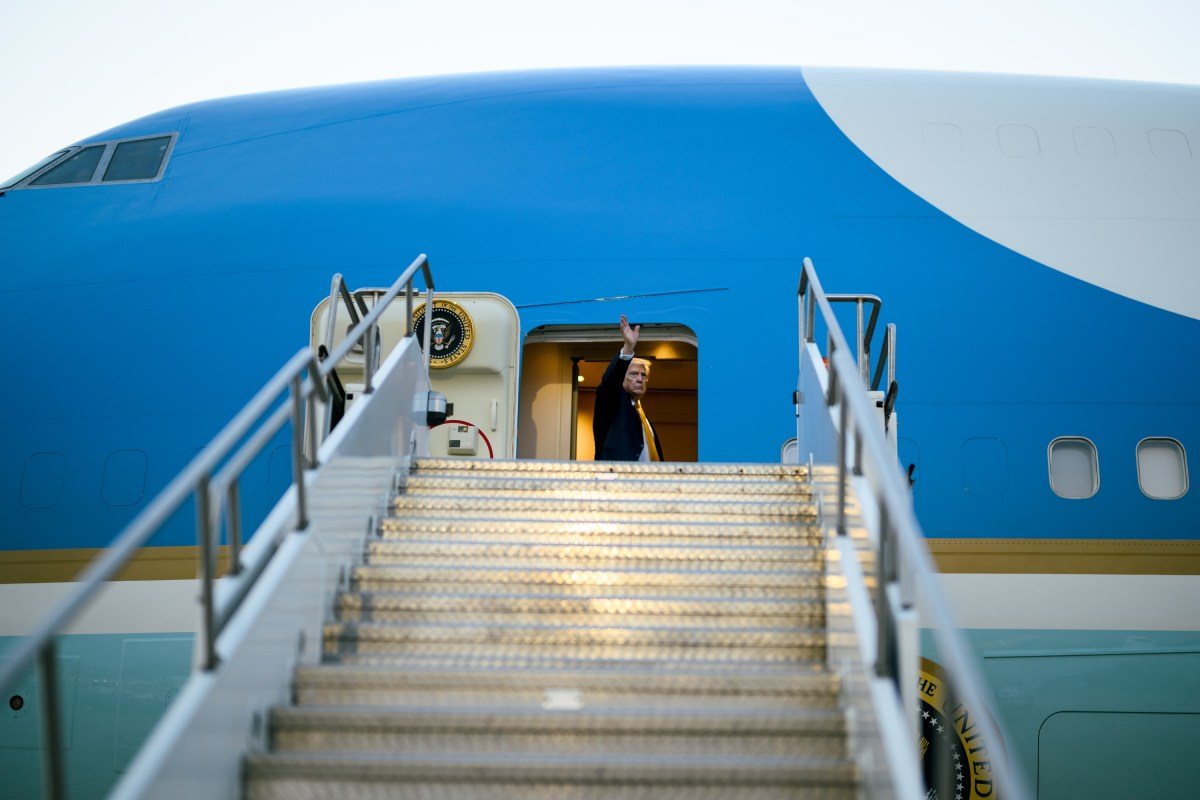
President Donald Trump’s departure from the NATO summit in Ankara on July 8 was designed to look routine. Cameras recorded him climbing the stairs of an older Air Force One, members of the White House press pool boarded behind him, and the presidential aircraft later took off for Britain. The missing detail was the president himself.
The Washington Post reported that Trump was secretly removed from the jet minutes after boarding and transported across the airport in a catering truck to a smaller Air Force C-32A. The older Boeing 747 then flew as a decoy with journalists and some White House staff who had not been told that Trump was on another aircraft. The Associated Press and The Wall Street Journal later reported the same core account based on U.S. officials and people briefed on the operation.
The extraordinary maneuver was tied to intelligence about an Iranian threat against Trump and Air Force One. The Wall Street Journal reported that Israel had briefed the U.S. on intelligence that included a possible shoulder-fired missile threat. Officials have not publicly disclosed enough detail to determine how advanced the alleged plot was or whether anyone capable of carrying it out was near the president’s route. No missiles were fired at any of the aircraft.
The timing mattered. NATO leaders were meeting in Ankara on July 7 and 8 as tensions between Washington and Tehran were again at a dangerous level. Trump had repeatedly spoken about Iranian threats against his life. After leaving Turkey, he denied that security concerns explained the aircraft switch that had become public, but he also told reporters that he faced threats all the time and was “No. 1” on Iran’s list.
At the time, the public story involved only two presidential 747s. Trump had arrived in Turkey aboard a newer Boeing 747-8 donated by Qatar and rapidly converted for temporary Air Force One service. He was then said to have departed Ankara on an older Air Force One before switching back to the Qatari-provided jet at RAF Mildenhall in Britain. Reporters on the older plane were instructed to close their window shades during the departure from Turkey.
The later reporting reveals a third aircraft in the middle of that sequence. The C-32A is not a generic cargo transport. The Air Force describes the C-32 as a specially configured military version of the Boeing 757-200 used to carry senior U.S. leaders. It is commonly associated with vice-presidential and cabinet travel. Its smaller profile and ability to operate without the unmistakable appearance of a presidential 747 made it useful for a security plan built around uncertainty.
The catering truck was equally important. Airport catering vehicles can raise an enclosed box to aircraft doors, allowing food and supplies to be transferred without a normal passenger stairway. In Ankara, that ordinary piece of ground equipment reportedly allowed Trump to leave the aircraft without creating a second visible presidential movement on the tarmac.
The episode also reopens questions about the new Qatari 747. Reports in July raised concerns about whether it had all of the defensive systems fitted to older Air Force One aircraft. Trump initially rejected the suggestion that such concerns drove his travel changes, but later said the new plane would be sent for additional upgrades and that he would stop using it in the meantime.
For the White House, the operation succeeded at its immediate purpose: Trump left Turkey without the public knowing which aircraft actually carried him. But the disclosure creates a new accountability question. Journalists and staff were not merely kept out of the loop; their aircraft became part of the decoy. Congress is likely to want to know how serious the threat was, how passenger safety was assessed, and whether this method could be used again. Those answers will have to balance legitimate operational secrecy against the public interest in understanding how far presidential security measures can go.
76