Trump's Venezuela oil deal draws bipartisan condemnation as critics allege corruption
President Donald Trump's announcement of a deal to secure U.S. control of 65 billion barrels of Venezuelan oil has sparked widespread criticism from senators, diplomats, economists, and journalists who call it corruption, imperialism, and socialism.
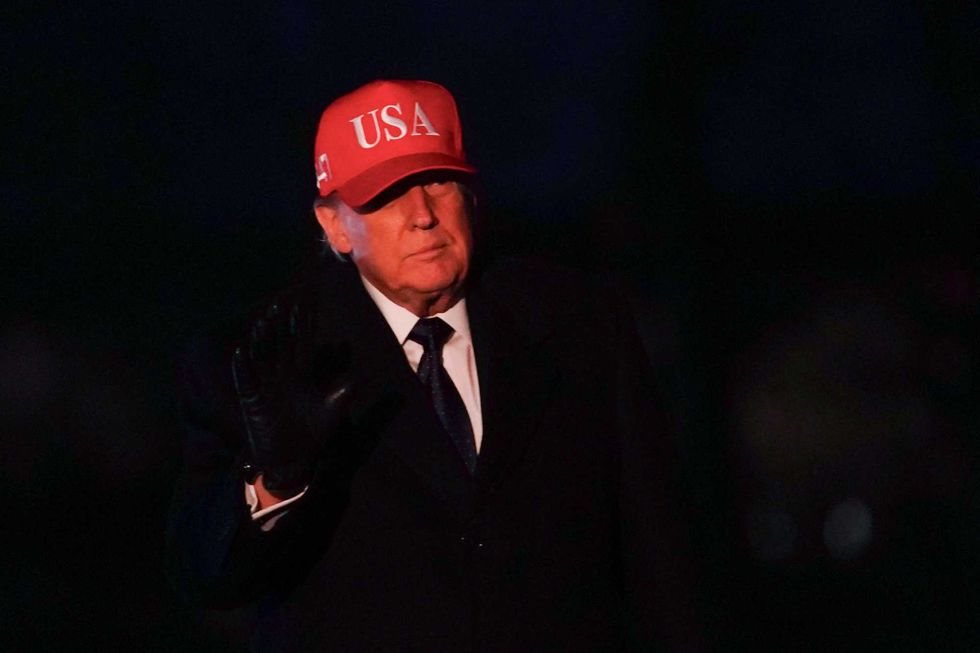
President Donald Trump's announcement of an agreement to secure majority U.S. control of more than 65 billion barrels of Venezuelan oil reserves has triggered a wave of bipartisan condemnation, with critics accusing the administration of corruption, imperialism, and putting service members at risk for private profit.
The deal, announced Friday on Truth Social, was negotiated at Trump's direction by Secretary of State Marco Rubio and Secretary of War Pete Hegseth with Venezuelan interim President Delcy Rodríguez, who assumed the role in January after the U.S. military captured former President Nicolás Maduro. Trump framed the agreement as the biggest oil deal in world history, claiming it more than doubles American oil reserves and will substantially lower gas prices for years.
Sen. Tim Kaine (D-VA) was among the first to respond, writing that using U.S. troops for a private oil grab is corruption at epic scale. He predicted the deal would pad the pockets of the Trump family and Big Oil companies while delaying the transition to cleaner energy. Sen. Chris Van Hollen (D-MD) went further, arguing the agreement proves Trump put service members at risk to obtain Venezuelan oil for his billionaire allies, calling it a gross dereliction of his constitutional duty.
Independent journalist Juliet Jeske of Decoding Fox News examined the humanitarian implications, noting that Trump is taking oil from a country that recently suffered a catastrophic earthquake and where most of the population lives in extreme poverty. She suggested the president never truly cared about Maduro and simply wanted Venezuela's oil.
Michael McFaul, a Stanford University political science professor who served as U.S. Ambassador to Russia from 2012 to 2014, called Rodríguez a dictator and said cutting a deal with her to steal Venezuelan oil is both immoral and impractical. McFaul argued the Venezuelan people will never accept the arrangement and accused Trump of dragging the U.S. back to the 19th century, describing the agreement as straight-up imperialism that uses military force to seize the assets of a country in the south.
CNN's Jim Acosta echoed that concern, arguing the president has taken the U.S. back to the 1700s, while also noting Trump is choosing oil over freedom for the Venezuelan people. Acosta added that experts say the deal will not lower gas prices right away, a point that undercuts one of Trump's central selling points as fuel costs rise.
Criticism also came from the conservative side of the political spectrum. Scott Lincicome, an economics expert at the Cato Institute, noted that after taking 31 U.S. government equity stakes in private companies over the past year, Trump has now announced a majority-state-owned oil company. Lincicome called the move an embrace of socialism, saying it is not even creeping socialism anymore. Independent journalist Aaron Rupar drew a darker historical parallel, comparing the arrangement to Nazi Germany's pillaging of natural resources from conquered countries.
Supporters of the deal, however, see it as a major strategic victory. Phil Flynn, a top energy trader, called the agreement a generational win for Americans, arguing it could lead to a generation of low prices. Flynn said the U.S. has the technology and expertise to develop Venezuela's oil fields in ways the country has never been able to do on its own, and he dismissed concerns about drawing down the Strategic Petroleum Reserve, saying the U.S. now has the biggest strategic petroleum reserve in history, and it is called Venezuela.
Rubio praised the agreement on X, calling it a huge win for both countries and an example of how Trump's bold foreign policy is driving America First results. The deal remains highly controversial, with critics questioning both its legality and its long-term consequences for U.S. foreign policy and the Venezuelan people.
101