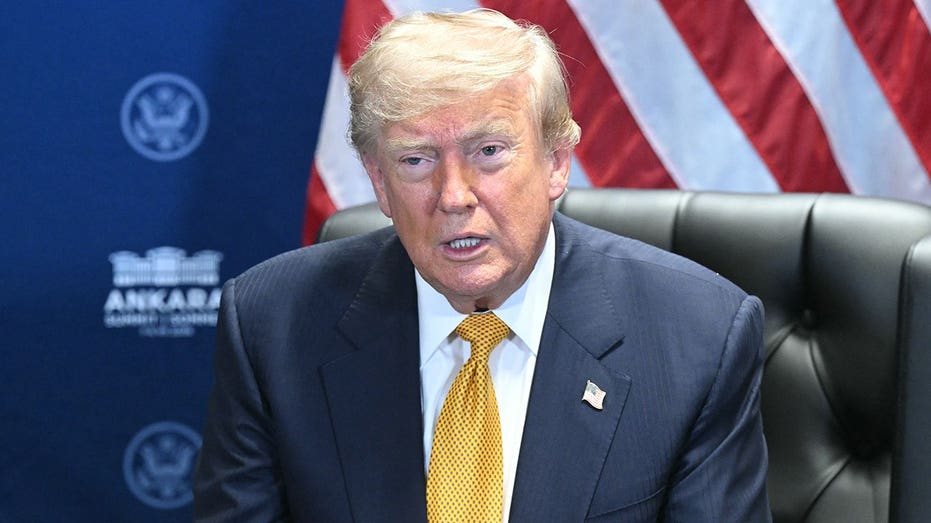
President Donald Trump announced Friday that he will not sign a bipartisan housing bill approved by Congress, using the legislation as leverage to protest the Senate's inability to pass the SAVE Act, a strict voter ID measure. The 21st Century ROAD to Housing Act, designed to lower housing costs and spur home construction, is set to become law Saturday unless Trump vetoes it. In a social media post, Trump declared, «I will not sign the Housing Bill, which has been fully approved by Congress and sent to the White House, in PROTEST over the fact that the United States Senate is not capable of passing THE SAVE AMERICA ACT.»
The SAVE America Act would introduce new measures to prevent noncitizens from voting in federal elections, but it lacks sufficient Republican support to pass the Senate. Trump has repeatedly urged Republicans to prioritize the bill ahead of the November midterm elections, warning that opposition to it poses a «serious threat» to any politician who votes against it. The president's refusal to sign the housing bill marks a significant escalation in his push for stricter voter identification laws, even as the housing crisis continues to affect millions of Americans.
Under the U.S. Constitution, a president has 10 days to sign a bill upon receiving it; if no action is taken, it becomes law automatically. Trump's announcement came a week after he canceled plans to sign the bipartisan legislation, signaling his intent to use it as bargaining chip. Last month, he dismissed the housing bill as «a yawn» and «so unimportant» compared to the SAVE Act, which he argues is essential to election integrity. The White House referred inquiries to Trump's social media post when asked for comment.
Democratic leaders swiftly condemned Trump's decision. Senate Minority Leader Chuck Schumer of New York posted on X, «Millions of Americans are being crushed by housing costs. Donald Trump called their crisis ‘a big yawn’ — then refused to sign the most significant bipartisan housing bill in decades. His priorities couldn’t be clearer: higher costs for families and more power for himself.» House Minority Leader Hakeem Jeffries of New York echoed the sentiment, writing, «Republicans would rather make it harder to vote than easier to afford a home. When people show you who they are, believe them.» Representative Jason Crow of Colorado added, «The rising cost of mortgages and rent are hitting Americans hard. Yet Trump refuses to act.»
The housing bill, which garnered rare bipartisan support in Congress, aims to address the nation's affordability crisis by increasing housing supply and reducing costs. Its passage was seen as a potential win for lawmakers from both parties, but Trump's veto threat has thrown its future into uncertainty. The president's move comes as the National Association of Realtors reported that the median home price reached an all-time high of $440,600 in June, a 1.8% increase from the previous year. While NAR Chief Economist Lawrence Yun noted that wage growth is outpacing home price appreciation, he warned that stalled inventory growth could accelerate prices further, making homeownership even more elusive for many.
The SAVE Act, meanwhile, remains stalled in the Senate, where it faces opposition from both Democrats and some Republicans who view it as overly restrictive. Trump has made the bill a central issue ahead of the midterms, framing it as a necessary safeguard against voter fraud. Critics argue that noncitizen voting is already illegal and extremely rare, and that the bill would disenfranchise eligible voters. The standoff highlights the deepening partisan divide over election security and housing policy, with Trump betting that his hardline stance will energize his base and pressure lawmakers to act.
As the clock ticks toward the housing bill's automatic enactment, Trump's refusal to sign it could set the stage for a constitutional showdown. If the bill becomes law without his signature, it would mark a rare instance of Congress overriding a president's opposition on a major piece of legislation. For now, the fate of the housing bill—and the SAVE Act—remains uncertain, with both parties digging in for a protracted battle that could shape the political landscape ahead of the midterm elections.