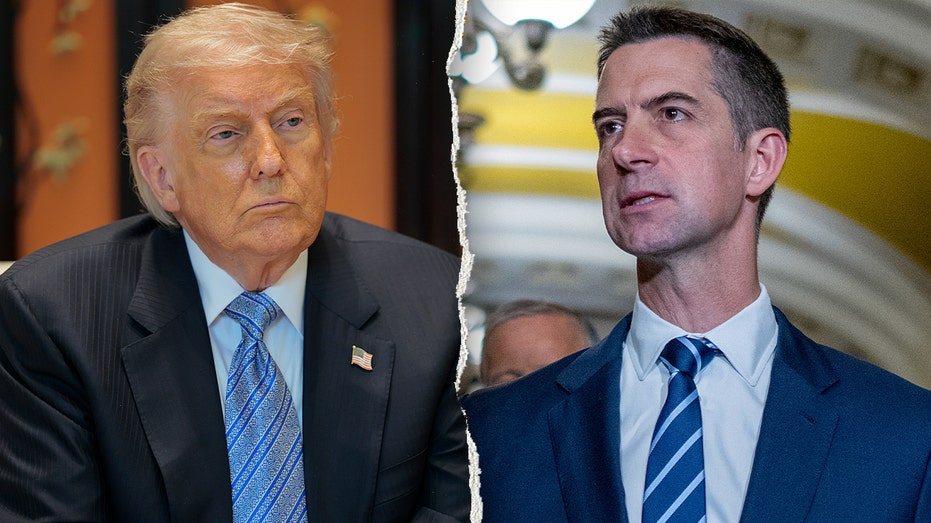
President Donald Trump wants Congress to pass legislation that would give Americans a break from the twice-yearly nuisance of changing clocks, but the sun will likely set on the push in the Senate, where the issue is deeper than politics. The House passed its bill, the Sunshine Protection Act, last week to allow states to voluntarily observe Daylight Saving Time year-round, but the legislation is hitting a brick wall in the Senate. And it is not the party aisle that is defining the debate — it is a horizontal line running through the United States that divides northern states versus southern states.
Senate Majority Leader John Thune, Republican of South Dakota, acknowledged the challenge. «That is an issue in which there are passionate views on both sides,» Thune said when asked whether the Senate would consider the bill. «So we will see. I mean, the House having acted on it now, we will see what the interest level is in the Senate. But I know that there are people who are willing to really slow things down over that issue.»
Proponents argue that the clock change is an inconvenience in their states and that they are hungry for more daylight in the evening. Opponents counter that it would force school-aged children to be in the dark for the beginning of the school day. One of the most vocal opponents of the legislation is one of Trump's own allies on Capitol Hill, Senator Tom Cotton, Republican of Arkansas, who last year declared that he would «always oppose» efforts for permanent Daylight Saving Time.
A source in Cotton's orbit told Fox News Digital that the lawmaker was «far from the only one who objects» to the bill. The source noted that the legislation is more of a grandfather clause that requires states to have already passed an observance of permanent standard time before the Sunshine Protection Act becomes law. Currently, Hawaii and Arizona are the only two states that, by their own laws, observe permanent standard time, while no states observe a permanent Daylight Saving Time.
This is not the first time Congress has tried such a change. «Congress has already tried changing to permanent Daylight Saving Time before,» the source said. «It was so thoroughly hated that Congress reversed course the following year — but almost no one knows that.» In the 1970s, lawmakers did enact a year-round Daylight Saving Time. But Americans rapidly soured on the change, especially parents whose children had to wait in the dark for the school bus. It was repealed about a year later.
Senator Mike Rounds, Republican of South Dakota, echoed those concerns. «I cannot support a motion to go to Daylight Saving Time, because it means that the kids in South Dakota ended up going to school in the dark for about the first hour of classes for more than six months out of a year,» Rounds said. «So we cannot do that.»
Proponents argue, however, that it is a long-needed change. Senator James Lankford, Republican of Oklahoma, who originally introduced the Sunshine Protection Act alongside then-Senator Marco Rubio, Republican of Florida, a decade ago, contended the push was «not a partisan issue, it is a preference issue» that often fell along geographic lines. Still, he acknowledged resistance from parents concerned about their kids going to school in the dark.
«This is left over from World War I when America was trying to save lamp oil. We are doing OK on lamp oil now, so that is not the issue on it,» Lankford said. «With streetlights, with different power and things, we have — we are in a very different situation. And I talk to a lot of folks that say they are just sick of the time change. They want to be able to lock the clock.»
Senator Rick Scott, Republican of Florida, who introduced the legislation last year, cheered the House passing the bill. «It is one of the most popular things in my state,» Scott said. «You would not believe how much I get asked about this.» Still, he acknowledged the resistance coming from the North. He argued that he could not understand how «anybody could vote against it when the state could make their own decision.»
«Give me the chance — I mean, look, in my state, the ability, we want to do it,» Scott added.
The debate highlights a broader challenge for Trump as he pushes his legislative agenda. While the president has signaled support for ending the clock change, the issue has exposed a rift within his own party that transcends typical partisan divisions. The geographic split — with northern states opposing permanent Daylight Saving Time and southern states favoring it — has made the bill a difficult test of Trump's ability to unite Republicans on a seemingly simple quality-of-life issue.
As the Senate weighs its next steps, the fate of the Sunshine Protection Act remains uncertain. With strong opposition from key Republicans like Cotton and Rounds, and the memory of the failed 1970s experiment still fresh for some, the bill may struggle to overcome the procedural hurdles needed for a vote. For now, Americans can expect to continue changing their clocks twice a year, as the sun sets on the latest effort to lock the clock.