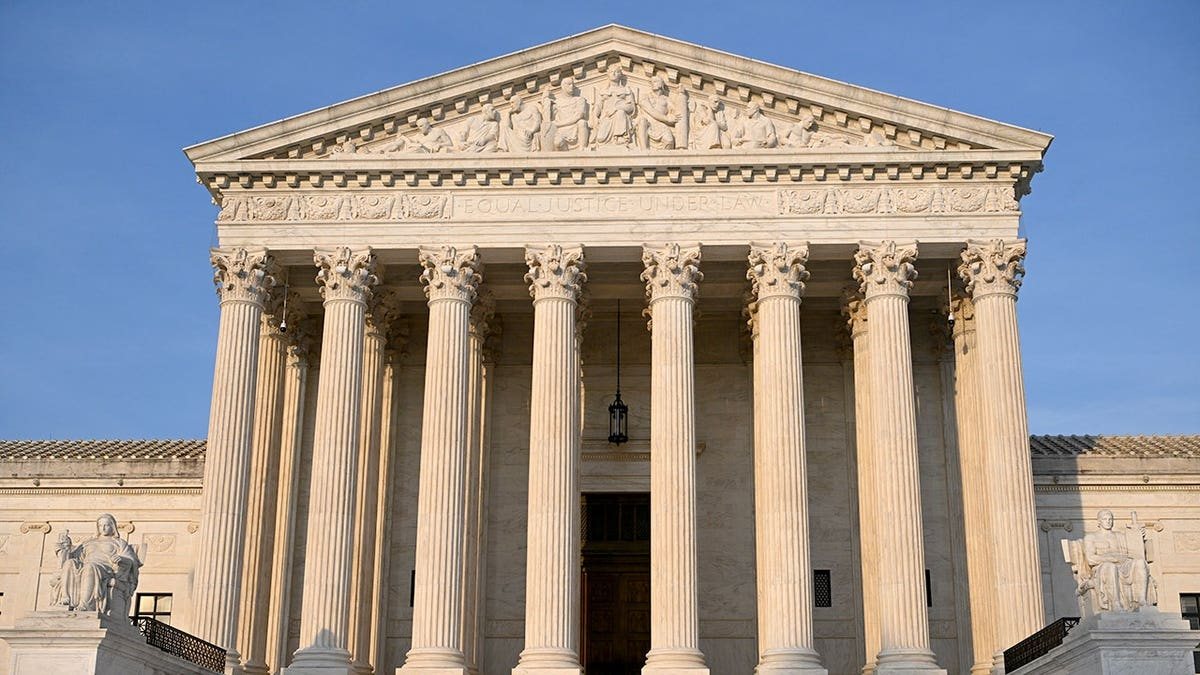
The Supreme Court has officially closed its latest term, issuing 67 majority opinions and revealing a notable increase in ideological divisions compared to the previous year. According to data compiled by SCOTUSblog, the percentage of cases decided by a 6-3 vote rose from 15.2% last term to 28.8% this term, while ideological 6-3 splits jumped from 9% to 22.7%. These figures indicate a shift toward more polarized decision-making on the nation's highest court.
Despite the uptick in divided rulings, legal experts and observers emphasize that the Court remains a stabilizing force in American governance. Chief Justice John Roberts and Justice Brett Kavanaugh were in the majority most often this term, each at 95%, followed by Justice Amy Coney Barrett at 92%. Justice Ketanji Brown Jackson, widely regarded as the most liberal member, was in the majority 67% of the time overall and 41% in non-unanimous cases. This suggests that even the most ideological justices frequently align with the broader conservative center of the Court.
The term's most significant decision may beNational Republican Senatorial Committee v. Federal Election Commission, which struck down limits on party campaign spending in coordination with candidates. The ruling breathed new life into the two major political parties by allowing them to spend more freely in direct coordination with their candidates. Another high-profile case,Trump v. Barbara, addressed birthright citizenship but drew little genuine surprise among the public, as the outcome aligned with widely anticipated legal reasoning.
While lower federal courts have faced criticism for politicized rulings, the Supreme Court continues to move at a gradual pace, a characteristic that constitutional law professors often highlight as essential for maintaining the rule of law. The Court's deliberate approach stands in contrast to the rapid, sometimes unpredictable decisions issued by district courts, which have fueled perceptions of a politicized judiciary. However, the high court's measured pace helps ensure that its rulings are more likely to be accepted by the public and endure over time.
Historical context underscores the Court's reluctance to outpace public opinion. The 1973Roe v. Wadedecision, which declared all anti-abortion laws unconstitutional, is frequently cited as an example of the Court moving too far ahead of societal consensus, leading to decades of political and legal turmoil. Similarly, the 2012National Federation of Independent Business v. Sebeliusdecision upholding the Affordable Care Act and the 2000Bush v. Goreruling that effectively decided the presidential election remain deeply divisive. This term's most controversial cases, by contrast, have not reached the same level of national discord.
The Court's ideological composition remains a subject of intense interest. The conservative wing, often described as originalist, includes Chief Justice Roberts and Justices Clarence Thomas, Samuel Alito, Neil Gorsuch, Brett Kavanaugh, and Amy Coney Barrett. Among these, Roberts, Barrett, and Kavanaugh are frequently grouped as moderates. The liberal wing consists of Justices Elena Kagan, Sonia Sotomayor, and Ketanji Brown Jackson. Despite the ideological labels, the data show that the Court does not operate in a purely ideological pattern in every major case, with cross-ideological alliances forming on certain issues.
As the Court recesses for the summer, its decisions will continue to shape American law and politics. The rise in 6-3 ideological splits may signal a more polarized future, but the Court's overall record this term suggests a commitment to stability and incremental change. Legal scholars and Court watchers will now turn their attention to the next term, which begins in October, to see whether these trends persist or evolve.