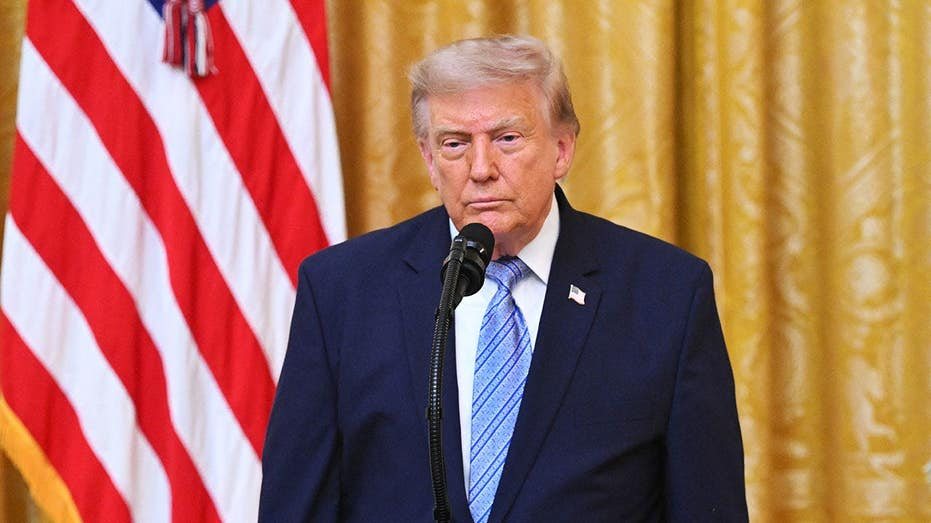
President Donald Trump has made his pick to replace the late Sen. Lindsey Graham, R-S.C., but several Republicans eyeing the seat are pressing ahead with their own campaigns, signaling a rare defiance of the president's endorsement power. Trump announced his "complete and total endorsement" of Darline Graham, Graham's sister, after meeting with her in the Oval Office on Friday, urging her to run in the special Republican primary scheduled for August 11, 2026. However, Darline Graham has not yet committed to the race, and her hesitation has not deterred a growing field of hopefuls.
Among those already jumping into the contest are Rep. Ralph Norman, R-S.C., businessman Mark Lynch, and Rep. Russell Fry, R-S.C., who announced his candidacy this week. Fry, in particular, had been seen as a rising star within the party, having recently been praised by Trump as "someone to watch" and having consulted with White House operatives about a potential bid. A source in Fry's political orbit told Fox News Digital that the lawmaker has "accomplished more than all the potential candidates combined," having passed three bills in his first four years in Congress. "This is really about giving voters a choice and not a coronation," the source said.
Despite entering the race against Trump's preferred candidate, Fry is not distancing himself from the president. In his campaign announcement, Fry emphasized Graham's legacy of standing with Trump and advancing the Republican agenda. "There is no other way to put it: Lindsey Graham was one of a kind," Fry said. "There is no replacing him, but I believe the best way to honor his legacy is to fight alongside the president just as steadfastly as he did." This balancing act reflects the delicate dynamics at play, as candidates seek to appeal to Trump's base while asserting their own independence.
The Trump endorsement has not proven an infallible asset in South Carolina this election cycle. South Carolina-based Republican consultant Dave Wilson noted that "South Carolina voters want to have a choice and not be told who they need to be voting for." He pointed to Trump's endorsement of Lt. Gov. Pamela Evette ahead of last month's GOP gubernatorial primary, which initially helped her win the primary but failed to secure her victory in the subsequent runoff, where she lost to Attorney General Alan Wilson in a landslide. Trump then endorsed both candidates days before the runoff, a move that some analysts saw as an attempt to back a winner rather than a consistent show of support.
Veteran Republican strategist Ryan Williams told Fox News Digital that a Trump endorsement is "a major boost for any candidacy, but it doesn't necessarily give you a lock on the seat." He argued that Senate seats rarely open up in South Carolina, and when they do, ambitious politicians must seize the opportunity regardless of presidential preferences. "If you're an aspiring House member in South Carolina, this is your time to run regardless of whom the president is supporting," Williams said. "There's no downside for running. They're all going to run as Trump Republicans, and they're all going to flatter the president on the campaign trail."
The race to replace Graham, who died earlier this year, has ignited a scramble among Republicans eager to fill a seat that has been held by a single family for decades. Graham's sister, Darline, is seen by many as a placeholder candidate, but her potential entry into the race has not cooled the ambitions of others. The primary is still more than a year away, leaving ample time for the field to grow and for Trump to potentially shift his support. For now, the contest underscores a broader tension within the Republican Party between loyalty to Trump and the desire for competitive primaries that reflect local voter preferences.
As the campaign unfolds, candidates are expected to emphasize their conservative credentials and alignment with Trump's agenda, even as they challenge his chosen successor. The outcome will test whether Trump's endorsement remains the dominant force in Republican primaries or whether South Carolina voters will assert their independence in a high-stakes race that could shape the balance of power in the Senate.