Republicans Accuse Smithsonian of Left-Wing Bias Amid Review of Staffing and Exhibits
A Fox News Digital review found roughly two dozen Smithsonian leaders and curators previously worked for Democratic offices or progressive nonprofits, prompting Republican allegations of left-of-center bias. Congressional hearings and potential funding cuts follow.
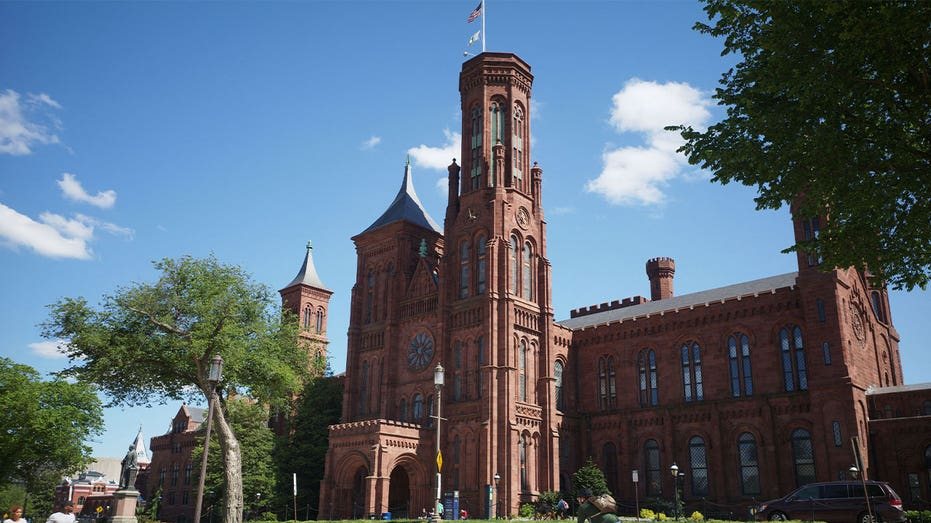
Republicans are escalating their scrutiny of the Smithsonian Institution after a review revealed that numerous senior staffers and curators have backgrounds as former Democratic aides or employees of progressive nonprofit organizations. The findings have intensified conservative criticism that the museum and research organization, which operates with significant public funding, has adopted a left-of-center perspective in its leadership and exhibits.
A Fox News Digital analysis of public biographies and social media profiles identified approximately two dozen current Smithsonian employees in leadership or curatorial roles who previously worked for Democratic political offices or liberal advocacy groups. The pattern extends beyond isolated cases, suggesting a broader institutional orientation that critics argue undermines the Smithsonian's mission as a neutral custodian of American history and culture.
Among the individuals highlighted is Roshni Lal, who became director of the Smithsonian's office of academic appointments and internships in November 2023. Her professional biography emphasizes a career-long commitment to diversity, equity and inclusion (DEI) in hiring. Before joining the Smithsonian, Lal served as director of DEI for the Mountain Pacific Association of Colleges & Employers, where she spearheaded policies she described as anti-racist and rooted in social justice. She also held DEI-related positions at the Manhattan Beach Chamber of Commerce and the National Association of Colleges and Employers. In a 2024 podcast appearance, Lal discussed her work on «identity-based career services,» including efforts to connect «students of color» with «culturally inclusive» job placement opportunities. Her predecessor, who held the role for 11 years starting in 2012, previously worked for the Clinton White House, the Obama State Department, and as a special assistant to then-Senator Hillary Clinton.
The current chairwoman of the National Museum of American History's political history division, which oversees exhibits on American presidents, also directs the Smithsonian's Center for Restorative History. According to the center's website, its mission is to «spotlight the people and stories that have been excluded from our national narrative using the principles of restorative justice.» Flagship programs include an effort to preserve the history of the Black Lives Matter movement from the perspective of activists and a «decolonization working group.» Multiple other curators at the museum describe their work as focusing on race, identity, and social justice, with one curator focused on «stitching social justice throughout the Americas» through exhibit design.
Republican lawmakers have responded by holding two congressional hearings to investigate allegations that the National Museum of American History has used taxpayer money to promote left-wing narratives about race, gender, and oppression while minimizing the nation's founding ideals and traditional historical figures. Following the hearings, conservative lawmakers are expected to use Congress's spending authority to pressure the Smithsonian to remove exhibits they deem inappropriate. The Trump administration has also criticized specific displays addressing gender identity, diversity, and social justice, arguing that curators have allowed political activism to replace neutral historical presentation.
A Smithsonian spokesperson defended the institution, stating: «The Smithsonian is a nonpartisan institution, and politics does not factor into our hiring practices. Our hiring is solely based on qualifications to fulfill the responsibilities of any given position.» The spokesperson also noted that the leadership includes individuals with conservative credentials, such as the chief legal officer who served in the Bush administration and the chief of staff to the regents, who clerked for Chief Justice John Roberts and Justice Brett Kavanaugh. However, the concentration of former Democratic and progressive staffers has fueled skepticism about the institution's claims of political neutrality.
The controversy reflects a broader political battle over cultural institutions, with conservatives leveraging their congressional majority to challenge what they view as ideological capture of publicly funded organizations. The Smithsonian, which encompasses multiple museums, research centers, and the National Zoo, receives substantial federal appropriations. Republican efforts to tie funding to exhibit content represent a significant escalation in the ongoing culture war over how American history should be presented and taught.