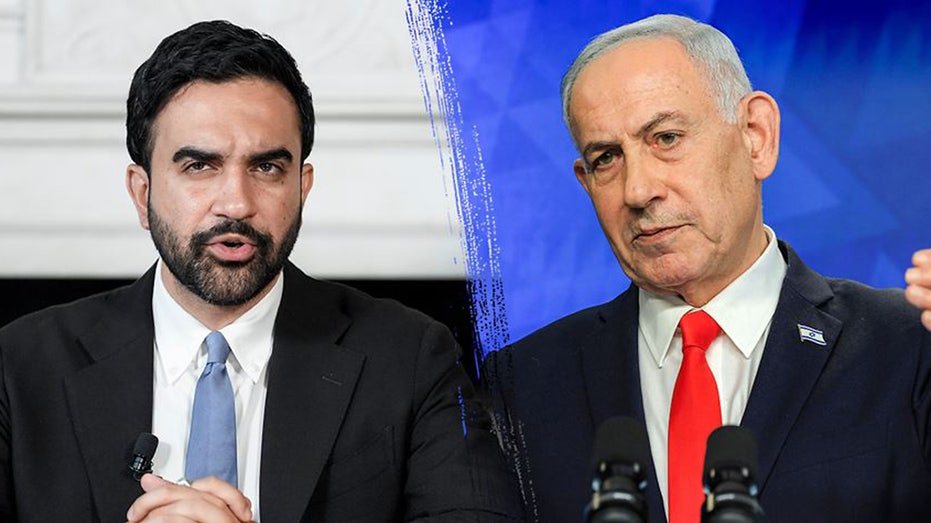
New York City Mayor Zohran Mamdani has announced that his administration is actively exploring whether the city possesses the legal authority to arrest Israeli Prime Minister Benjamin Netanyahu should he travel to New York for the upcoming United Nations General Assembly. In remarks first reported by The New York Times, Mamdani described Netanyahu as a «war criminal» who «belongs in the Hague» and confirmed that his office is in an «active conversation» with the city's Law Department to determine what legal options exist. The statement marks one of the mayor's sharpest criticisms of the Israeli leader and raises significant questions about the limits of municipal authority over foreign affairs and international law.
The International Criminal Court issued arrest warrants for Netanyahu and former Israeli Defense Minister Yoav Gallant in November 2024, alleging war crimes and crimes against humanity linked to Israel's military campaign in Gaza. The ICC has accused Netanyahu of using starvation as a method of warfare and intentionally directing attacks against civilians. Israel has vehemently rejected the allegations and disputes the court's jurisdiction, while the United States is not a signatory to the Rome Statute, the treaty that established the ICC. The warrants have created a diplomatic dilemma for world leaders, who must now weigh whether to enforce them if Netanyahu enters their countries.
Mamdani, a self-described Democratic socialist who won the mayoral election in 2025, has positioned himself as a progressive voice on international issues. His comments have drawn sharp rebukes from both Republicans and some Democrats. U.S. Ambassador to the United Nations Mike Waltz dismissed the mayor's remarks as «pure political theater,» arguing that Mamdani has no legal authority to arrest a visiting head of government. In a post on X, Waltz pointed out that the U.S. is not party to the ICC's founding treaty, that the UN Headquarters Agreement protects visiting heads of state, that head-of-state immunity applies, and that «federal authority trumps any local mayor's wishes.»
The official House Republicans account on X also condemned Mamdani, accusing him of threatening to arrest «the head of one of our closest allies» and urging him to focus instead on addressing «rising rent and housing prices and antisemitism in NYC.» The criticism highlights the political sensitivity of the issue, particularly as Netanyahu has long been a key ally of former President Donald Trump and remains a central figure in U.S.-Israel relations. Mamdani's office did not immediately respond to requests for comment on whether the mayor stands by his characterization of Netanyahu as a war criminal or whether he would direct the NYPD to execute an arrest if the Law Department determines the city has legal authority.
The United Nations General Assembly, held annually in New York, brings together dozens of heads of state and government, creating unique diplomatic and security challenges for the host city. Mamdani's remarks are likely to intensify scrutiny of his foreign policy positions, which have already drawn attention. Earlier this year, the State Department intervened to halt a planned meeting between a senior Mamdani administration official and Iran's UN ambassador, emphasizing that foreign policy is the purview of the federal government, not local authorities. The episode underscored the tension between municipal activism and federal prerogatives in international affairs.
Legal experts have expressed skepticism about the feasibility of Mamdani's proposal. The U.S. is not a party to the Rome Statute, meaning American authorities, including local law enforcement, are not obligated to enforce ICC warrants. Additionally, head-of-state immunity, a long-standing principle of international law, generally protects sitting leaders from arrest by foreign jurisdictions. The UN Headquarters Agreement, which governs the status of the United Nations in New York, also provides protections for delegates and visiting officials. Mamdani acknowledged these constraints in his interview with the Times, stating, «Whatever the law allows me to do in New York City, that's what we will do, but we won't be writing our own laws to that end.»
The controversy comes amid ongoing debate over Israel's military operations in Gaza, which began after Hamas's October 7, 2023, terrorist attack that killed approximately 1,200 Israelis and took hundreds of hostages. Israel's subsequent campaign has resulted in widespread destruction and civilian casualties, drawing condemnation from human rights groups and some international bodies. A United Nations committee has labeled the situation a genocide, a charge Israel and the U.S. have rejected. Israeli officials maintain that the military campaign is a legitimate act of self-defense and that allegations of war crimes are unfounded.
Mamdani's stance has also drawn attention from potential 2028 Democratic presidential contenders, with some expressing concern about the implications of local officials attempting to enforce international law independently. Senator John Fetterman, a Democrat, previously warned Mamdani that his vow to defy a Supreme Court immigration ruling risked a «constitutional crisis,» reflecting broader unease about the mayor's approach to legal and foreign policy matters. As the UN General Assembly approaches, the city faces the practical challenge of balancing security, diplomacy, and the mayor's stated intentions, though it remains unclear whether any legal action will materialize.