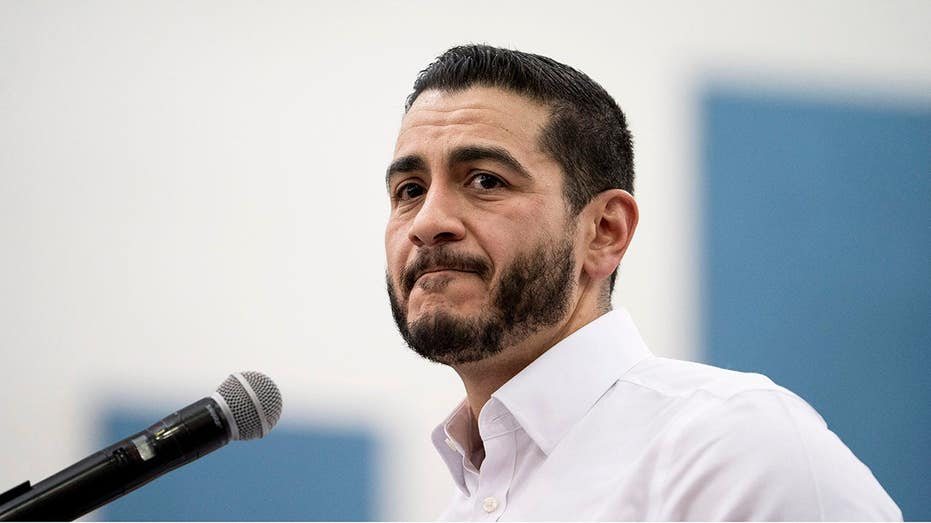
A debate over the use of the title «physician» by a Democratic U.S. Senate candidate in Michigan has drawn attention from medical professionals and political commentators, raising questions about the accuracy of candidate claims and the importance of medical credentials in public office. Dr. Abdul El-Sayed, a candidate in the Michigan Democratic primary, has faced scrutiny for describing himself as a physician despite not holding a valid state medical license and having no record of practicing medicine.
The controversy gained traction after left-wing host Mehdi Hasan challenged El-Sayed during an interview on Zeteo, asking whether he wished he had simply called himself a «doctor» to avoid the controversy. El-Sayed holds a medical degree from Columbia University College of Physicians and Surgeons and a doctorate in public health from Oxford University, but he has not completed a medical residency or obtained a license to practice medicine in any state. His campaign materials and public statements have frequently referred to him as a «physician,» a term that many state licensing boards, including New York's, reserve for individuals who are licensed to practice medicine or surgery.
Dr. Marc Siegel, a physician and Fox News medical contributor, wrote in an opinion piece that the distinction between «doctor» and «physician» is not minor. «I consider being a physician an active role that involves healing or treating patients or studying potential tests or cures as a physician-scientist,» Siegel wrote. He noted that while El-Sayed has strong medical credentials, including academic appointments at the University of Michigan and Harvard T.H. Chan School of Public Health, those qualifications make him a doctor and an epidemiologist, not a physician. «Simply put, El-Sayed has not practiced medicine,» Siegel added.
The debate taps into a broader discussion about the role of medical professionals in politics. The United States has a long history of physicians serving in the U.S. Senate, including Sen. John Barrasso, an orthopedic surgeon; Sen. Bill Cassidy, a gastroenterologist; Sen. Rand Paul, an ophthalmologist; Sen. Roger Marshall, an OB-GYN; and former Sen. Bill Frist, a heart surgeon. These lawmakers have brought hands-on medical experience to their legislative work, often shaping health care policy based on direct patient care. Siegel argued that the qualities required of a great physician—compassion, balanced judgment, calmness, and resolve under pressure—are also crucial for a U.S. senator.
El-Sayed has defended his use of the title, pointing to his medical degree and his work as executive director of the Detroit Health Department and director of Wayne County's Health, Human and Veterans Services Department. He has also authored a book titled «Medicare for All: A Citizen's Guide» and is a strong supporter of a single-payer health care system. During the Zeteo interview, El-Sayed argued that his experience in public health and his lack of financial ties to insurance companies make him uniquely qualified to advocate for health care reform. However, Siegel countered that the process of wrangling with insurers to obtain care for patients provides a practical understanding of Medicare's limitations that El-Sayed lacks.
The controversy has become a focal point in the Michigan Senate primary, with opponents questioning El-Sayed's honesty and transparency. The issue is not merely semantic, as voters rely on candidate claims to make informed decisions. If a candidate misrepresents a core credential, it can undermine trust in their broader platform. The Michigan Democratic primary is expected to be competitive, and the outcome could have implications for the balance of power in the U.S. Senate.
El-Sayed's campaign has not issued a formal response to the criticism, but his supporters argue that his academic and public health credentials are sufficient to warrant the title. They point to his leadership during public health crises and his work on health equity as evidence of his qualifications. However, the distinction between a medical degree and a license to practice medicine remains a legal and professional boundary that many states enforce strictly.
The debate also highlights the broader challenge of how candidates present themselves to voters. In an era of heightened scrutiny, even minor discrepancies in titles or credentials can become campaign liabilities. For El-Sayed, the question is whether his use of «physician» will resonate as a minor issue or become a defining controversy in his bid for the Senate.