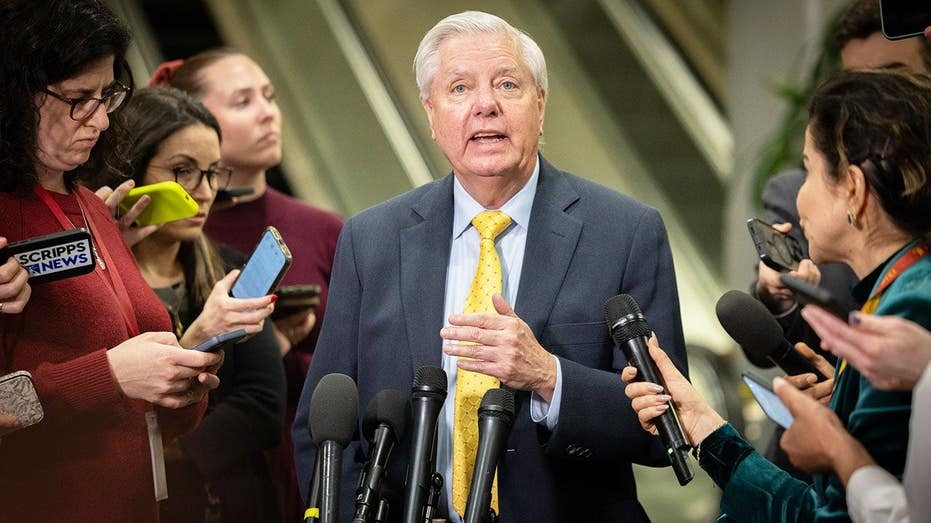
The District of Columbia's Office of the Chief Medical Examiner has released preliminary findings indicating that Senator Lindsey Graham died from an aortic dissection caused by arteriosclerotic cardiovascular disease. The 71-year-old South Carolina Republican was pronounced dead at George Washington University Hospital at 10:23 p.m. Saturday, following what his office described as a «brief and sudden» illness. The medical examiner performed an autopsy on Sunday and emphasized that the findings are not final, as Graham's death certificate will remain pending until toxicological and microscopic testing is complete.
According to the medical examiner's statement, the preliminary examination identified «Aortic Dissection due to Arteriosclerotic Cardiovascular Disease» as the cause of death. An aortic dissection is a tear in the inner layer of the aorta, the body's largest artery, which allows blood to flow between the layers of the vessel wall. The condition is considered a life-threatening medical emergency that can lead to severe internal bleeding or organ damage. Arteriosclerotic cardiovascular disease refers to the buildup of plaque inside the arteries, which can restrict blood flow and increase the risk of serious heart and vascular complications. The medical examiner's office noted that comprehensive toxicological and microscopic testing is routinely conducted in the District when an autopsy is performed and must be completed before the death certificate is updated with the cause and manner of death.
Emergency dispatch audio reviewed by Fox News Digital captured the response to Graham's Washington, D.C., home on Saturday night. The recordings show that first responders were dispatched shortly after 8 p.m. local time for a reported cardiac arrest. Dispatchers relayed that the caller reported the front door was unlocked, but when responders arrived, they found the door locked with no response from inside. Metropolitan Police Department officers were then requested to force entry. Roughly 20 to 25 minutes after the initial dispatch, radio traffic indicated that CPR was in progress as emergency crews worked inside the home. The audio does not identify Graham by name or describe the patient's condition. Authorities could be heard saying the incident would be handled as a «Capitol Police matter only.» The final relevant radio traffic came through shortly after 9:30 p.m.
Graham's office later announced that the senator died Saturday evening following a «brief and sudden» illness. «On the evening of Saturday, July 11, U.S. Senator Lindsey Graham passed away from a brief and sudden illness,» his office wrote in a statement. «Senator Graham's family appreciates prayers at this time and asks for privacy during this incredibly difficult period.» The dispatch recordings provide few additional details about what responders encountered inside the residence or what medical care, if any, was provided before his death.
Graham, a Republican who was first elected to the Senate in 2002 after serving four terms in the House of Representatives, became one of the chamber's most influential voices on national security, foreign policy, and the judiciary. He chaired the Senate Judiciary Committee during President Donald Trump's first term and was one of the president's closest allies on judicial nominations and defense policy. Following news of his death, tributes poured in from lawmakers across the political spectrum, with colleagues remembering his decades of public service and his influence on some of the Senate's most consequential debates.
The Office of the Chief Medical Examiner said it will update Graham's death certificate after toxicological and microscopic testing is complete. The medical examiner's office emphasized that the findings released Sunday are preliminary and that the death certificate remains pending. Officials said that such testing is standard procedure in the District and is necessary to determine the final cause and manner of death. The release of the preliminary findings comes as the nation mourns the loss of a senator who rose from small-town roots in South Carolina to become a powerful figure in the Republican Party and a key player in shaping U.S. policy on issues ranging from national security to the judiciary.